The first big packaging decision is the structure: what the box is made of and how it opens. It sets the feel, the protection, the freight volume and a large share of the cost, before you've picked a single colour.
This guide compares the three families you'll be offered, plus the common rigid box styles. New to packaging? Start with How custom packaging is made.
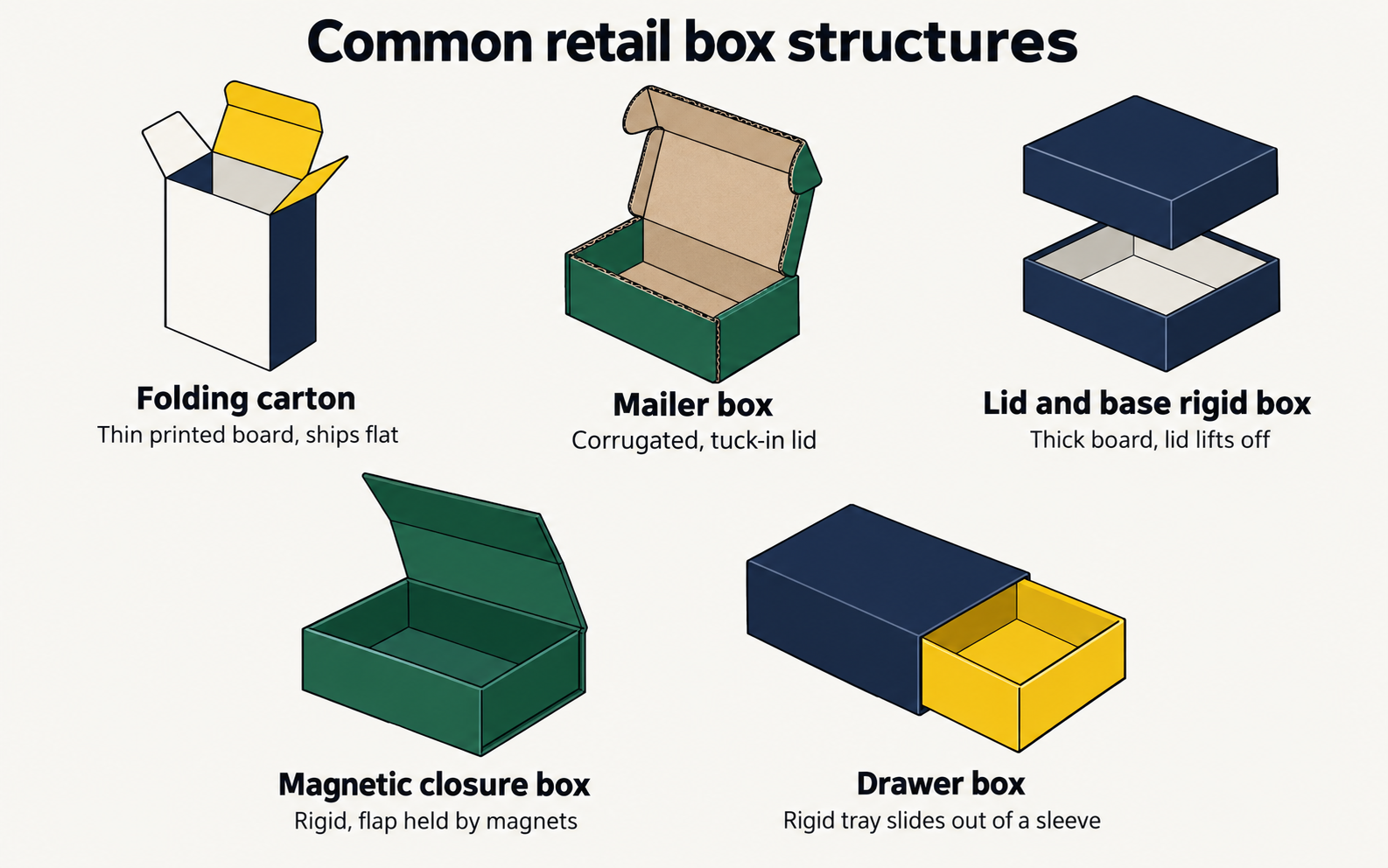
Folding carton (折叠彩盒, zhédié cǎihé)
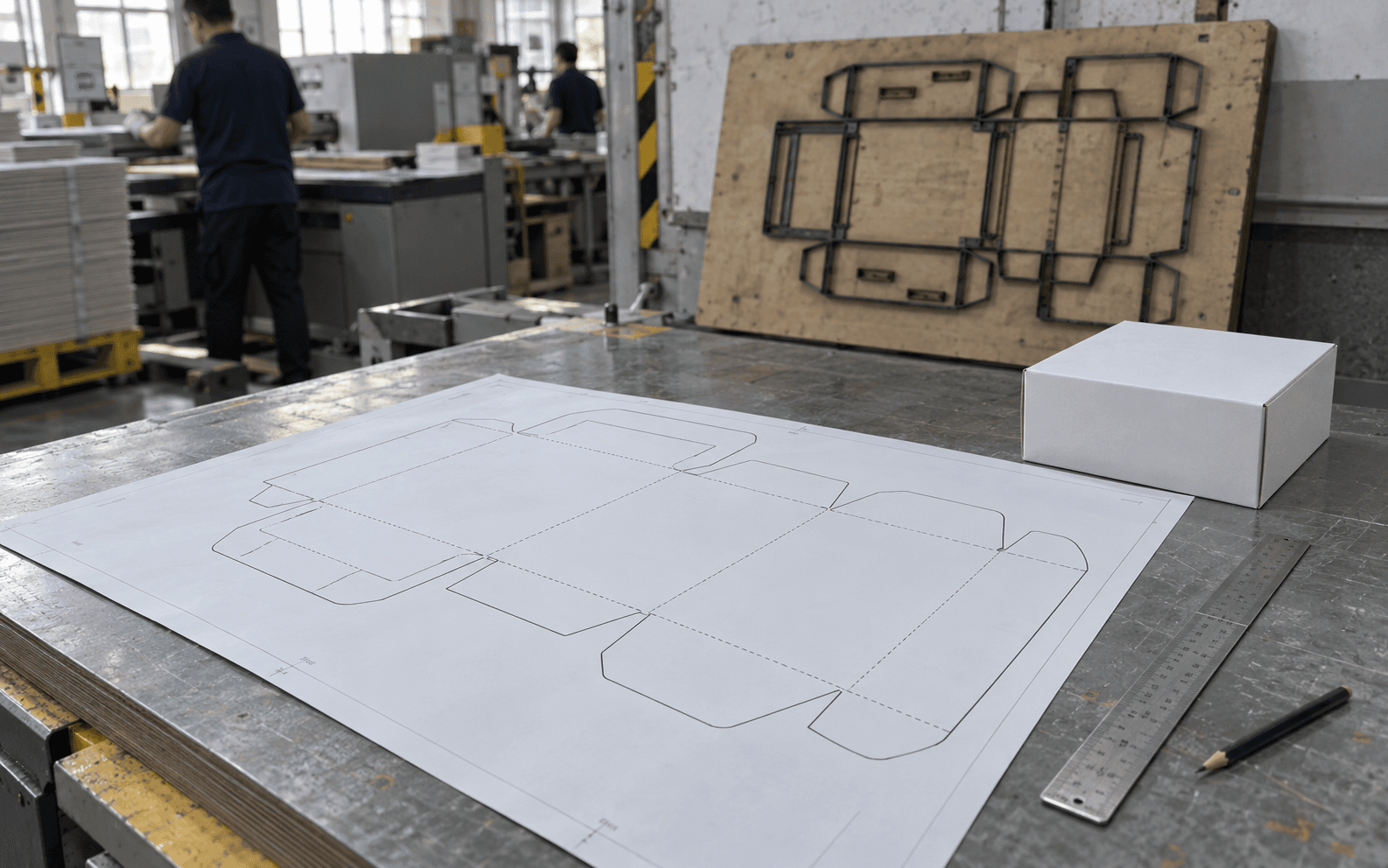
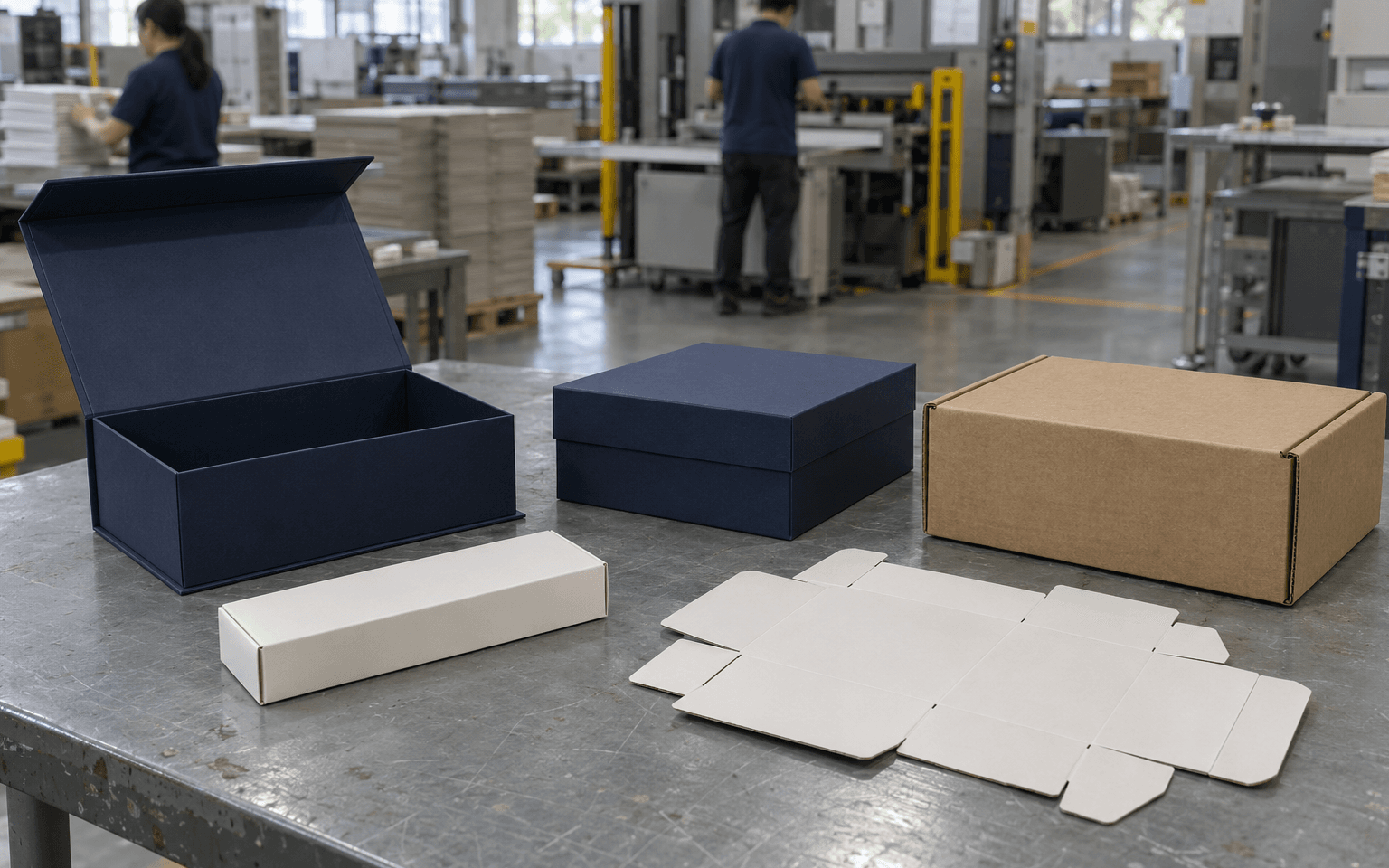
A folding carton is a single sheet of printed paperboard, cut and creased, then folded and glued. It ships flat, and gets folded into shape when the product is packed. Think of the box a phone charger or a smart plug comes in.
- Material: paperboard, usually a few hundred gsm (grams per square metre, a measure of how heavy and thick the board is). White coated board (白卡纸, báikǎzhǐ) prints best; grey-backed board (灰底白板, huīdǐ báibǎn) is cheaper.
- Closures: tuck-end flaps at the top and bottom, or an auto-lock bottom (自动扣底) that snaps into place, good for heavier products.
- Good for: retail shelves, light to medium products, cost-sensitive launches.
- Watch out for: it flexes in the hand and won't protect a fragile product on its own. It relies on the insert and the shipping carton.
Mailer box (飞机盒, fēijīhé)
A mailer box is made of corrugated board (瓦楞纸板, wǎléng zhǐbǎn): two flat paper layers with a wavy layer (the flute) in between, like a sandwich. The flute makes it stiff and shock-absorbing. Thin flutes such as E-flute (E坑) are common for printed mailers. The Chinese name means "aeroplane box", from its shape when unfolded.
- Closures: a fold-over lid with tuck-in flaps; many are self-locking with no glue.
- Good for: direct-to-consumer and e-commerce, where the box itself goes through the post.
- Watch out for: print quality on corrugated is lower unless the box is litho-laminated (a printed sheet glued onto corrugated). See Offset vs digital printing for boxes.
Rigid box (精装盒, jīngzhuānghé)
A rigid box is made from thick greyboard (灰板, huībǎn), often around 1–3 mm (typical, confirm with your supplier), covered in a printed or speciality wrapping paper. It doesn't fold flat. This is the "premium unboxing" box used for headphones, high-end gadgets and gift sets. Chinese factories also call these 礼盒 (lǐhé, gift box).
Common styles:
- Lid and base (天地盖, tiāndìgài, "heaven and earth lid"): a separate lid lifts off a base. Classic and simple.
- Magnetic closure (磁吸盒 or 翻盖磁铁盒, cíxīhé): a hinged flap held shut by hidden magnets. Very common for electronics.
- Drawer (抽屉盒, chōutìhé): a tray slides out of a sleeve. Feels like a reveal, good for flat products and accessories.
- Book-style (书型盒, shūxínghé): opens like a book cover; often magnetic.
- Shoulder/neck box: a lid-and-base with an inner collar showing between them, for an extra-premium look.
What to know:
- Hand assembly. Wrapping greyboard is largely manual. That means more labour cost, longer lead times, and more variation: check corners, glue marks and wrinkles on the sample.
- Freight volume. Rigid boxes ship assembled, so you pay to ship air. Collapsible rigid boxes (可折叠精装盒) exist: they fold flat and are snapped into shape at packing. Ask about them if freight matters.
- Reuse. Customers often keep rigid boxes, which is nice for the brand.
Comparison table
| Folding carton | Mailer box | Rigid box | |
|---|---|---|---|
| Chinese | 折叠彩盒 | 飞机盒 | 精装盒 / 礼盒 |
| Material | Paperboard | Corrugated board | Greyboard + wrap paper |
| Ships | Flat | Flat | Assembled (unless collapsible) |
| Feel | Light, some flex | Sturdy, casual | Solid, premium |
| Protection alone | Low | Medium to high | High |
| Print quality | Excellent | Good (best if litho-laminated) | Excellent (printed wrap) |
| Assembly | Machine gluing | Folded at packing | Mostly by hand |
| Relative cost | Lowest | Low to medium | Highest |
| Typical use | Retail shelf | E-commerce shipping | Premium unboxing, gifts |
"Relative cost" is a ranking, not a price. Size, board, finishes and quantity change the numbers.
What drives the cost
- Structure (the biggest factor): rigid boxes cost several steps more than cartons, mostly due to material and hand work.
- Size and board thickness.
- Magnets, ribbons and special closures each add parts and labour.
- Wrap paper: speciality textured or coloured papers cost more than printed coated paper.
- Finishes: foil, embossing and spot UV add tools and passes.
- Inserts: see Packaging inserts for electronics.
- Freight: an assembled rigid box can take many times the shipping space of a flat carton. Factor this into landed cost (see Shipping from Shenzhen: sea vs air).
How to choose
- How is it sold? On a shelf: folding carton or rigid box. Shipped direct: mailer, or a carton inside a mailer.
- How fragile and heavy is the product? Heavier products need an auto-lock bottom, corrugated or rigid board, and a good insert.
- What price point? A premium product in a thin carton can feel cheap; a budget product in a rigid box eats your margin.
- How many? Rigid boxes at small quantities can be expensive per unit. Ask for quotes at several quantities.
- Make a white sample first. Hold the real structure with your product inside before choosing. See how proofing works.
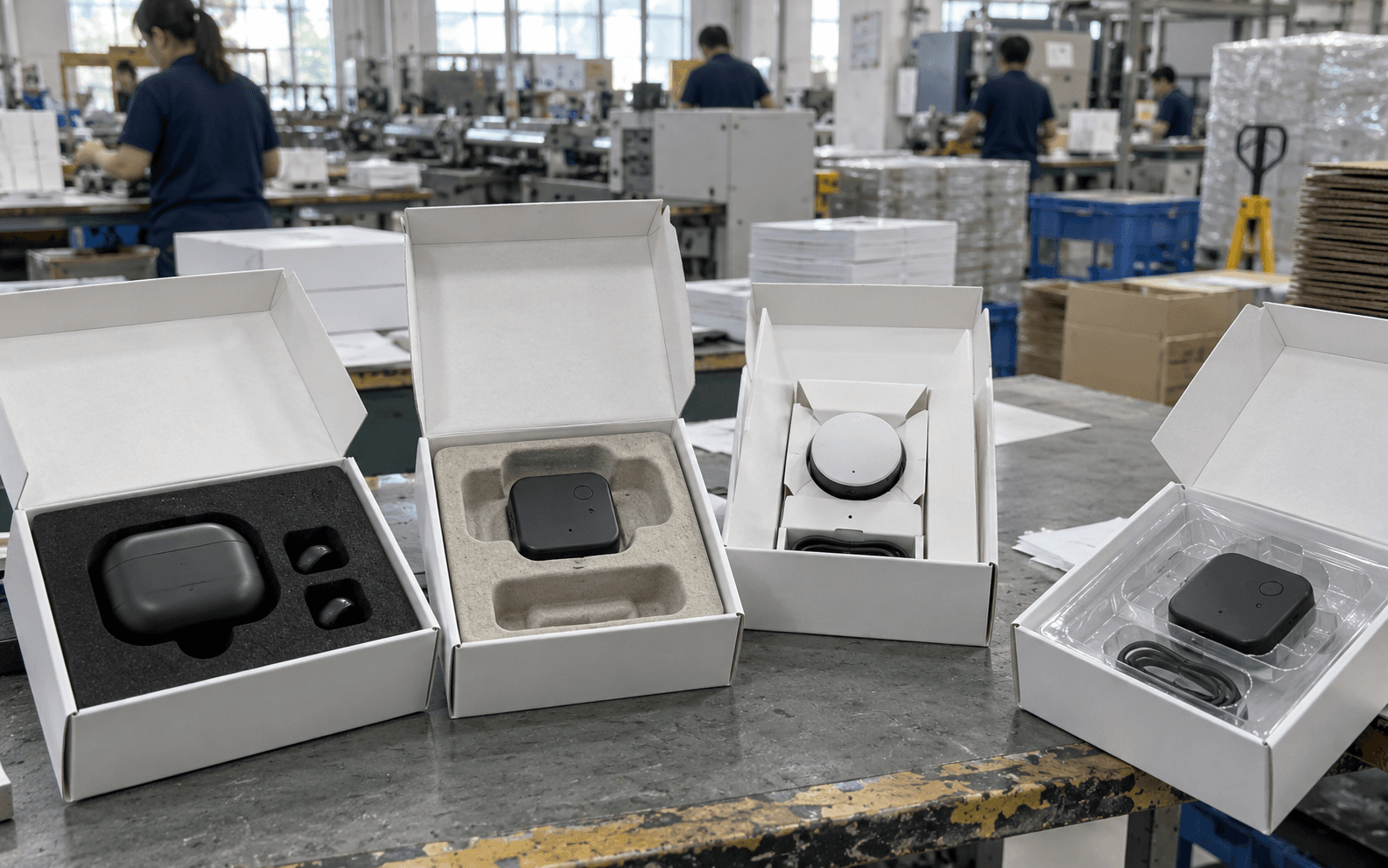
A common pattern for consumer electronics: a printed folding carton for retail, packed several to a plain shipping carton; or a rigid magnetic box for a premium product, shipped inside a corrugated mailer.
FAQ
Is a rigid box worth it for a first product? It depends on price point and margin. Many first products launch in a well-finished folding carton and upgrade later.
What's the difference between a mailer box and a shipping box? A mailer is designed to be seen and opened by the customer. A plain shipping box (a regular slotted carton) is just for transport.
Can rigid boxes be shipped flat? Standard ones can't. Collapsible rigid boxes can, at some extra cost per box.
Key words
| English | Chinese | Pinyin |
|---|---|---|
| Folding carton | 折叠彩盒 | zhé dié cǎi hé |
| Mailer box | 飞机盒 | fēi jī hé |
| Corrugated board | 瓦楞纸板 | wǎ léng zhǐ bǎn |
| Rigid box | 精装盒 / 礼盒 | jīng zhuāng hé / lǐ hé |
| Greyboard | 灰板 | huī bǎn |
| Lid and base | 天地盖 | tiān dì gài |
| Magnetic box | 磁吸盒 | cí xī hé |
| Drawer box | 抽屉盒 | chōu tì hé |
Keep reading
- How custom packaging is made (pillar)
- Packaging inserts for electronics
- Embossing vs debossing
- What is a dieline?
Next steps
- Read the packaging hub
- Browse packaging suppliers
- See the Packaging stage of the Path
- Glossary: 精装盒 rigid box
- Not sure where to start? Get an intro
Updated 3 October 2026