Both methods put a real metallic layer on your box. They get there in very different ways, and that changes how the result looks, what designs work, and when each one is the cheaper choice.
If you haven't read it yet, start with What is hot foil stamping?
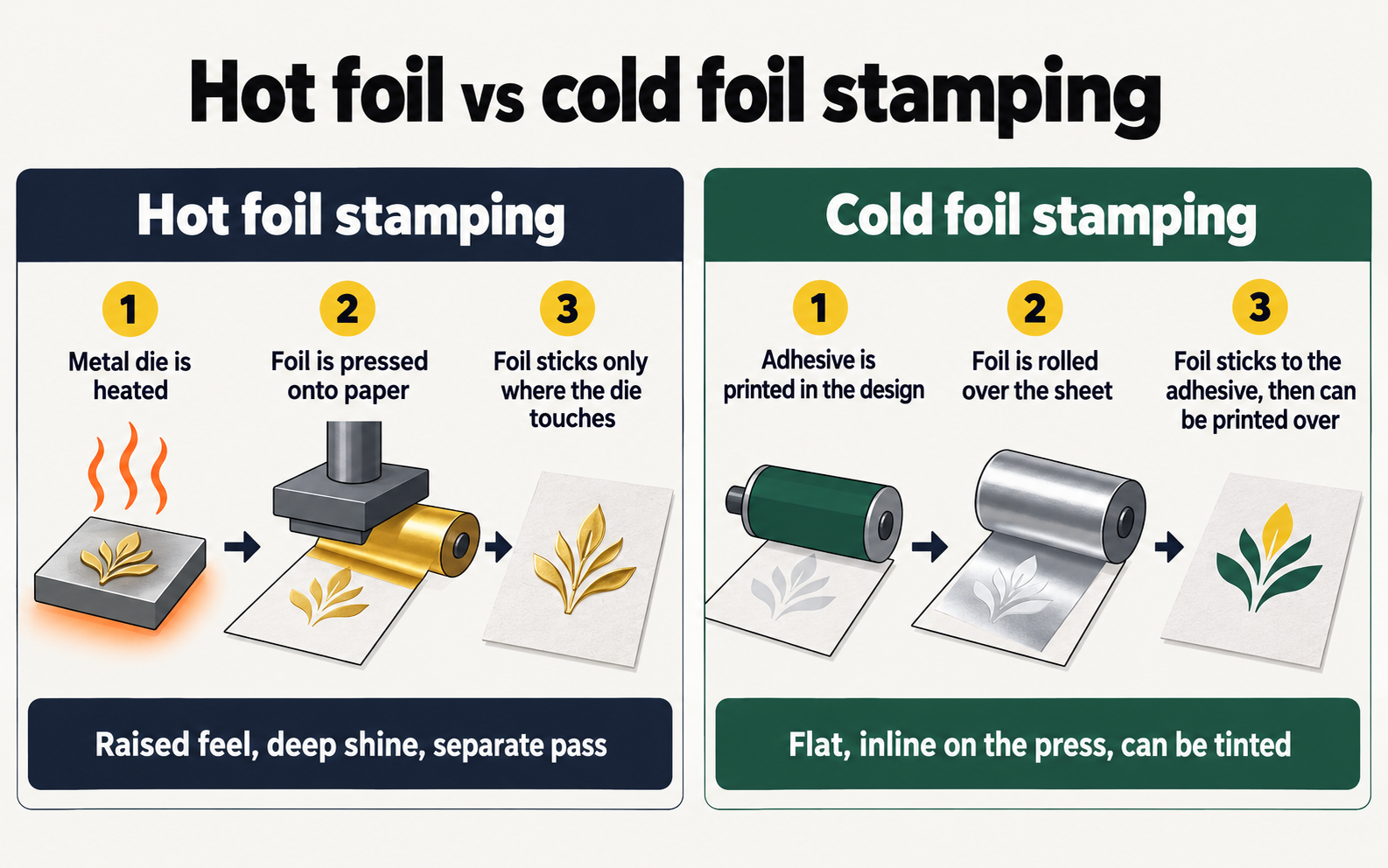
The short version
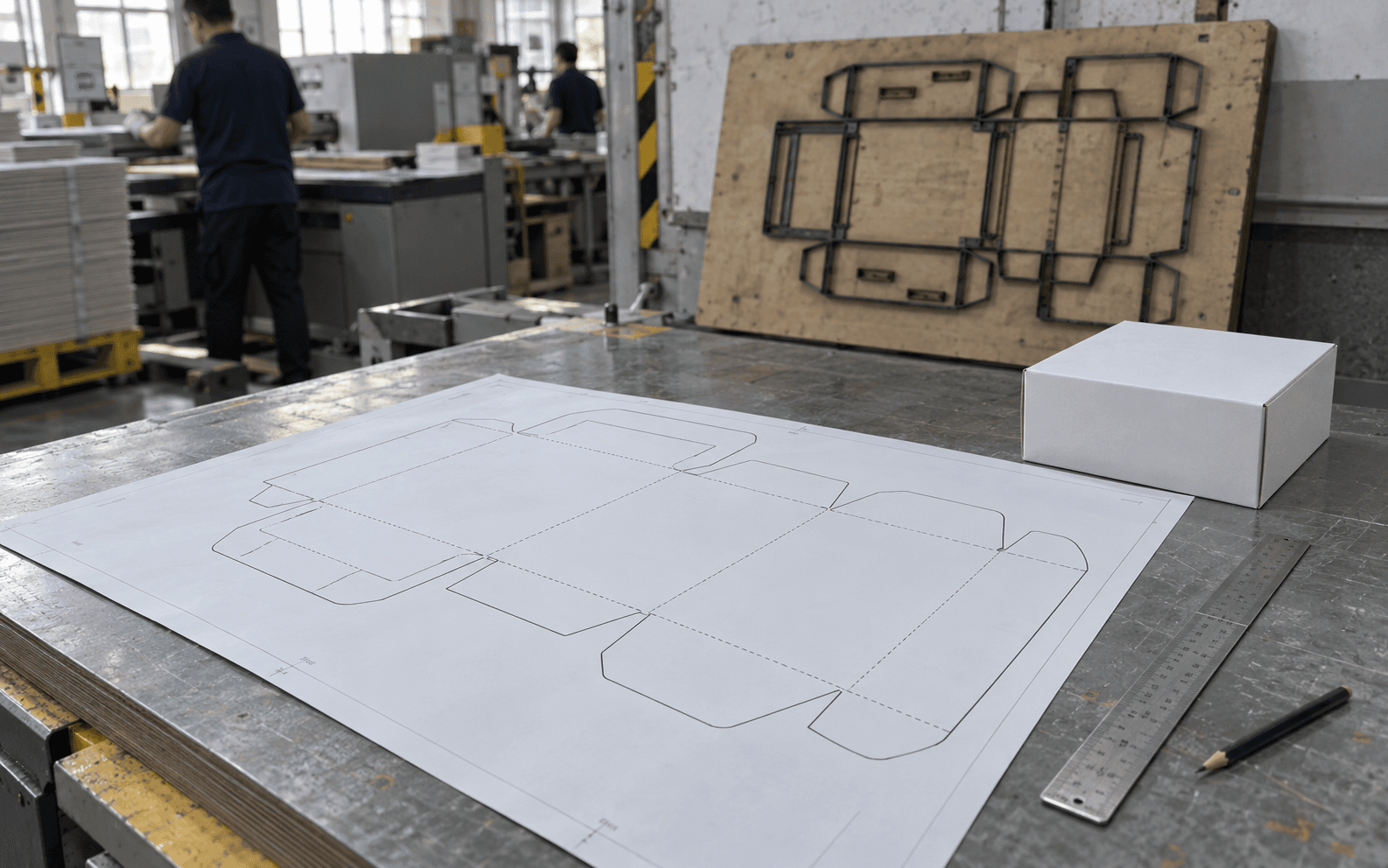
- Hot foil (烫金, tàngjīn) uses a heated metal die to press foil onto the board. It's a separate step after printing. It gives the brightest shine and a slight pressed-in feel.
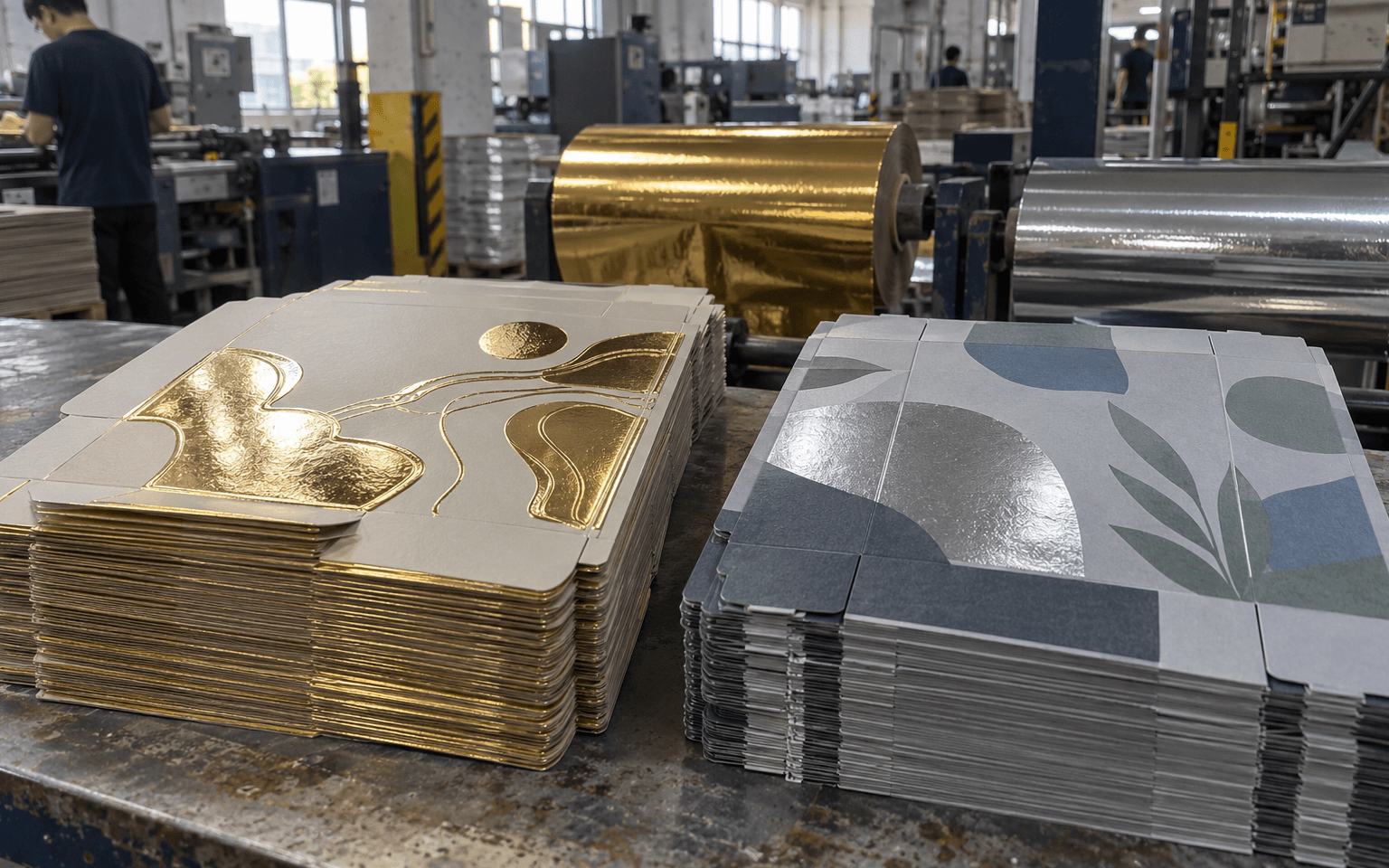
- Cold foil (冷烫, lěngtàng) uses no heat and no die. A printing unit lays down glue in the shape of the design, foil is rolled over, and it sticks only to the glue. It happens on the printing press itself and can be printed over with colour.
How cold foil works
- A printing plate (the same kind used for ink) prints a special adhesive wherever the metallic area should be.
- A roll of foil is pressed against the sheet. The metal layer sticks to the adhesive and peels away everywhere else.
- The adhesive is cured, often with UV light.
- The next printing units can print CMYK ink on top of the foil. Print a light yellow over silver foil and you get gold. Print blue over it and you get metallic blue.
That last point is cold foil's superpower: one roll of silver foil can become a whole range of metallic colours, and even metallic photos and gradients.
How they compare
| Hot foil (烫金) | Cold foil (冷烫) | |
|---|---|---|
| Tool | Metal die, one per design and colour | Ordinary printing plate for the adhesive |
| When it happens | Separate machine, after printing | On the press, during printing |
| Look | Brightest, mirror-like shine | Metallic but a little less brilliant |
| Feel | Slightly pressed into the surface | Completely flat |
| Colours | One foil colour per die | Silver foil plus overprinting gives many colours |
| Fine detail and gradients | Best for solid logos and text | Can do fine patterns, halftones, metallic images |
| Surfaces | Works on many papers, including some textured ones | Needs smooth, coated board |
| Can add emboss | Yes, even in one step | Only as a separate step |
| Usually economical for | Short to medium runs, small foil areas | Longer runs, larger or multi-colour metallic areas |
| Availability | Almost every box factory | Needs a press fitted with a cold-foil unit |
Which one should you pick?
Choose hot foil when:
- You want a logo or product name to really shine.
- Your run is in the hundreds or low thousands.
- You want to combine foil with embossing.
- Your board is textured, uncoated or soft-touch laminated (check foil compatibility first).
Consider cold foil when:
- The metallic area is large or covers much of the box.
- You want several metallic colours, gradients or metallic images.
- Your run is long and your printer has cold foil on their press.
For most first retail boxes for a hardware product, hot foil is the default. Cold foil starts to make sense when the design is built around metallic effects and quantities are high.
Other ways to get a metallic look
- Metallised paper or board (镀铝纸, dùlǚzhǐ, or 金卡/银卡纸): the whole sheet is metallic, and you print white ink where you don't want shine. Good for boxes that are mostly metallic.
- Digital foil: used by some digital printing shops for short runs. Foil sticks to printed toner, so there's no die. Fine for samples and small batches; shine and durability vary.
- Metallic ink: cheapest, but it looks duller than any foil.
What drives the cost
- Hot foil: die charge (by size and material), number of foil colours, foil area, and the extra machine pass.
- Cold foil: the adhesive plate and press set-up, plus foil used. Foil rolls run across the sheet, so waste depends on the layout. The press needs a cold-foil unit, which narrows your supplier choice.
Ask for quotes both ways if your design uses a lot of metallic area. The crossover point depends on the factory's equipment and your design, so let them tell you.
FAQ
Is cold foil cheaper than hot foil? On long runs with large metallic areas, it often is. On short runs with a small logo, hot foil is usually simpler and cheaper.
Does cold foil look as good as hot foil? It's metallic and sharp, but generally a little less brilliant, and it has no pressed-in feel. Compare real samples side by side.
Can cold foil be embossed? Not in the same step. You can emboss afterwards as a separate operation, which adds a die and a pass.
Is cold foil the same as digital foil? No. Both skip the hot die, but cold foil is done on a conventional printing press with an adhesive plate, while digital foil bonds to toner from a digital printer.
Key words
| English | Chinese | Pinyin |
|---|---|---|
| Hot foil stamping | 烫金 | tàng jīn |
| Cold foil | 冷烫 | lěng tàng |
| Metallised paper | 镀铝纸 | dù lǚ zhǐ |
| Gold / silver card | 金卡纸 / 银卡纸 | jīn kǎ zhǐ / yín kǎ zhǐ |
| Overprint | 叠印 | dié yìn |
Keep reading
- How custom packaging is made (pillar)
- What is hot foil stamping?
- Embossing vs debossing
- Offset vs digital printing for boxes
Next steps
- Read the packaging hub
- Browse packaging suppliers
- See the Packaging stage of the Path
- Glossary: 烫金 hot foil stamping
- Not sure where to start? Get an intro
Updated 3 October 2026