Your parts are made. Now they need to leave Shenzhen and reach you or your customers. For hardware teams there are three main ways to do this: express courier, air freight and sea freight. They differ hugely in speed, cost and paperwork.
This guide explains each one in plain words. Transit times and pricing change often, so treat every number here as a rough, typical range and confirm with your forwarder.
Why Shenzhen is a good place to ship from
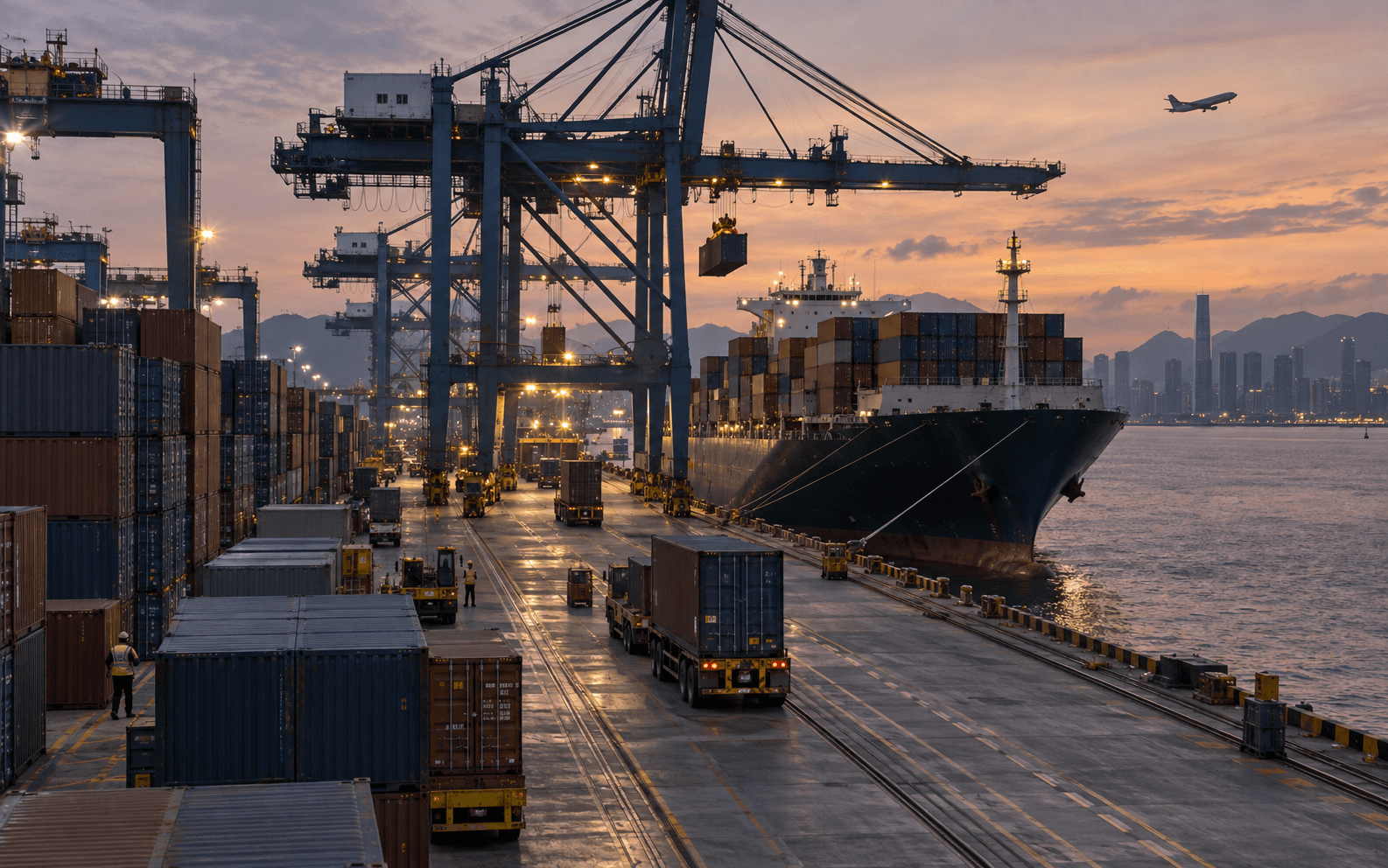
Shenzhen sits next to some of the busiest shipping infrastructure in the world:
- Container ports: Yantian and Shekou in Shenzhen, plus the nearby port of Hong Kong.
- Airports: Shenzhen Bao'an and Hong Kong International, both with large cargo operations.
- Freight forwarders everywhere. A freight forwarder is a company that books space with airlines and shipping lines, collects your goods, prepares paperwork and often arranges customs clearance. Think of them as a travel agent for cargo.
Option 1: express courier
International express companies pick up from the factory and deliver to a door, handling most of the paperwork and customs clearance along the way.
- Speed: often a few working days door to door (typical, confirm with the courier).
- Best for: samples, prototypes, documents, and small, urgent shipments.
- Cost: the highest per kilogram, but simple and all-in, apart from import duties and taxes.
- Watch out: duties and taxes may be billed to the receiver on arrival, plus a handling fee. Ask how they will be charged.
Option 2: air freight
Goods fly as cargo on passenger or freighter planes, booked by a forwarder. You then need customs clearance and delivery at the other end, which the forwarder can often arrange.
- Speed: roughly one to two weeks door to door, including handling at both ends (typical, confirm with your forwarder).
- Best for: medium shipments (roughly tens to hundreds of kilograms) that are urgent, like a pilot build or a product launch.
- Cost: cheaper per kilogram than express for larger shipments, but much more than sea.
Option 3: sea freight
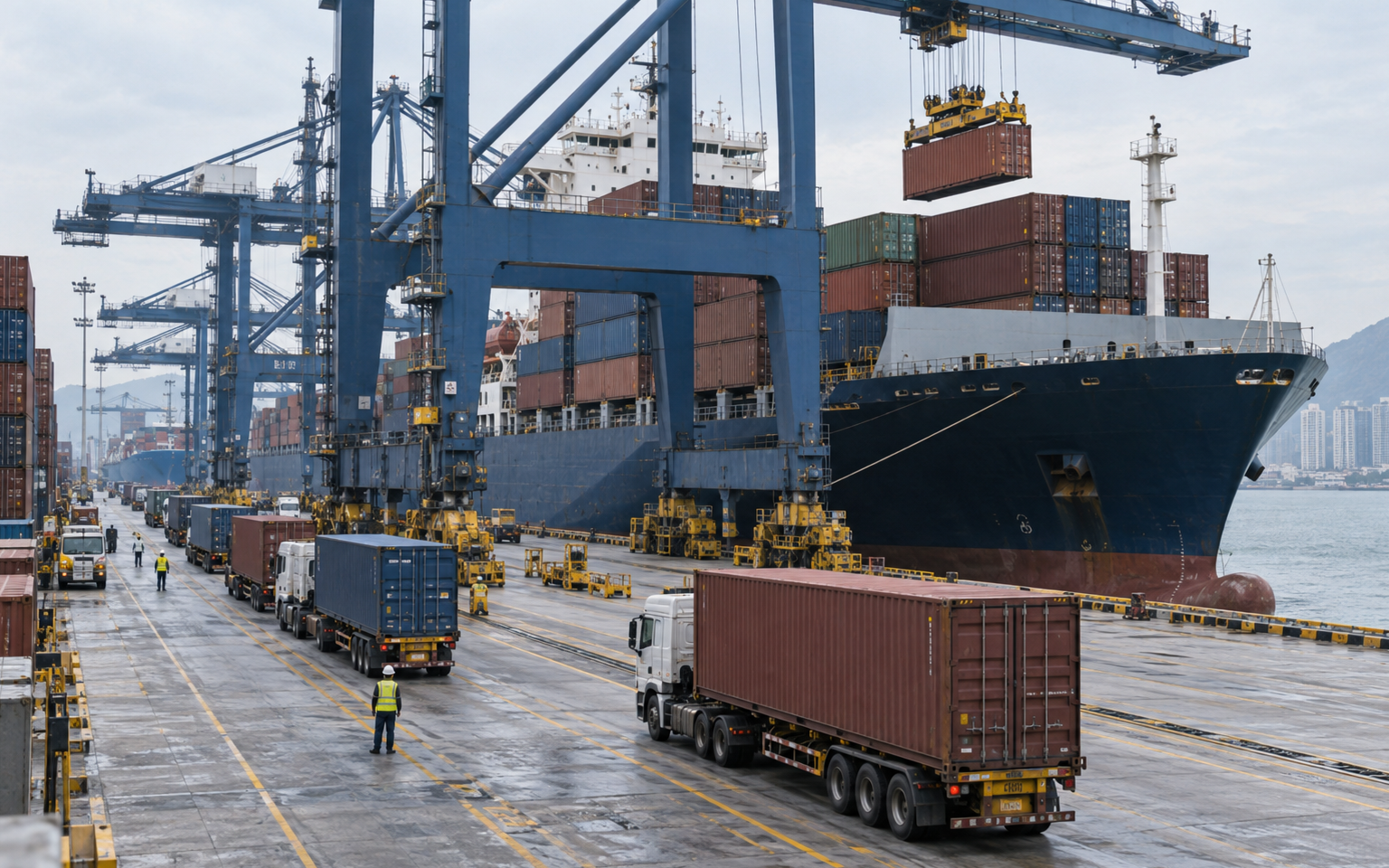
Goods travel in shipping containers on cargo ships.
- FCL (full container load): you rent a whole container, usually 20 ft or 40 ft. Good value once you have enough goods to fill most of one.
- LCL (less than container load): your cartons share a container with other people's goods. You pay by volume. Good for a few pallets, but extra handling at consolidation warehouses adds time.
Speed: port-to-port transit to the US West Coast is often around two to three weeks, and to Northern Europe often around four to six weeks, plus several days to weeks for port handling, customs and delivery at each end (typical, varies with route and season; confirm with your forwarder).
Best for: production shipments, heavy or bulky products, anything not urgent.
Cost: the cheapest per unit by far for large volumes.
Rail to Europe also runs from southern China and can sit between sea and air in time and price. Ask a forwarder whether it suits your route.
How weight is charged: chargeable weight
Carriers care about space as well as weight. A box of foam packaging is light but takes up a lot of room. So air and express shipments are charged on whichever is greater:
- the actual weight, or
- the volumetric (dimensional) weight, calculated from the box size.
A common formula is: length × width × height in cm, divided by a factor. Express couriers often use 5,000; air freight often uses 6,000 (typical, confirm with your carrier).
Example: a carton 60 × 40 × 40 cm = 96,000 cm³. Divided by 5,000 = 19.2 kg volumetric. If the carton actually weighs 8 kg, you're charged for about 19 kg.
For sea LCL, you usually pay per cubic metre (CBM), with a minimum charge.
Takeaway: smaller, well-designed packaging saves real money, especially by air. See the packaging hub.
Batteries and other dangerous goods
If your product contains lithium batteries, shipping gets more complicated. Lithium batteries are classed as dangerous goods for transport, and carriers usually ask for:
- a UN38.3 test summary (a transport safety test for lithium batteries),
- a safety data sheet (MSDS/SDS),
- correct packaging, labels and declarations.
Some routes and services won't accept certain battery shipments at all, especially loose batteries. Tell your forwarder about batteries before booking, and make sure your battery supplier can provide the documents. See the batteries hub.
Customs and duties
Every shipment is checked by customs when it leaves China and when it enters your country.
- Commercial invoice: lists the goods, value, and the seller and buyer.
- Packing list: what's in each carton, with weights and sizes.
- HS code: an international product classification number that determines the import duty rate. Your customs broker or forwarder can help you find the right one.
- Import duties and taxes depend on your country, the product and its origin, and they can change. Check current rates before you commit to a price.
Who handles and pays for each step depends on your Incoterm. See Incoterms for first-timers.
Quick decision guide
| Your shipment | Usually best |
|---|---|
| Samples, prototypes, a few kg | Express courier |
| Urgent pilot build, tens to hundreds of kg | Air freight |
| Production run, not urgent | Sea freight (LCL or FCL) |
| Contains lithium batteries | Ask your forwarder first |
Many teams split a production run: a small portion by air to launch on time, the rest by sea to save cost.
Before your goods leave the factory
- Book a pre-shipment inspection so problems are caught in Shenzhen, not after arrival. See Quality inspection explained.
- Check carton marks and labels match your forwarder's and retailer's requirements.
- Get the final packing list and commercial invoice to your forwarder early.
Keep reading
- Incoterms for first-timers
- Quality inspection explained
- How to choose a factory in China
- EVT, DVT, PVT explained
Next steps
- Find logistics and freight services in the directory
- Read the packaging hub
- See the Logistics stage of the Path
- Not sure where to start? Get an intro
Updated 29 September 2026