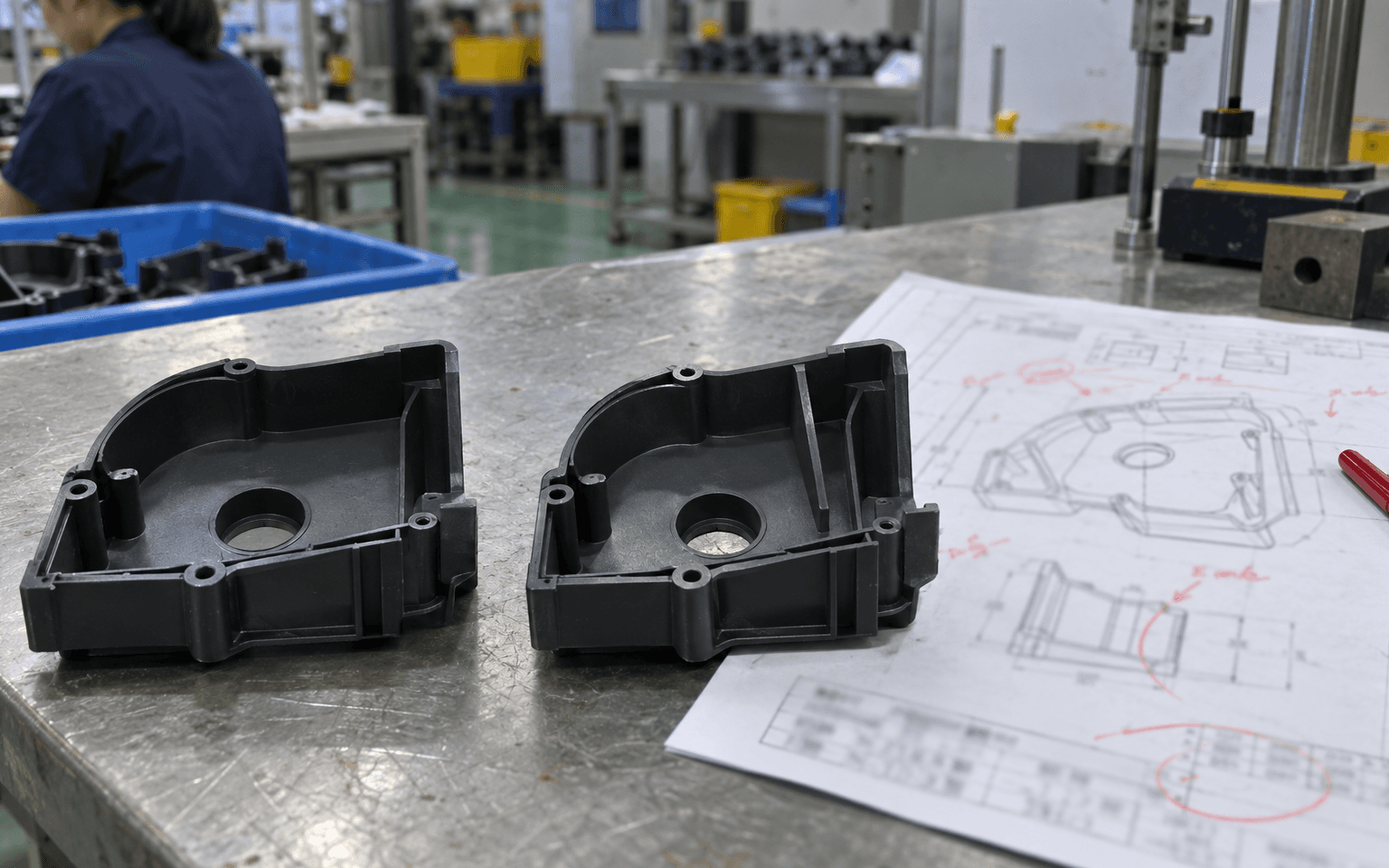
In software, you can ship a fix tonight. In hardware, a change can mean re-cutting a steel mold, throwing away a warehouse of old parts and re-testing for certification. That's why hardware teams freeze their design at key points, and why every change after that goes through a written process called an engineering change order, or ECO.
This guide explains both in plain terms, and how they work with a factory in China.
What is design freeze?
Design freeze is the point where you agree to stop changing the design, so other people can start spending money on it. After a freeze, the design files, drawings and BOM (bill of materials, the list of every part) are treated as fixed. Chinese factories may call it 设计冻结 (shè jì dòng jié).
It doesn't mean the design can never change. It means changes stop being casual. From now on, every change is written down, checked for impact and approved before anyone acts on it.
Why freeze at all?
Because other people are about to commit money and time based on your files:
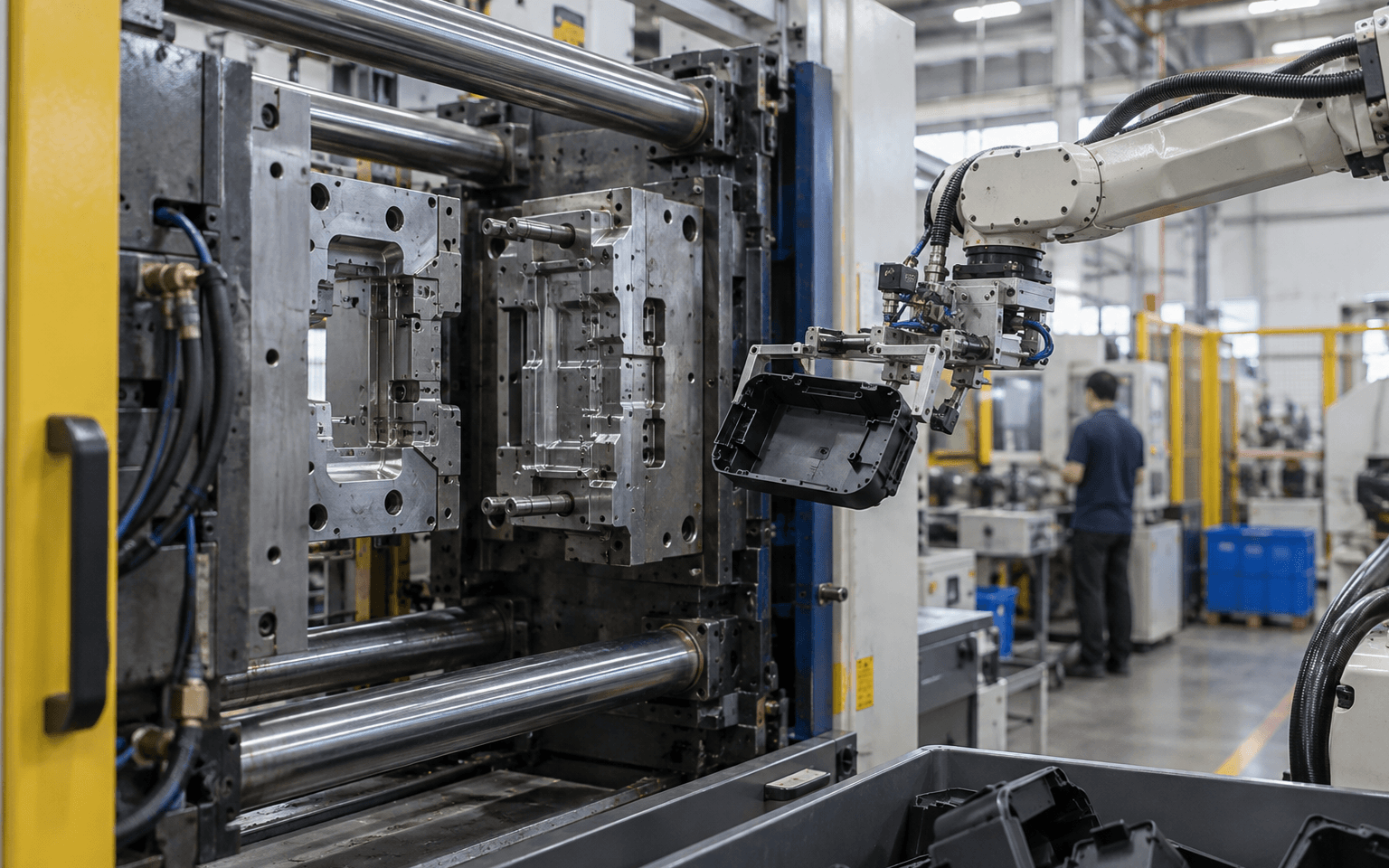
- A mold maker is about to cut steel. See How to get an injection mold made in China.
- A factory is about to order components, some with long lead times.
- A test lab is about to certify a specific version.
- Packaging and manuals are about to be printed with dimensions and photos.
Change the design after that and some of the work gets thrown away. The later the change, the more there is to throw away.
When to freeze
Most projects freeze in steps rather than all at once:
| Freeze point | What gets frozen | Why then |
|---|---|---|
| Before tooling | The shape of every molded or cast part | Steel is about to be cut |
| Before DVT | The full design, including electronics | Certification and reliability tests must be run on the final version |
| Before PVT | The BOM and the build process | The factory is setting up for mass production |
DVT and PVT are the pilot builds before mass production. See EVT, DVT, PVT explained.
A common trap: freezing too early, while you still know the design isn't right. A freeze should come after prototypes have answered the big questions, not as a deadline you hit regardless.
ECR, ECO and ECN: three related documents
These three acronyms get mixed up a lot. The simplest way to think of them:
- ECR (engineering change request): "We think this should change." Anyone can raise one: you, your engineer, the factory, the mold maker. It says what the problem is and what change is proposed.
- ECO (engineering change order): "This change is approved; here's exactly what to do." It lists the affected parts, the new revisions, when the change takes effect and what happens to old stock.
- ECN (engineering change notice): "Everyone, this has changed." The announcement sent to all the people who need to know.
Small teams often fold these into one form. Chinese factories commonly use the term ECN (工程变更通知) for the whole thing. What matters isn't the name; it's that every change is written, approved and shared.
What goes into an ECO
A useful ECO, even a one-page one, covers:
- What's changing: the part numbers and drawings affected, old revision and new revision.
- Why: the problem it fixes, such as a test failure, a part shortage, a cost saving or a customer complaint.
- Impact: what else this touches. Tooling? Other parts? Firmware? Certification? Packaging? Cost per unit? Schedule?
- Effective point: when the change starts, for example from a certain batch, date or serial number. This is called the cut-in.
- What happens to old stock: use it up, rework it, or scrap it. This is called the disposition.
- Approval: who signed off, on both your side and the factory's.
Then update the BOM revision, the drawings and, if needed, the golden sample (金样, jīn yàng), the approved reference unit that production is checked against.
Why late changes cost so much
A small-looking change can ripple a long way. Moving a screw hole by 2 mm might need:
- a mold modification (改模, gǎi mó) and new trial samples,
- a new revision of the mating part,
- changes to an assembly fixture,
- new inspection criteria,
- and, if it affects the electronics or the enclosure around an antenna, retesting for certification.
That's why the rule of thumb is: change freely before the freeze, reluctantly after it, and only with an ECO.
Working with a factory in China
- Never make verbal changes. A change agreed in a WeChat voice message is easy to misremember. Follow up in writing with a revision number, ideally in English and Chinese.
- Expect the factory to raise ECRs too. Suppliers may propose changes to make parts easier to produce or to swap a hard-to-find component. That's often good advice, but approve it formally.
- Watch for silent changes. The riskiest changes are the ones nobody tells you about: a different plastic grade, a substitute chip, a new sub-supplier. Make it a written term of your agreement that any change to materials, parts, process or sub-suppliers needs your approval first.
- Check the change landed. After an ECO, inspect the first units built with it. See Quality inspection explained.
- Keep one master set of files. One BOM, one drawing set, one revision log. See What is a bill of materials?
FAQ
Is a design freeze permanent? No. It's a line after which changes need a formal process. Products keep evolving for years, through ECOs.
Who approves an ECO? On a small team, usually the founder or lead engineer, plus the factory's engineering lead. Larger companies use a change board.
Do software updates need an ECO? Firmware updates that change how the hardware behaves, or that are loaded at the factory, should go through the same written process so the factory loads the right version.
Keep reading
- EVT, DVT, PVT explained
- What is a bill of materials (BOM)?
- What is DFM? Design for manufacturing explained
- How long does it take to develop a hardware product?
Next steps
- Browse contract manufacturers and QC and inspection firms in the directory
- See the DFM & tooling and EVT · DVT · PVT stages of the Path
- Glossary: 改模 mold modification, 金样 golden sample, 签样 sample approval
Updated 3 October 2026