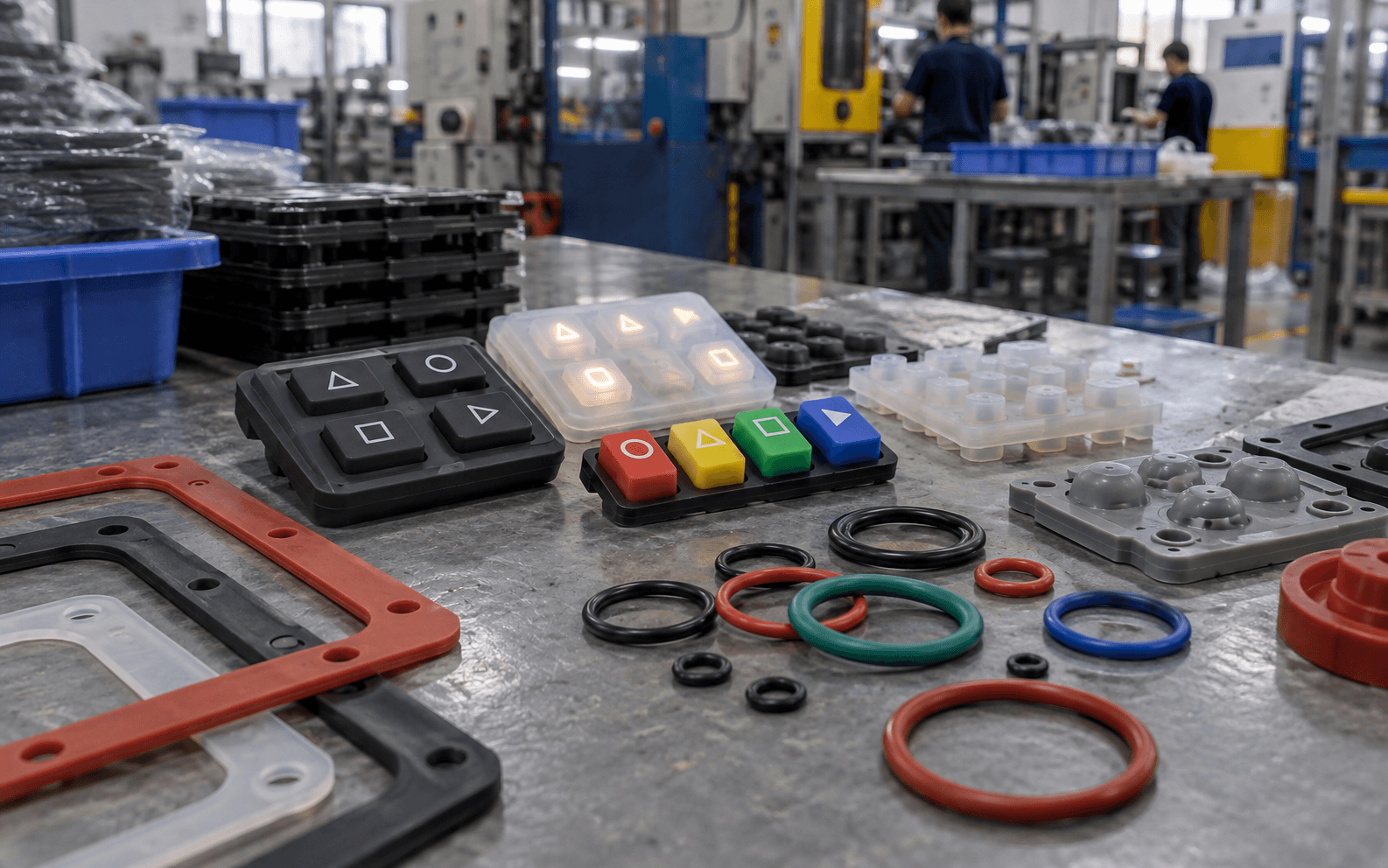
Press the buttons on a TV remote, a calculator or a handheld controller, and there's a good chance you're pressing silicone rubber. The same material seals waterproof devices, cushions batteries, makes soft watch straps and forms the feet under your laptop.
Silicone parts are custom-made in huge numbers around Shenzhen and Dongguan. This guide explains how they're made and what you need to decide to order them.
What silicone rubber is
Silicone rubber is a soft, flexible, rubbery material. Compared with many other rubbers it:
- stays flexible across a wide temperature range,
- resists weathering and UV light,
- is available in food-contact and skin-contact grades,
- can be made in almost any colour, including translucent (so light can shine through).
In Chinese, silicone is 硅胶 (guī jiāo). A silicone keypad is a 硅胶按键 (guī jiāo àn jiàn).
Two ways to mold silicone
Compression molding (the most common)
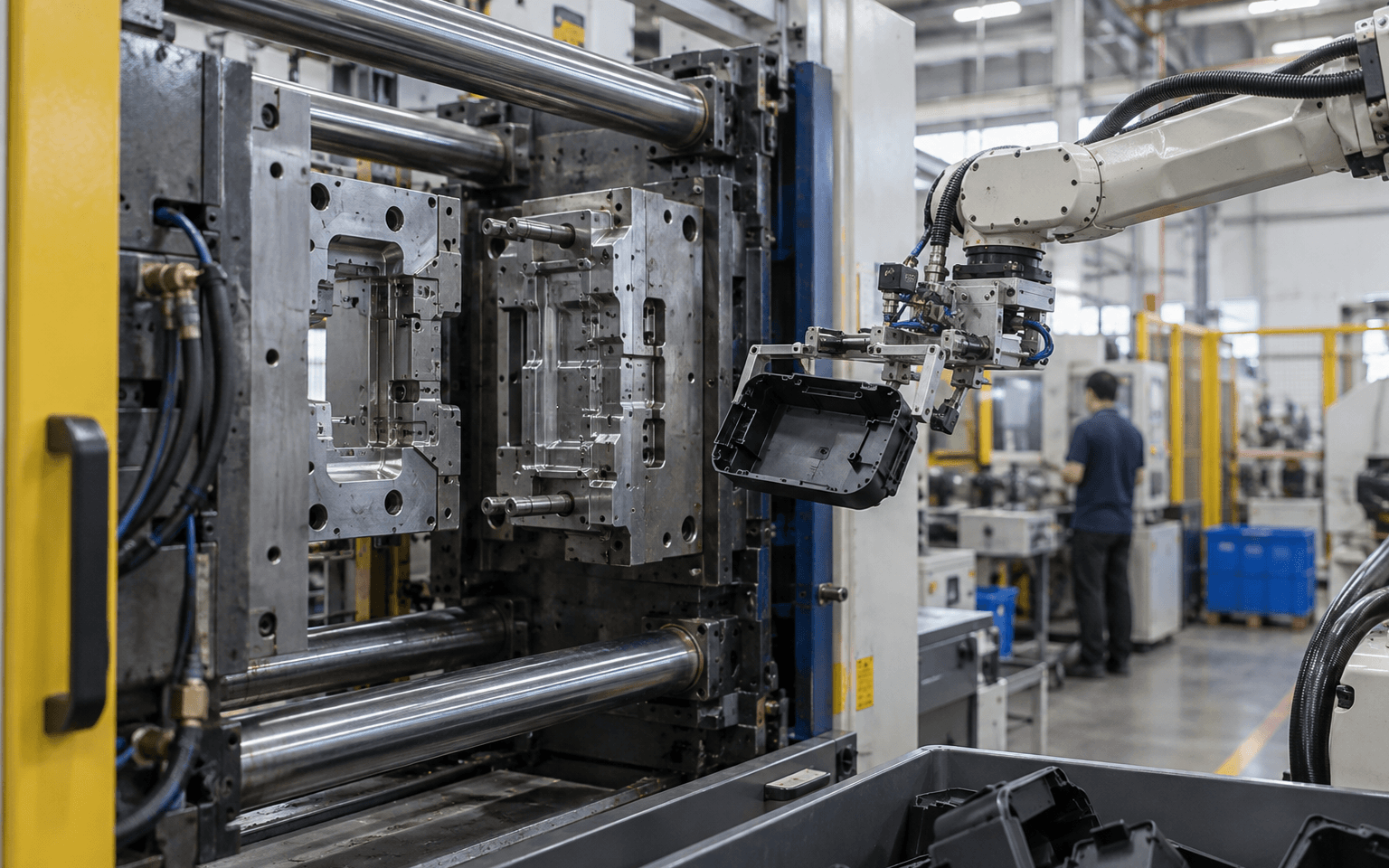
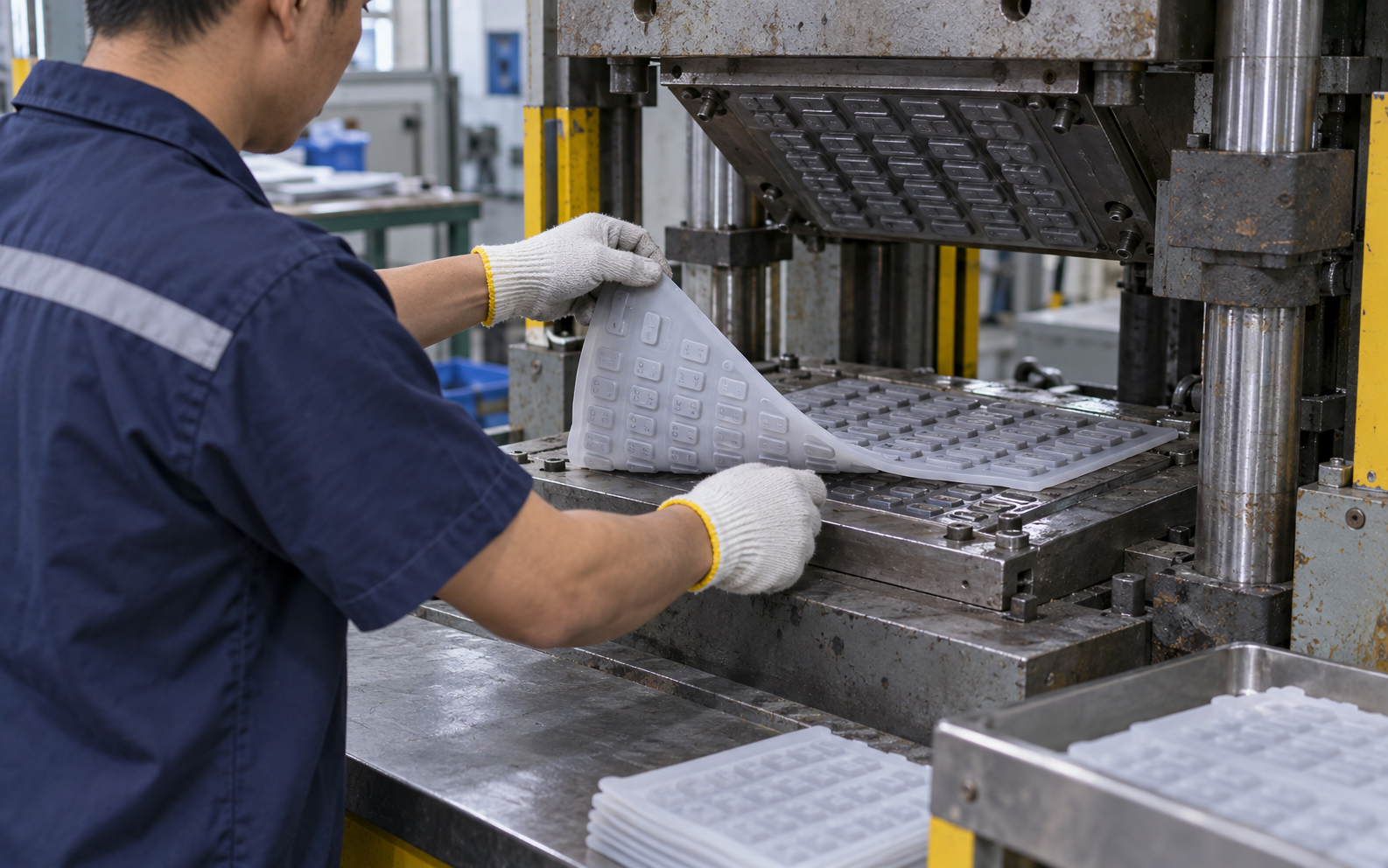
A measured piece of solid (high-consistency) silicone, like a thick dough, is placed into a heated steel mold. The mold closes under pressure, squashing the silicone into every corner, and heat cures it (sets it permanently, a bit like baking). The mold opens and the parts are peeled out. Extra material around the edges (flash) is trimmed off.
An analogy: a waffle iron. You put in the batter, close the lid, heat it, and open it to a finished shape.
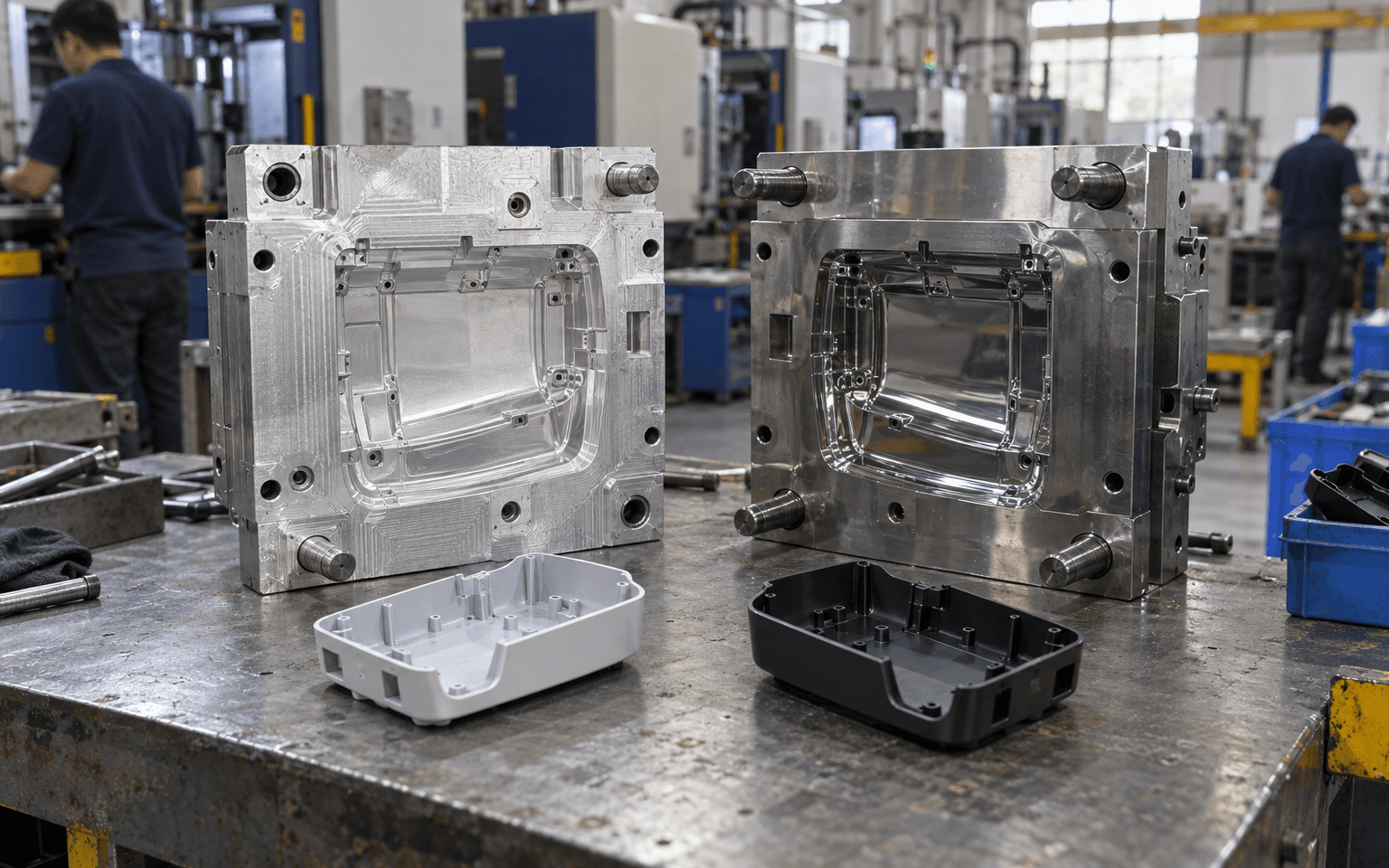
Compression molds are generally simpler and cheaper than injection molds, and they often make many parts per cycle. Most keypads are made this way.
LSR injection molding
LSR stands for liquid silicone rubber (液态硅胶, yè tài guī jiāo). It's a two-part liquid that's mixed and injected into a hot mold by a machine, a lot like plastic injection molding but in reverse (the mold is hot and the material is cool).
LSR is more automated, very consistent and clean, with less flash. It suits high volumes, precise small parts, medical and baby products, and overmolding silicone onto plastic. The molds and machines cost more. See Overmolding explained.
How a silicone keypad works
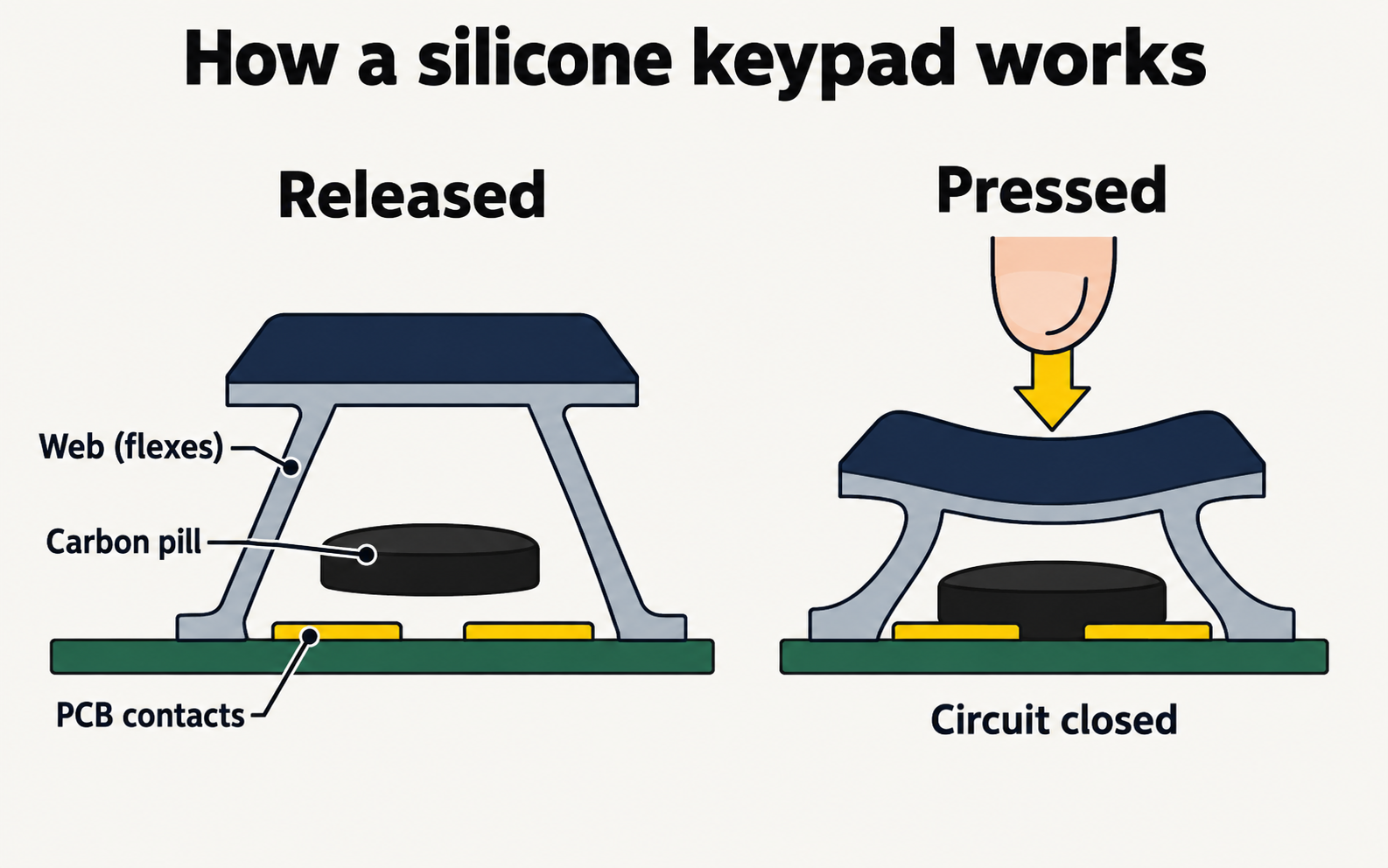
A keypad looks like a sheet of buttons, but each key is a small mechanism:
- The key top: the part your finger presses.
- The web (or skirt): a thin, cone-shaped silicone wall around each key. When you press, it buckles, giving the "click" feeling. When you let go, it springs back.
- The contact: under each key there's either a conductive carbon pill (a small black disc that conducts electricity) or a printed conductive ink. When the key is pressed, it touches two contacts on the circuit board beneath and completes the circuit.
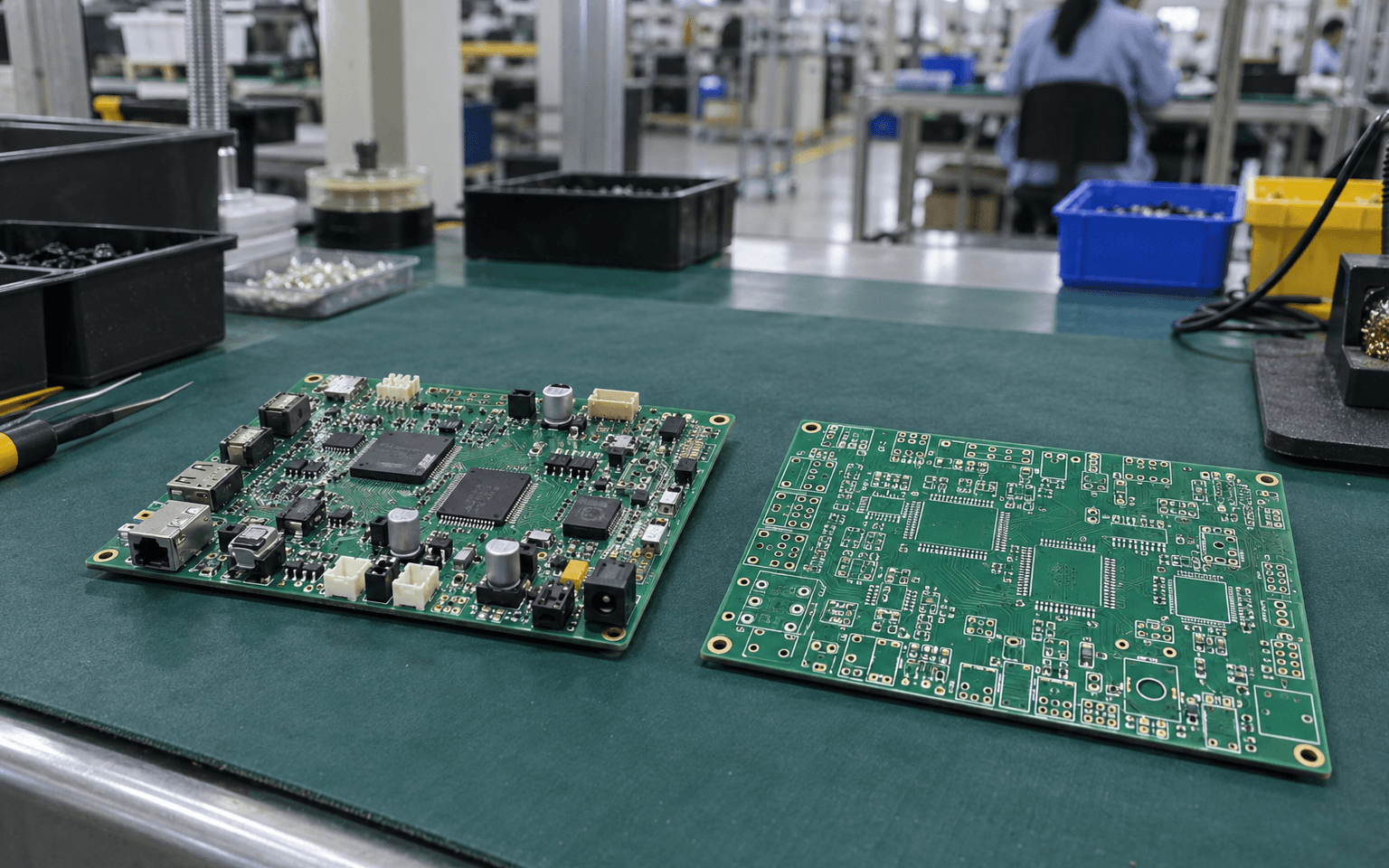
The PCB has matching contact patterns (often interlocking gold-plated "fingers"), so your electronics and keypad designs must match. Talk to your PCB assembler and keypad supplier together.
Key feel: force and snap ratio
Two numbers describe how a key feels:
- Actuation force: how hard you press before the key "gives", usually given in grams.
- Snap ratio: how sharply the force drops after the peak. A higher snap ratio gives a crisper, more "clicky" feel; a low one feels soft and mushy.
Both come from the shape and thickness of the web and the hardness of the silicone. Suppliers can tune them, but the best way to judge is to press real samples. Ask for samples of a few different forces early.
Hardness: Shore A
Silicone hardness is measured on the Shore A scale: lower numbers are softer, higher numbers are firmer. A soft pencil eraser and a car tyre are at different points on the same kind of scale. Keypads, seals and grips each use different hardness levels; your supplier will usually suggest a range for your part (confirm with them, and test samples).
Printing, colour and backlighting
- Colour: silicone is pigmented before molding. Multiple colours in one keypad are possible (for example, a red power key) but add cost.
- Printing: symbols are usually silk-screen or pad printed (丝印) and then coated for wear resistance.
- Backlit keys: the keypad is molded in translucent silicone, painted with an opaque colour, and then the symbol is laser etched (镭雕) through the paint so light from LEDs underneath shines through.
- Hard key tops: some keypads have plastic caps bonded on top for a harder feel and a crisper look.
Silicone seals and gaskets
Seals keep water, dust and air out, for example in an outdoor sensor or a device aiming for an IP rating (a standard code for how well a product resists dust and water). Common types:
- O-rings: round rings that sit in a groove. Often standard sizes, so check catalogues before making custom ones.
- Custom gaskets: flat or shaped seals that match your enclosure outline.
- Molded-in seals: silicone overmolded directly onto a plastic part with LSR.
A seal works by being squeezed (compressed) between two surfaces. Too little squeeze leaks; too much can crush the seal or crack the housing. Groove design matters as much as the seal itself. Ask your supplier or a design engineer to check the compression.
Cost and lead time
- Tooling: compression molds are usually far cheaper than plastic injection molds; LSR molds cost more. Multi-colour and complex keypads raise the price.
- Part price: depends on size, number of colours, printing steps, laser etching and any bonded parts.
- MOQ: many keypad factories have a minimum order quantity (起订量). Ask early.
For prototypes before tooling, silicone parts can be vacuum cast from rubber-like resins or cast in silicone. See What is vacuum casting?
How to order
- Send 3D files of the keypad or seal, plus the mating parts (PCB outline, housing).
- State hardness (Shore A), colours, printing, backlighting and target actuation force.
- Mention any required material grade (food-contact, skin-contact, flame retardant) and ask what documentation they can provide.
- Request samples at two or three forces or hardnesses before the tool is finalised.
- Approve a golden sample (金样) before mass production.
Key words
| English | Chinese | Pinyin |
|---|---|---|
| Silicone | 硅胶 | guī jiāo |
| Silicone keypad | 硅胶按键 | guī jiāo àn jiàn |
| Liquid silicone rubber (LSR) | 液态硅胶 | yè tài guī jiāo |
| Conductive pill | 导电粒 | dǎo diàn lì |
| Hardness | 硬度 | yìng dù |
Keep reading
- Overmolding explained
- What is injection molding?
- What is vacuum casting?
- How to specify colour and finish
Next steps
- Read the silicone & LSR hub
- Browse silicone molding suppliers in Shenzhen and Dongguan
- See the Tooling stage of the Path
- Not sure where to start? Get an intro
Updated 29 September 2026