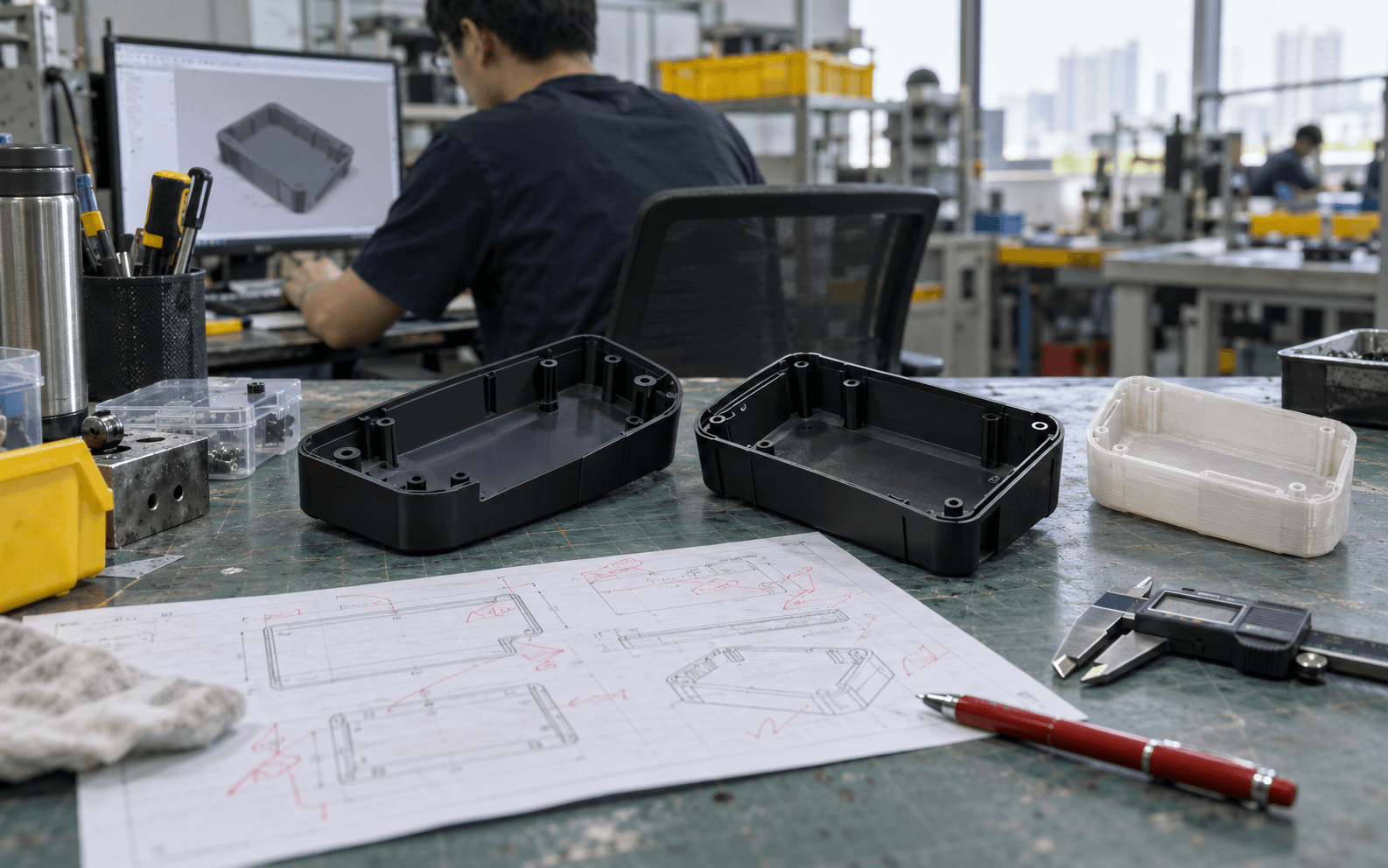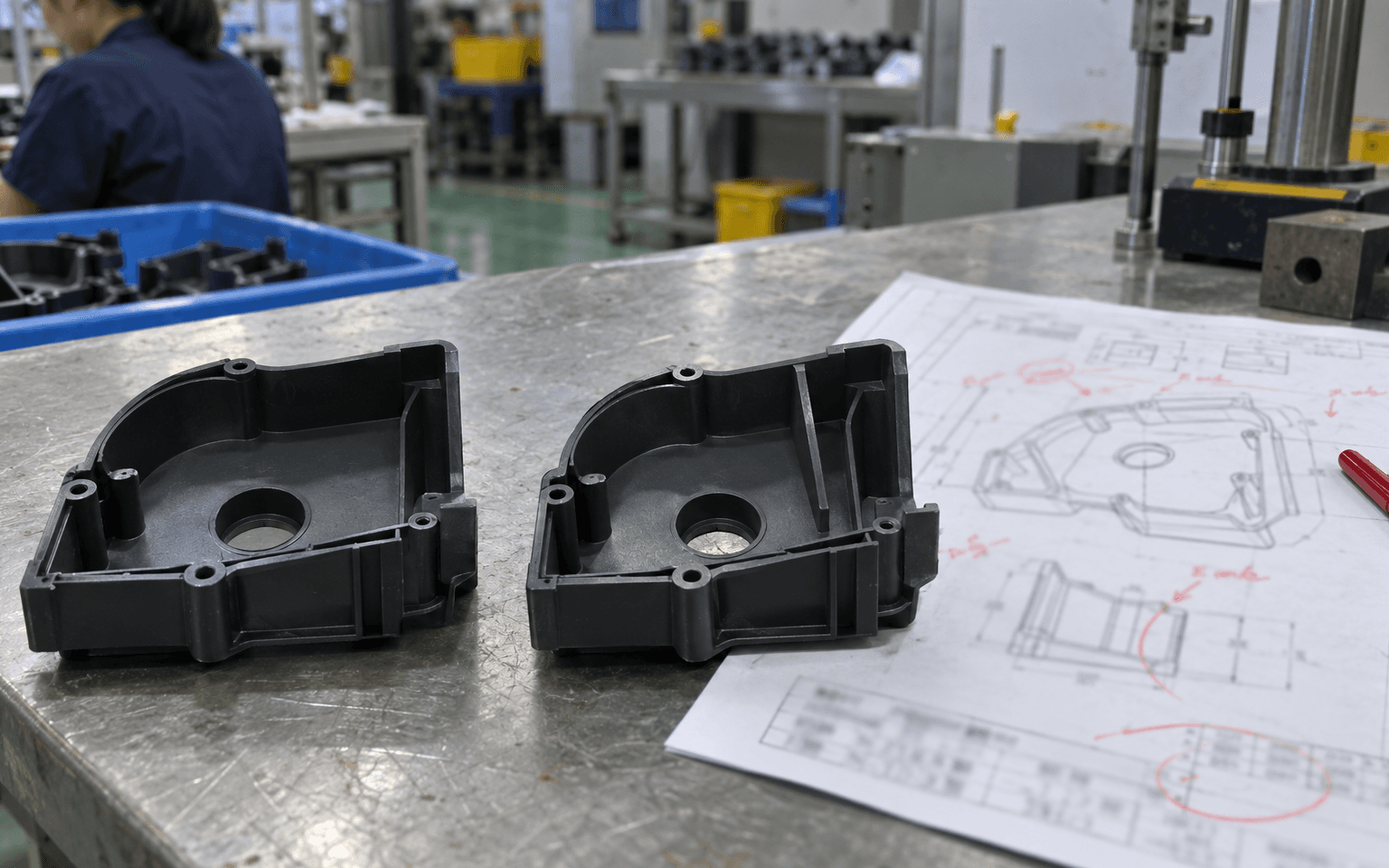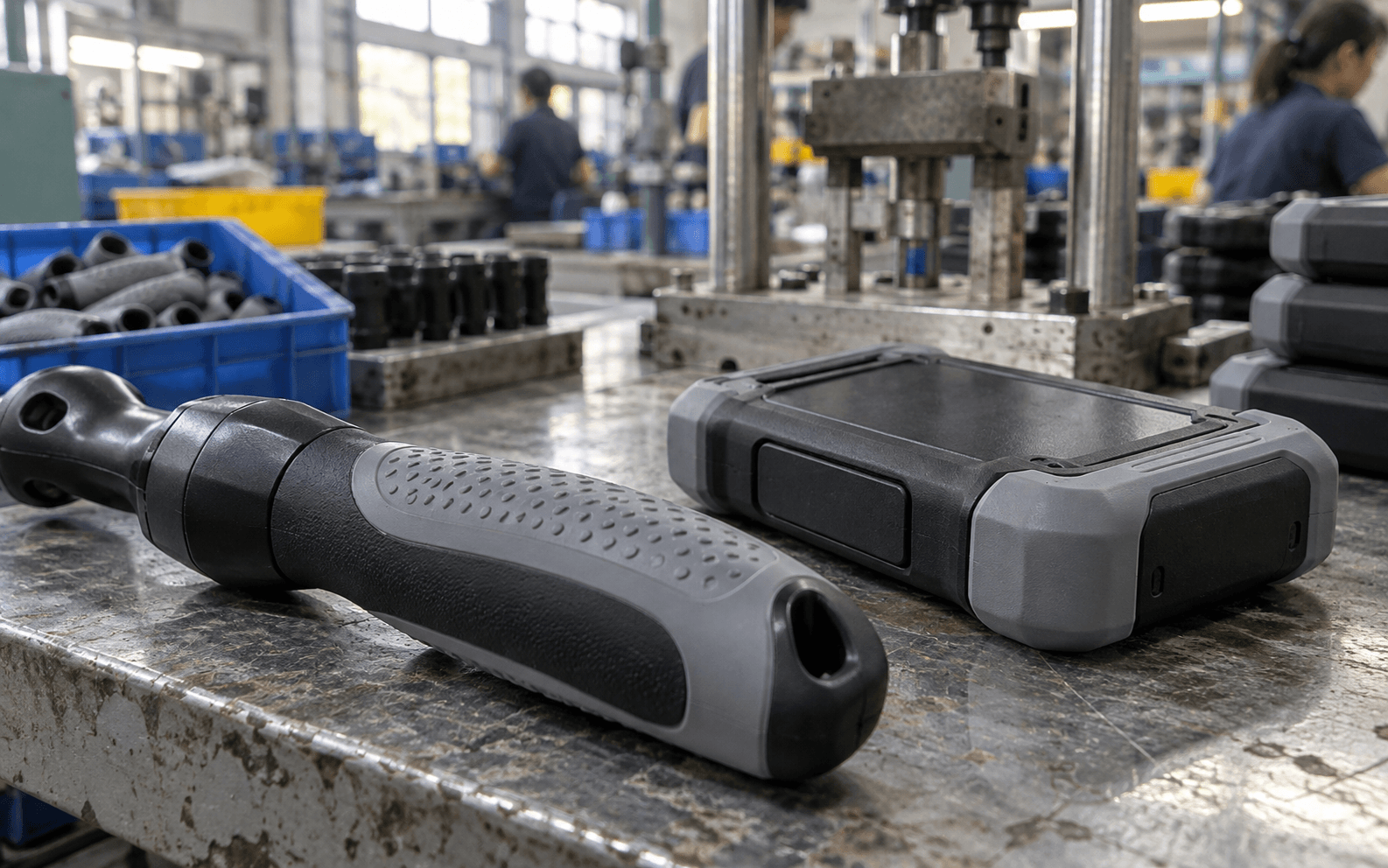
Ever noticed a toothbrush with a rubbery grip fused onto a hard handle, or a power tool with soft bumpers? Those aren't glued on. They're made by molding one material directly onto another.
Overmolding
Overmolding means molding a second material over (or around) a first part. The most common combination is a soft, rubbery plastic (TPE or TPU) over a hard plastic base (like PC or ABS).
It's used for:
- soft-touch grips and handles
- waterproof seals and gaskets molded in place
- bumpers that protect a device when dropped
- two-colour designs
How it's done: the hard part is molded first, then placed into (or moved to) a second mold, where the soft material is injected over it.
Two-shot (2K) molding
Two-shot molding does both materials in one machine with two injection units. The mold rotates or moves between shots, so the part never leaves the machine. It's faster and more consistent at high volume, but the machine and mold cost more.
Insert molding
Insert molding means placing a pre-made part, often metal, into the mold before plastic is injected, so the plastic forms around it. Examples:
- brass threaded inserts molded into plastic for strong screw holes
- metal pins or contacts in a connector
- magnets held inside a plastic case
Things to get right
- Material pairing: not every soft plastic sticks to every hard plastic. Ask your mold maker which grades bond well, and ask for an adhesion test.
- Mechanical locking: holes or grooves in the base part help the overmold grip, even when the chemical bond is weak.
- Cost: overmolding usually means an extra mold (or a more complex one) and an extra step, so it costs more than a single-material part.
Is it right for your product?
If you need a sealed, rubbery or two-material part at volume, overmolding is usually cleaner and more durable than gluing. At prototype stage, urethane casting can often imitate overmolded parts cheaply. Ask a prototype shop.
Next steps
Updated 29 September 2026