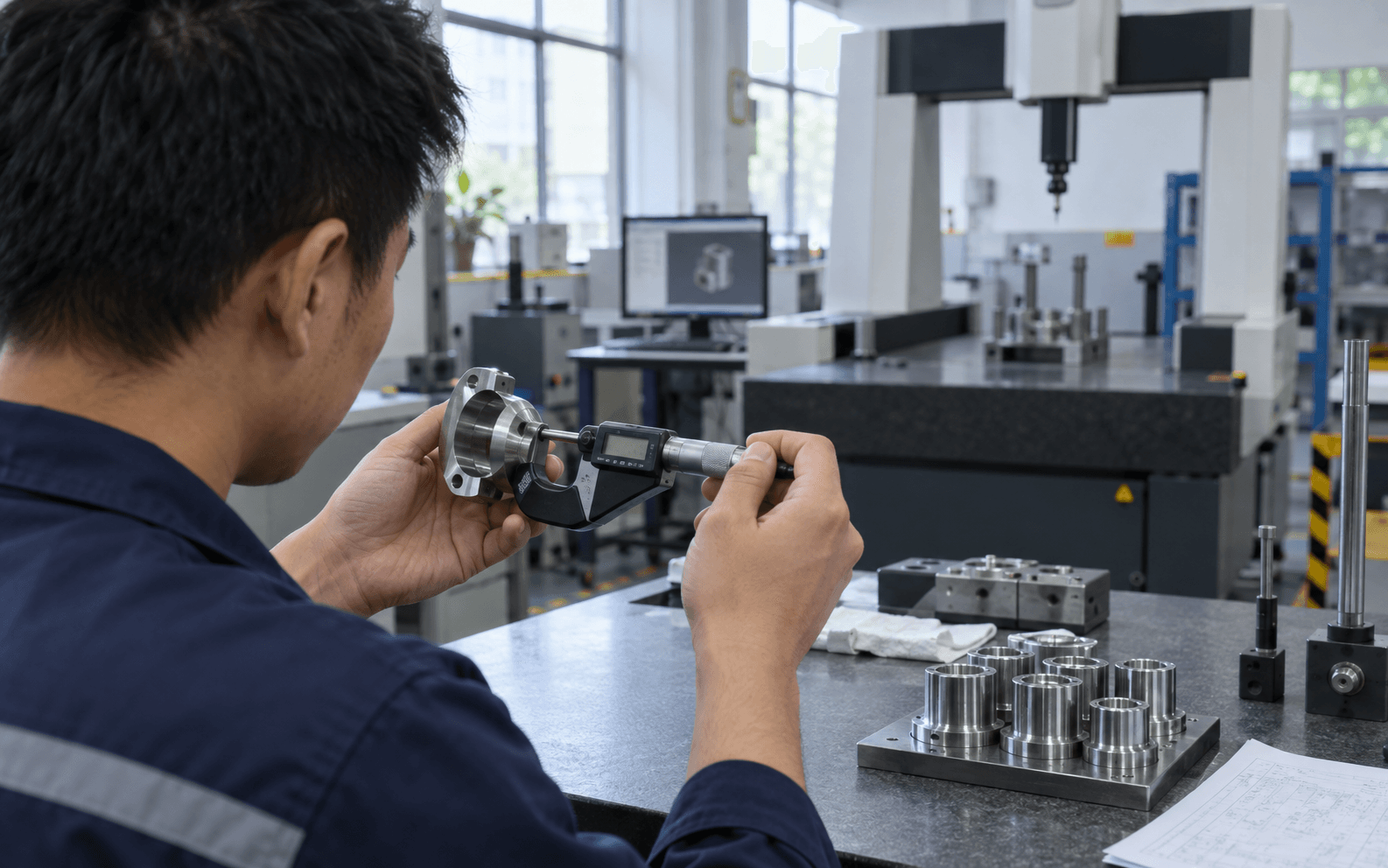
No machine makes a part exactly the size on your drawing. There's always a tiny difference. A tolerance tells the factory how big that difference is allowed to be. Getting tolerances right is one of the easiest ways to save money and avoid parts that don't fit.
Reading a tolerance
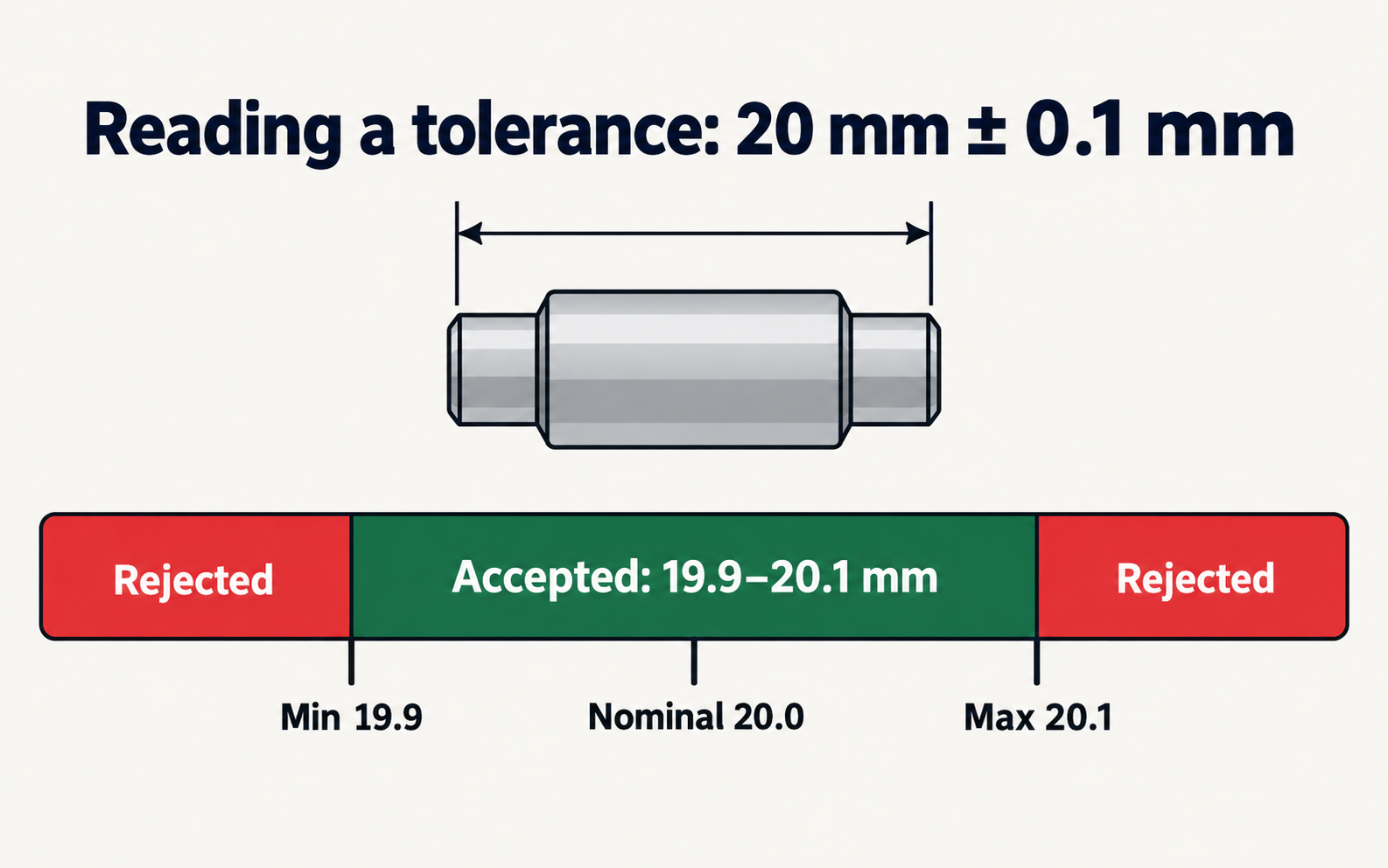
- 20 mm ± 0.1 mm means anything from 19.9 to 20.1 mm is acceptable.
- 8 mm +0.02 / −0 means the size can be up to 0.02 mm bigger but never smaller. That's useful for a hole a pin must fit into.
For scale: a human hair is roughly 0.05–0.1 mm thick.
Why tighter costs more
To hold a very tight tolerance, the shop must cut more slowly, use more careful setups, measure more often (sometimes on a CMM, a very precise measuring machine), and may scrap parts that come out slightly wrong. All of that is time and money.
A rough feel for what's typical (confirm with your shop):
- ± 0.1 mm: easy for most CNC shops; a common default
- ± 0.05 mm: normal precision work
- ± 0.01–0.02 mm: high precision; costs noticeably more and needs good inspection
Which features need tight tolerances?
Only the ones where two parts must fit together precisely:
- A hole a bearing or pin presses into
- Two parts that must slide or snap together
- Mounting holes that must line up with another part
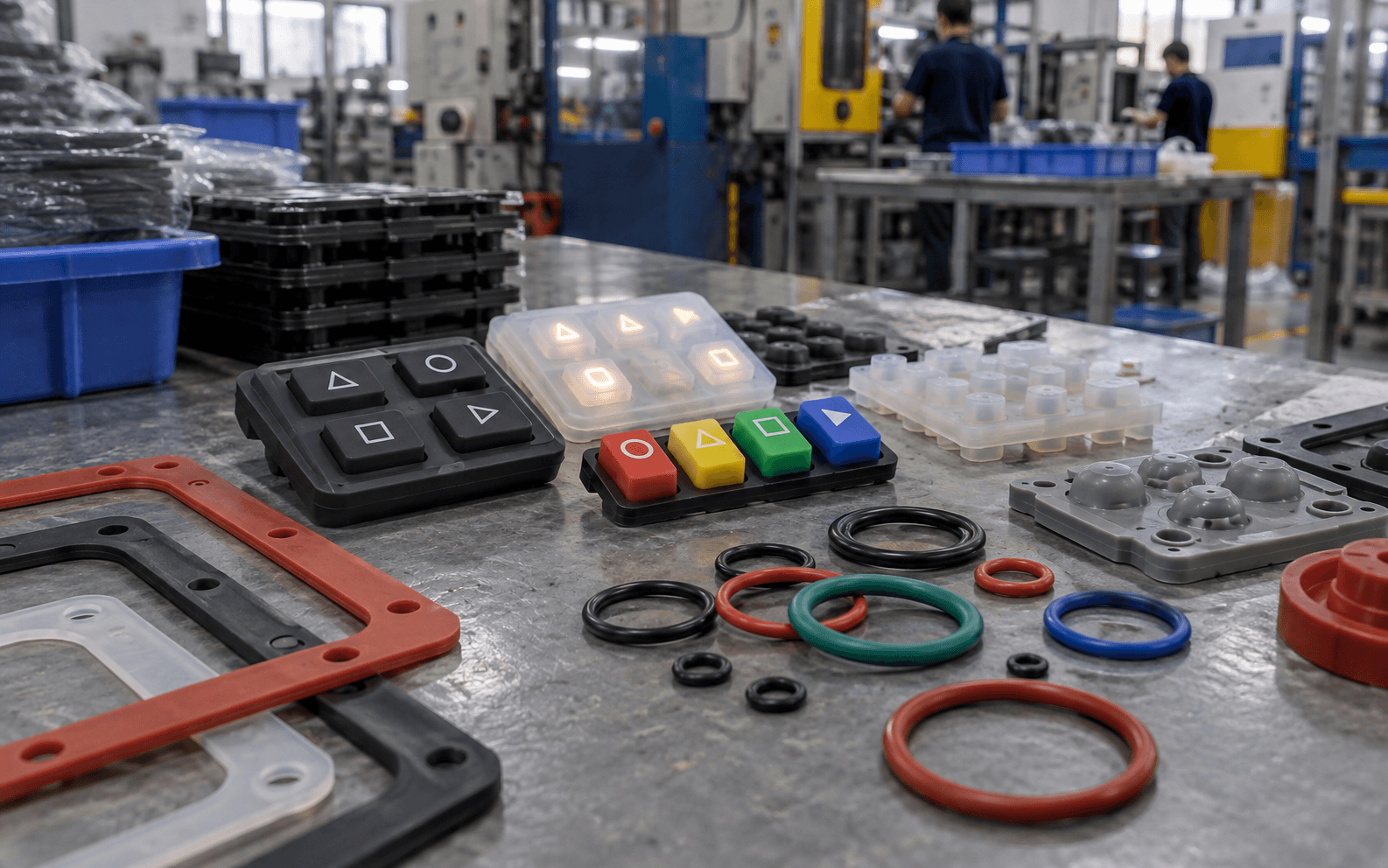
- Surfaces that seal (a gasket or O-ring)
Everything else, like outer edges, cosmetic curves and pockets that just remove weight, can use a general tolerance.
General tolerance: the shortcut
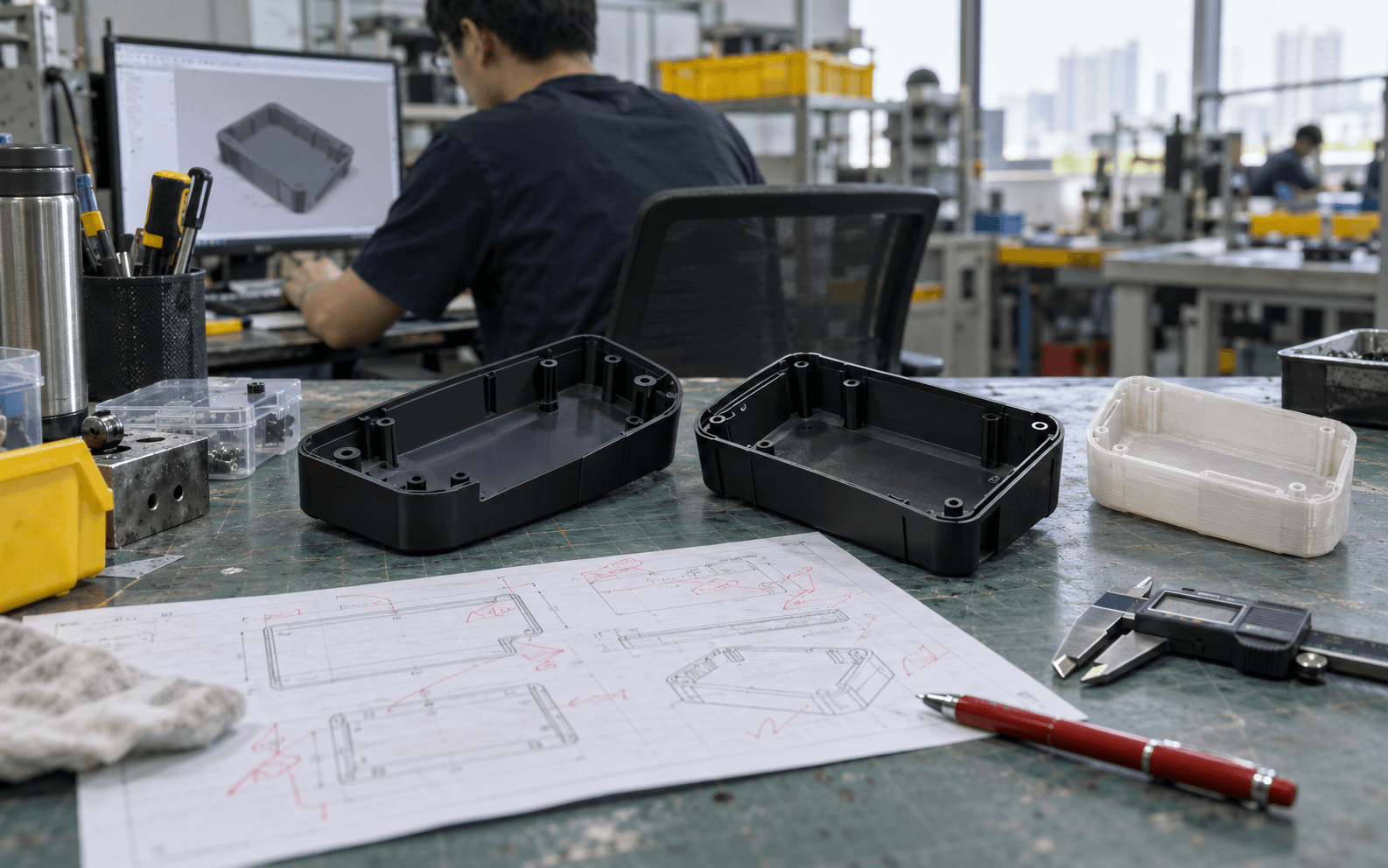
Put a note on your drawing like "Unless otherwise stated: ±0.1 mm", then mark only the critical features with tighter numbers. Many drawings refer to a standard such as ISO 2768-m (a published table of "medium" general tolerances) instead of writing a number.
Tolerances are different for other processes
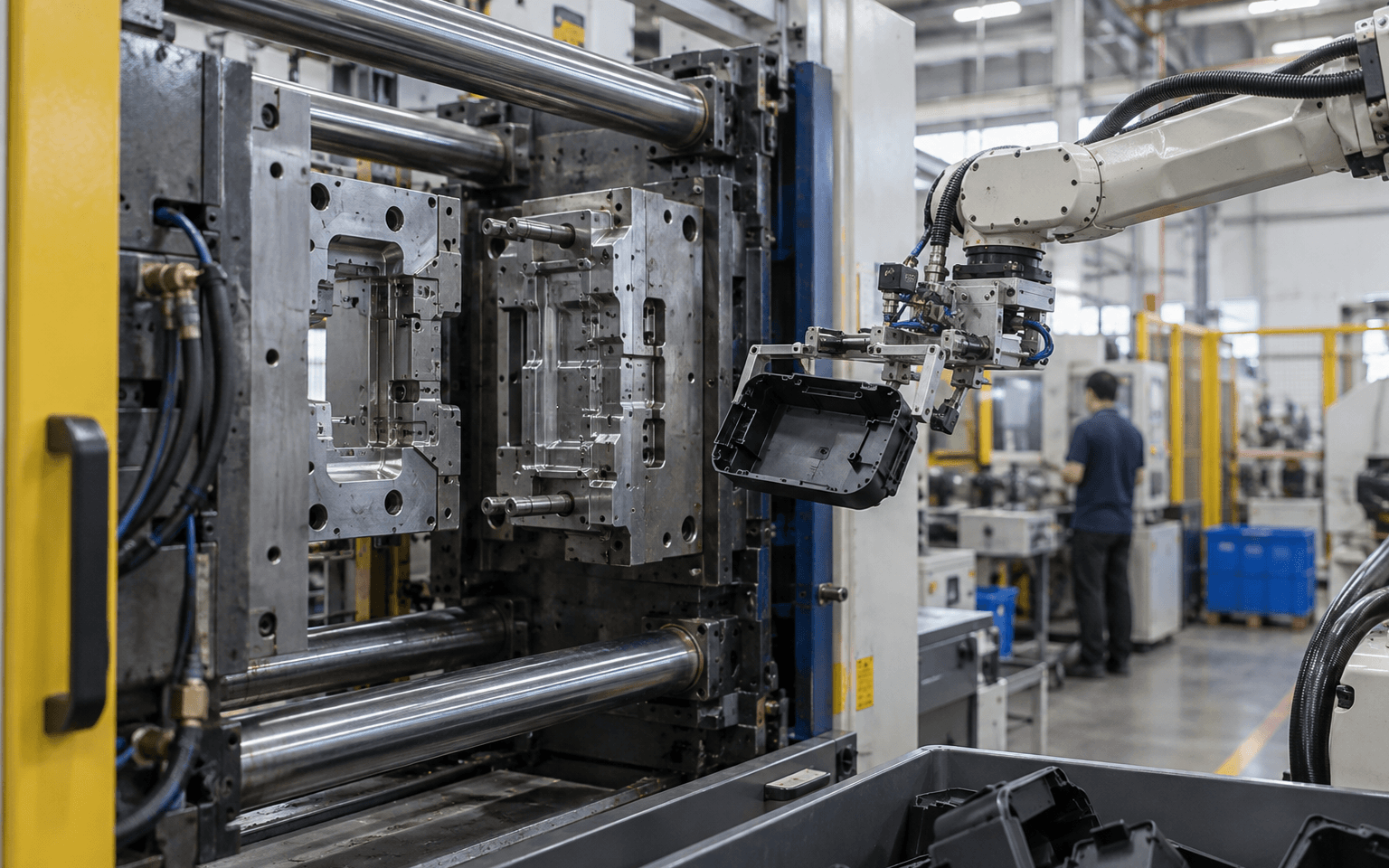
- Injection-molded plastic shrinks as it cools, so typical tolerances are looser than CNC.
- Sheet metal bends vary a little more than machined features.
- 3D printing varies by technology; SLA is more precise than FDM.
Design each part for the process that will actually make it in production, not just the prototype.
Next steps
Updated 29 September 2026