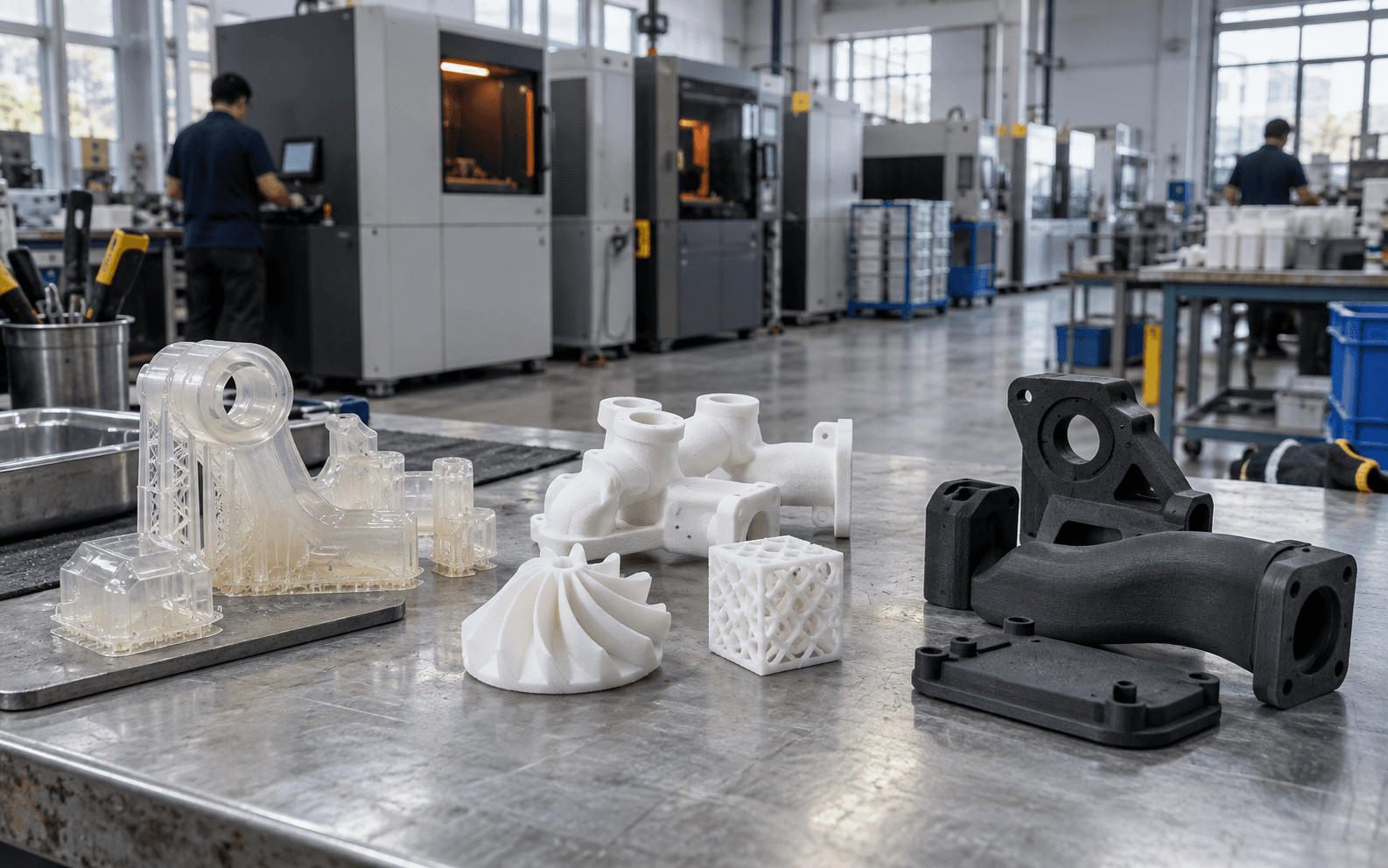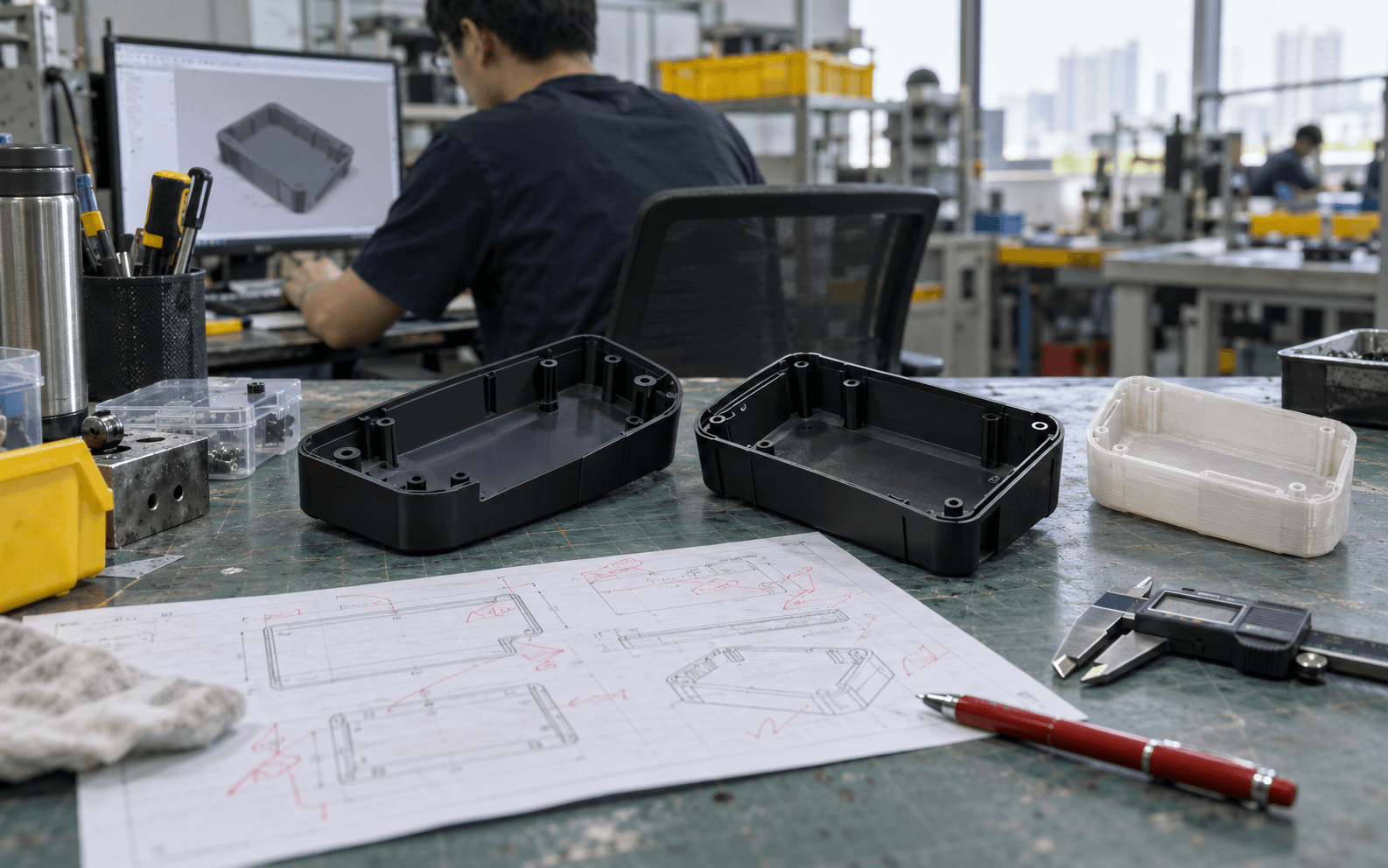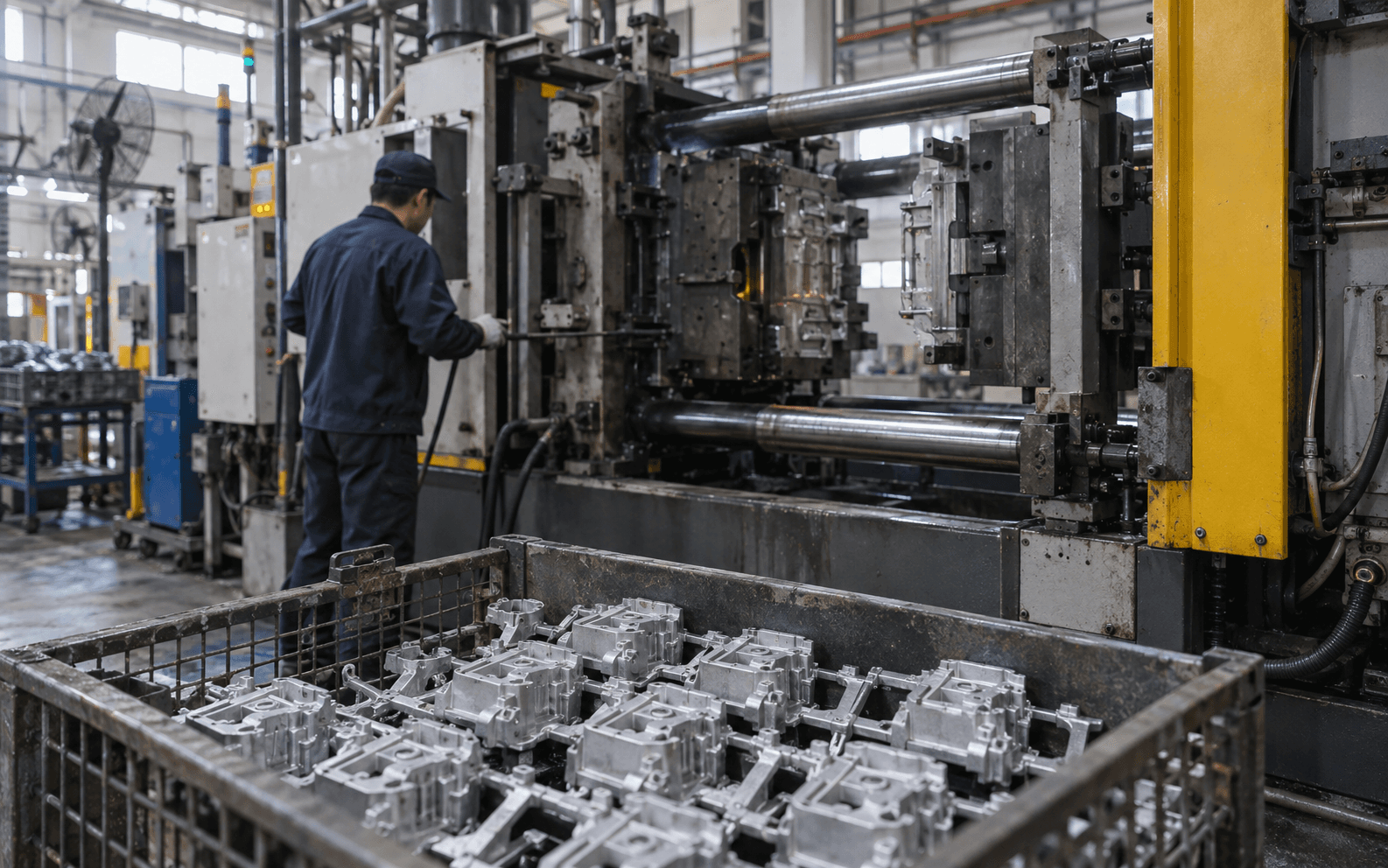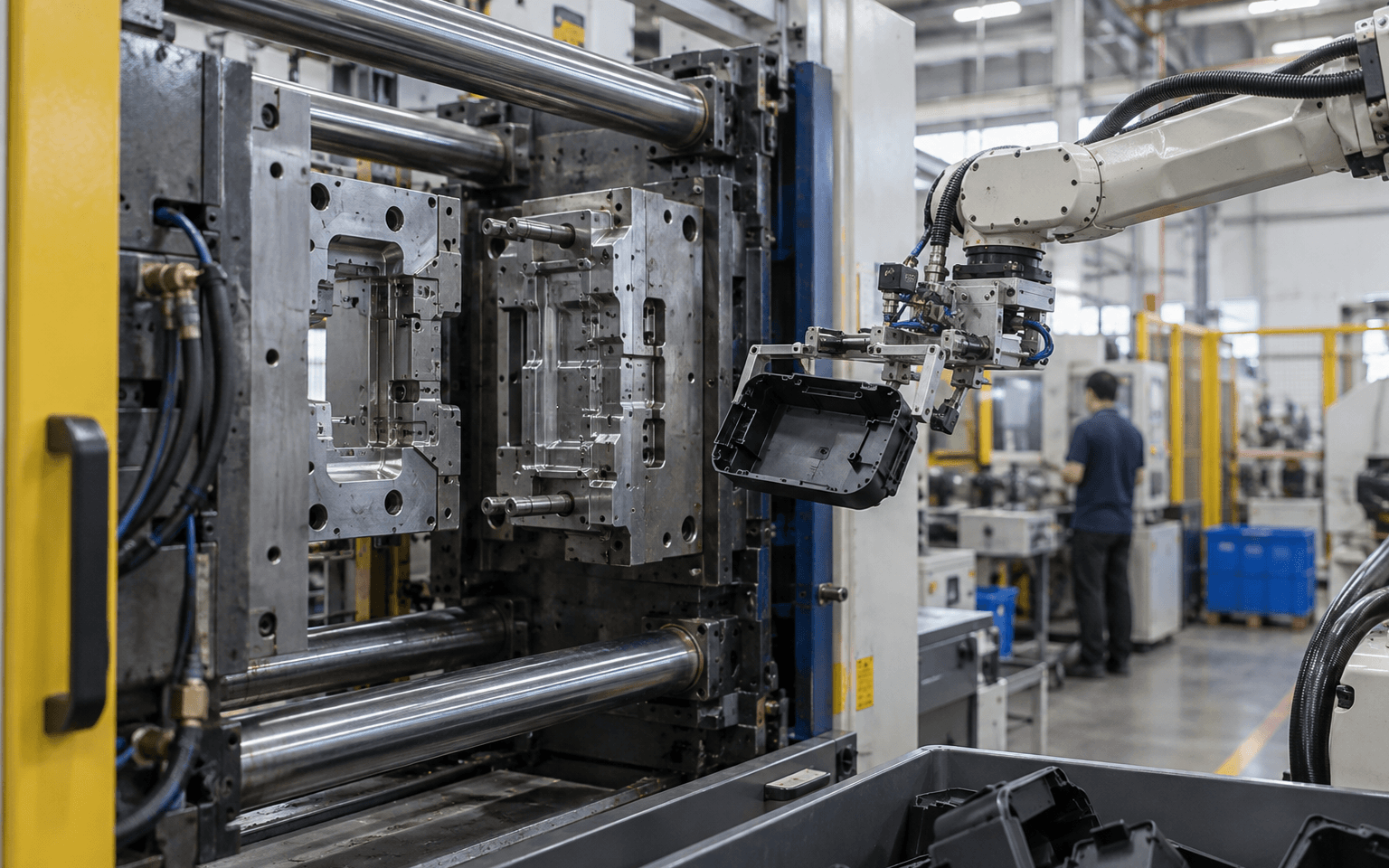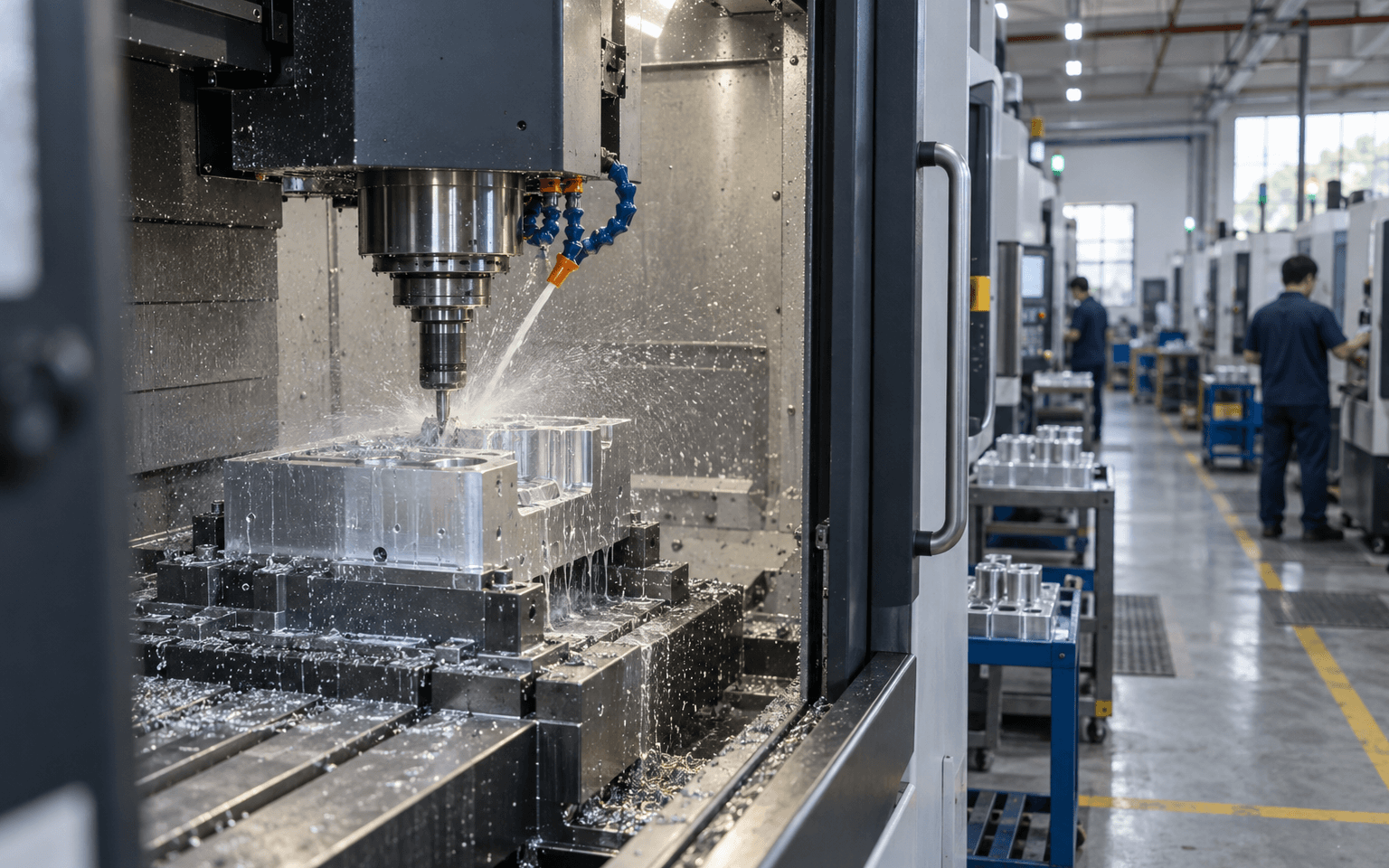
If you've ever held an aluminum laptop case, a metal camera part or a precise plastic bracket, there's a good chance it was CNC machined. It's one of the most common ways to make custom parts, both for prototypes and for real products.
This guide explains CNC machining from scratch: what it is, how it works, when to use it, and how to get parts made.
What CNC stands for
CNC stands for Computer Numerical Control. It means a machine tool (a drill, a mill, a lathe) is moved by a computer following a program, instead of by a person's hands.
In Chinese you'll see it written as CNC加工 or 数控加工 (shù kòng jiā gōng).
How it works, in one picture
Imagine a sculptor starting with a block of stone and chipping away everything that isn't the statue. CNC machining is the same idea, but:
- the block is metal or plastic (called the stock or blank),
- the chisel is a fast-spinning cutting tool, and
- the sculptor is a computer that never gets tired and can repeat the same part thousands of times.
Because it removes material, CNC machining is called a subtractive process. 3D printing, which adds material layer by layer, is additive.
The steps from your file to a finished part
- You send a 3D file. Usually a STEP file (a universal 3D CAD format), plus a 2D drawing if some dimensions matter a lot.
- The shop programs the machine. An engineer uses CAM software (computer-aided manufacturing) to plan the cutting paths: which tools to use, in what order, and how fast.
- The stock is clamped into the machine. This is called a setup.
- The machine cuts the part. Coolant (the milky spray you'll see in videos) keeps the tool and part cool.
- The part may be flipped and clamped again to cut the other side. That's a second setup.
- Finishing. Burrs (sharp edges) are removed, and the part may be anodized, painted or bead-blasted.
- Inspection. Critical dimensions are measured, sometimes on a CMM (a very precise measuring machine).
The main types of CNC machines
- CNC mills (milling machines): the part stays still and a spinning tool moves around it. Most enclosures, brackets and plates are milled.
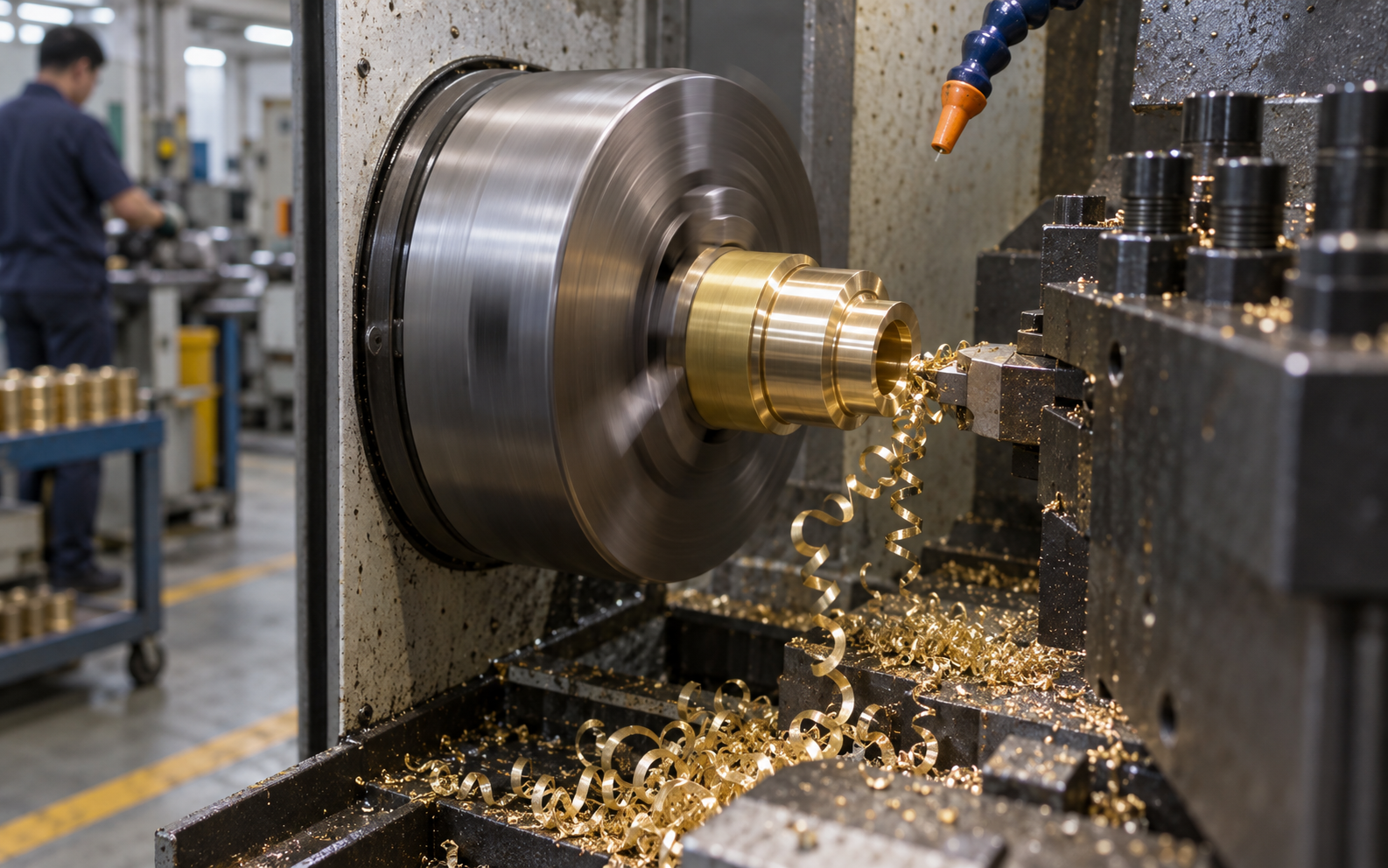
- CNC lathes (turning): the part spins and a stationary tool cuts it. Best for round parts like shafts, knobs and pins.
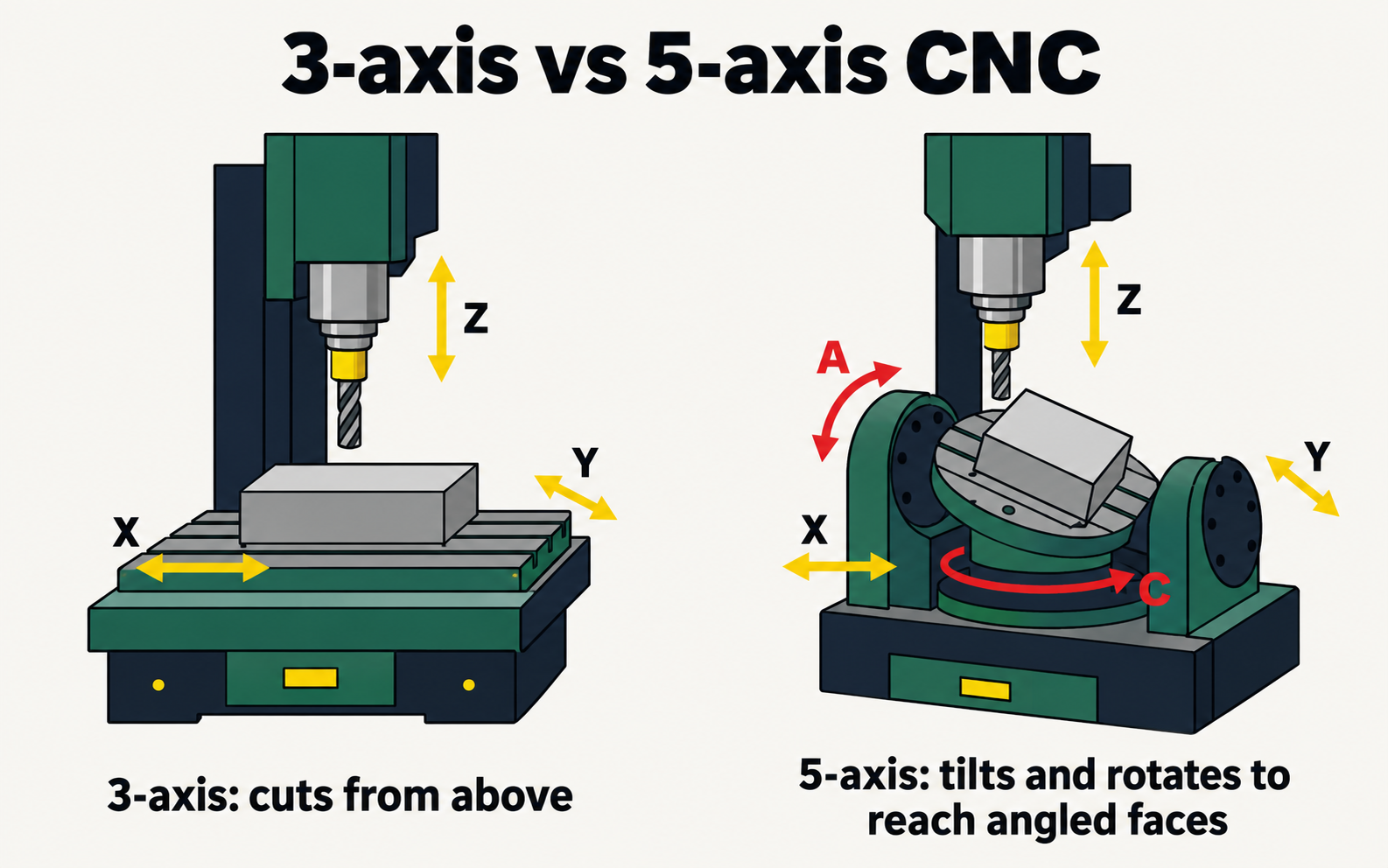
- 3-axis vs 5-axis: a 3-axis mill moves the tool left–right, forward–back and up–down. A 5-axis machine can also tilt and rotate the part, so it can reach complex shapes in one setup. More axes means more capability, and usually a higher price.
What CNC machining is great for
- Prototypes that must be strong or precise. Machined parts are made from real engineering materials, not printing resin.
- Metal parts in small quantities, from 1 to a few hundred.
- Tight tolerances: very precise dimensions. (See the "Tolerances" section below.)
- A premium look. Many high-end products use machined and anodized aluminum on purpose.
What it's not great for
- Very large quantities of simple plastic parts. Once you need thousands, injection molding is usually far cheaper per part.
- Shapes the tool can't reach, like closed internal channels. Some of those need 3D printing or casting.
- Very thin, flexible or soft parts. They're hard to hold still while cutting.
Common materials
- Aluminum 6061: the default choice. Light, strong, machines easily, anodizes well.
- Aluminum 7075: stronger and more expensive.
- Stainless steel (304, 316): tough and corrosion-resistant, but slower (so pricier) to machine.
- Brass: machines beautifully; good for small precise parts.
- Plastics: POM (also called Delrin; slippery and stable), ABS, PC, nylon, PEEK (for high temperatures).
What are tolerances, and why do they matter?
A tolerance is how far a real dimension is allowed to differ from the drawing. "20 mm ± 0.05 mm" means anything from 19.95 to 20.05 mm is acceptable.
Many Shenzhen shops work to around ±0.05–0.1 mm by default and can go tighter on request. Tighter tolerances cost more, because they need slower cutting and more measuring. Only put tight tolerances on the features that really need them, like a hole a bearing must press into.
How much does CNC machining cost?
The price mostly comes from machine time, the number of setups, the material, and finishing. A single small aluminum part might be tens of dollars; a complex 5-axis part with anodizing can be hundreds. Ordering 10 or 50 of the same part lowers the price per part, because programming and setup are shared.
Getting CNC parts made in Shenzhen
Shenzhen and nearby Dongguan have a huge concentration of CNC shops, from small workshops to factories with a hundred machines. Many work in English. A typical first order looks like this:
- Send your STEP file and drawing to 3–5 shops (in the directory, filter by CNC machining).
- Compare quotes: price, lead time, material and finish should all be written down.
- Ask for a DFM review, where the shop tells you what would make the part easier or cheaper to make.
- Order a small first batch before a larger one.
Lead times of 3–7 days for simple prototypes are common.
Key words
| English | Chinese | Pinyin |
|---|---|---|
| CNC machining | 数控加工 / CNC加工 | shù kòng jiā gōng |
| Made to your drawing | 来图加工 | lái tú jiā gōng |
| 5-axis | 五轴 | wǔ zhóu |
| Tolerance | 公差 | gōng chā |
| Prototype | 手板 | shǒu bǎn |
Keep reading
- How much does CNC machining cost?
- How to prepare files for a CNC quote
- Tolerances explained for first-timers
- Choosing a material for CNC parts
- 3-axis vs 5-axis CNC
Next steps
- Browse CNC machining shops in Shenzhen and Dongguan
- Read the CNC machining hub for design tips and typical costs
- Compare it with 3D printing and sheet metal
- Not sure where to start? Get an intro
Updated 29 September 2026