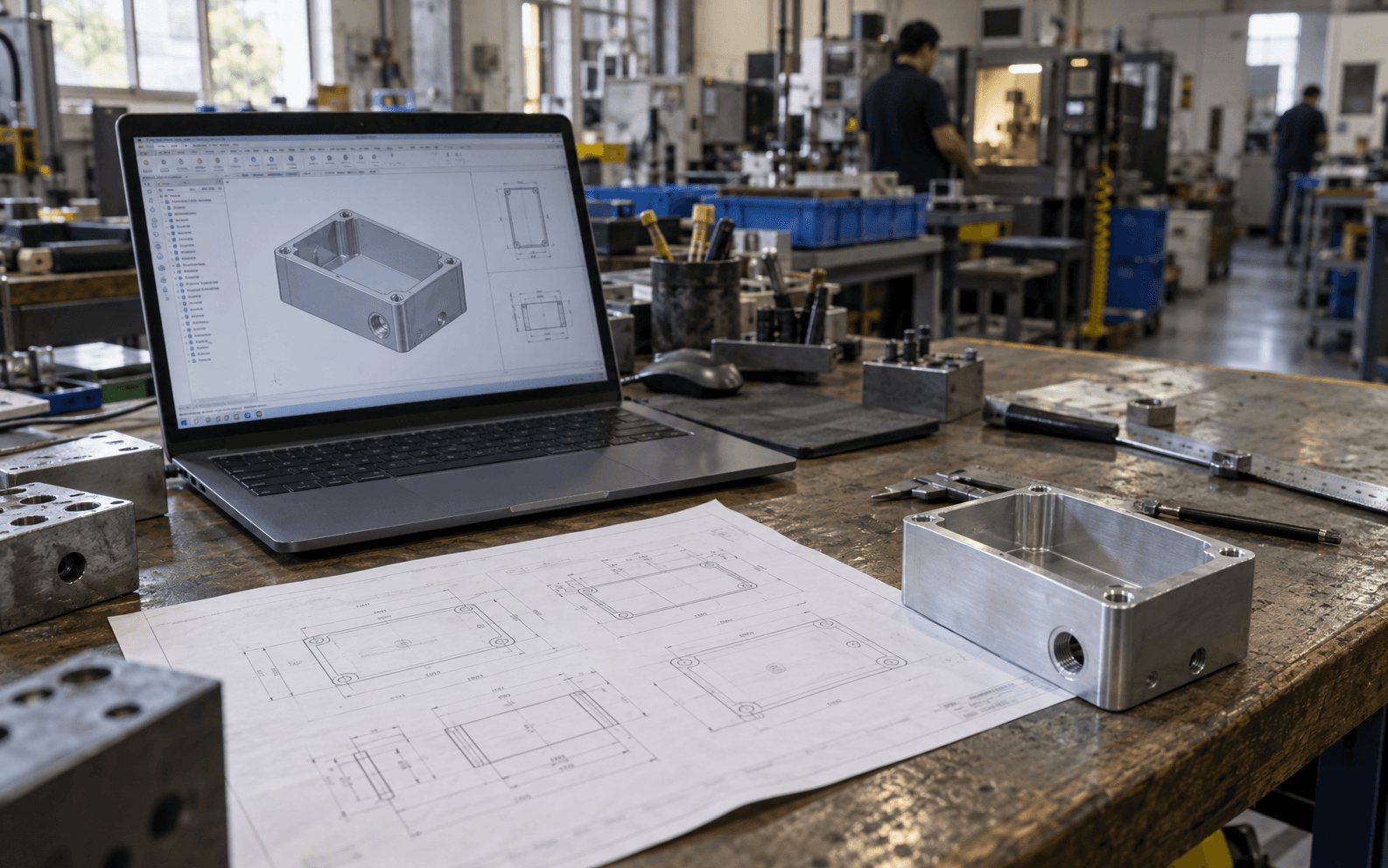
A good quote request gets you a fast, accurate price and fewer surprises. A vague one gets you a slow reply, a list of questions, or a quote for the wrong thing. Here's what to send.
1. A 3D file in STEP format
A STEP file (ending in .step or .stp) is a universal 3D format that every CNC shop can open, whatever CAD software you used. Export one file per part, in millimetres, and name them clearly (e.g. enclosure-top-v3.step).
Avoid sending only an STL file (the format used for 3D printing). STL describes the surface as tiny triangles, which makes accurate machining hard.
2. A 2D drawing (for anything that matters)
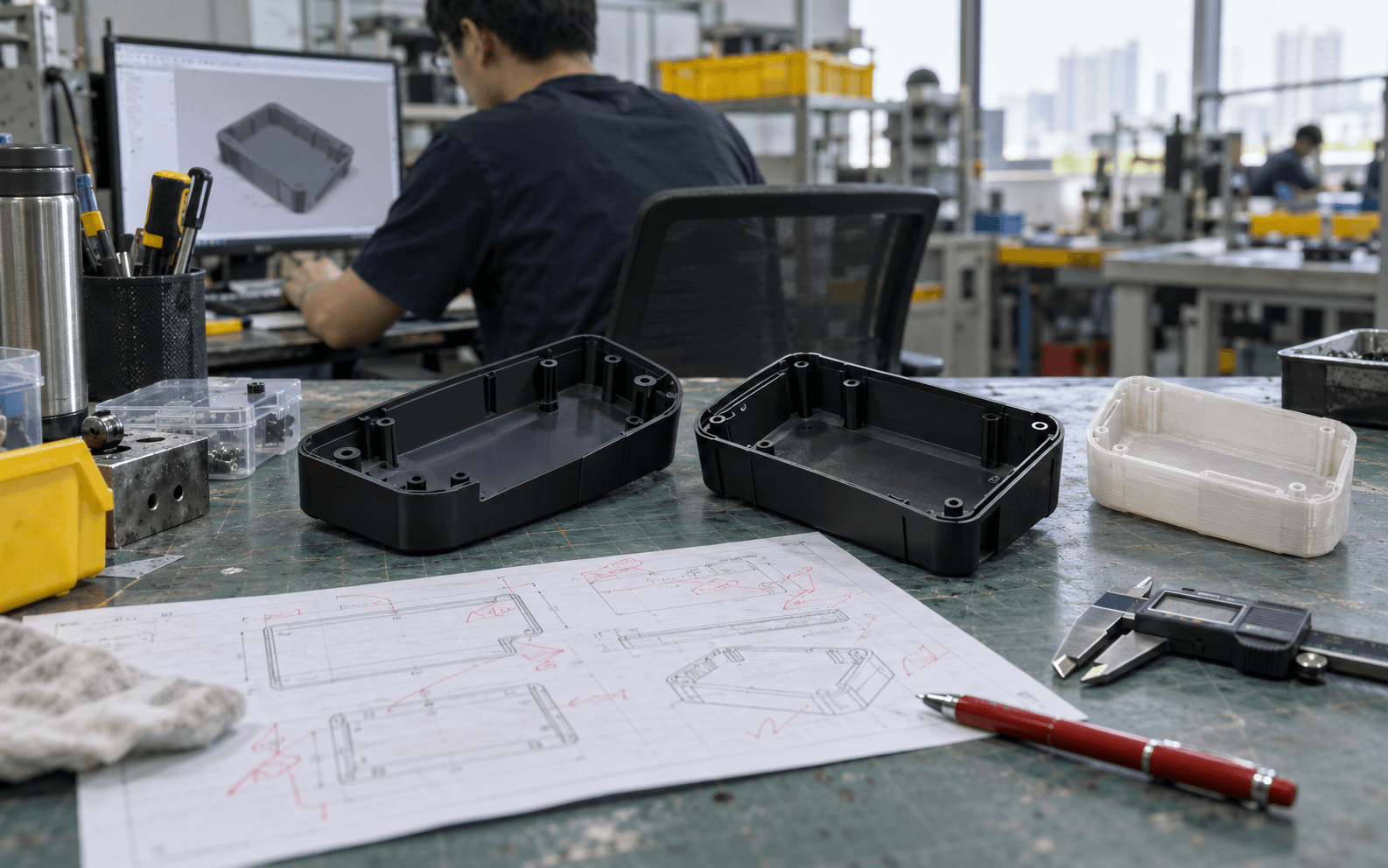
A 2D drawing is a flat technical drawing (usually a PDF) that shows the dimensions and requirements the 3D file can't express:
- Critical dimensions and tolerances. For example, "this hole: 8.00 mm +0.02/−0" because a bearing presses into it. (See Tolerances explained.)
- Threads. Which holes are threaded, and the thread size (e.g. M3).
- Surface finish. Which faces are cosmetic, and the finish (e.g. "black anodize, bead blast").
- General tolerance. A note like "unless stated, ±0.1 mm" covers everything else.
For a simple prototype with no critical fits, the 3D file alone is often enough. Say so in your message.
3. The details in your message
Write these in the email or quote form:
- Material and grade, e.g. aluminum 6061-T6, stainless 304, POM. If you're unsure, describe what the part must do and ask for a recommendation.
- Quantity, or several quantities to see price breaks (e.g. 5 / 20 / 100).
- Finish: anodize colour, paint colour (Pantone or RAL code), texture, logo printing.
- Deadline and delivery address (the country matters for shipping and duties).
- Inspection: do you need a measurement report?
A ready-to-copy checklist
- STEP file per part, in mm
- PDF drawing with critical dimensions, tolerances and threads
- Material and grade
- Quantities
- Finish and colour
- Deadline and delivery country
- Inspection report needed? (yes / no)
Protecting your design
Most prototype shops handle many customers' files every day. If your design is sensitive, ask the shop to sign an NNN agreement (a Chinese-language non-disclosure, non-use, non-circumvention contract) before sending full files. Or send only the parts they need to quote.
Next steps
Updated 29 September 2026