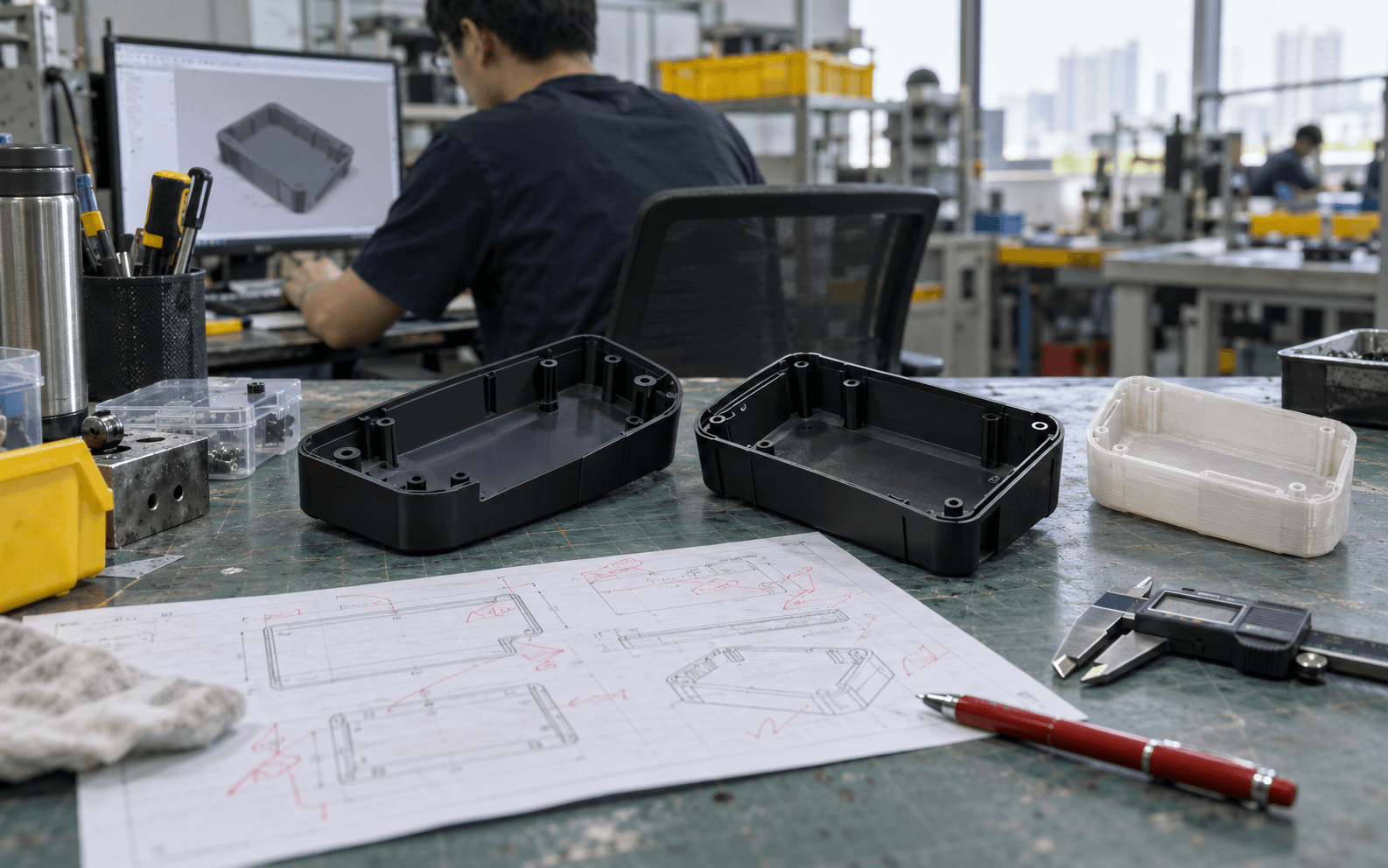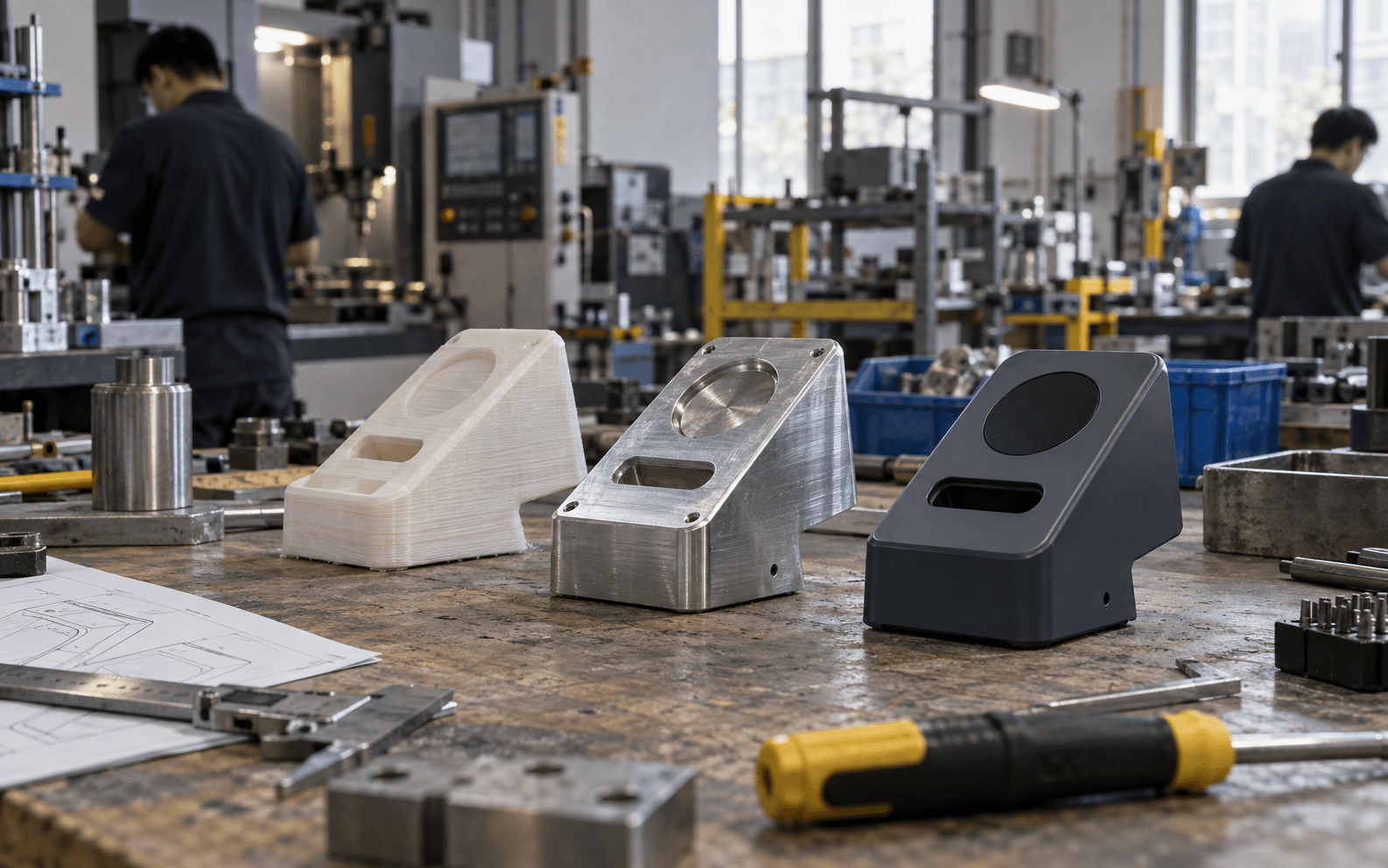
A prototype is an early physical version of your product. Rapid prototyping means making those versions quickly, in days rather than months, using methods that don't need expensive production tooling.
It's how you find out whether your design actually fits, feels right and works, while changes are still cheap.
Why prototype at all?
A screen can't tell you:
- whether parts really fit together,
- how the product feels in your hand,
- whether the buttons click nicely,
- whether it's too big, too heavy or too fragile.
Finding these problems at prototype stage costs a few hundred dollars. Finding them after a steel mold is made can cost thousands, plus weeks of delay.
The main rapid prototyping methods
3D printing: builds parts layer by layer straight from your 3D file. It's the fastest and cheapest for early shapes. Industrial technologies like SLA (liquid resin cured by light) give fine detail; SLS and MJF (nylon powder) give tough parts. → 3D printing hub
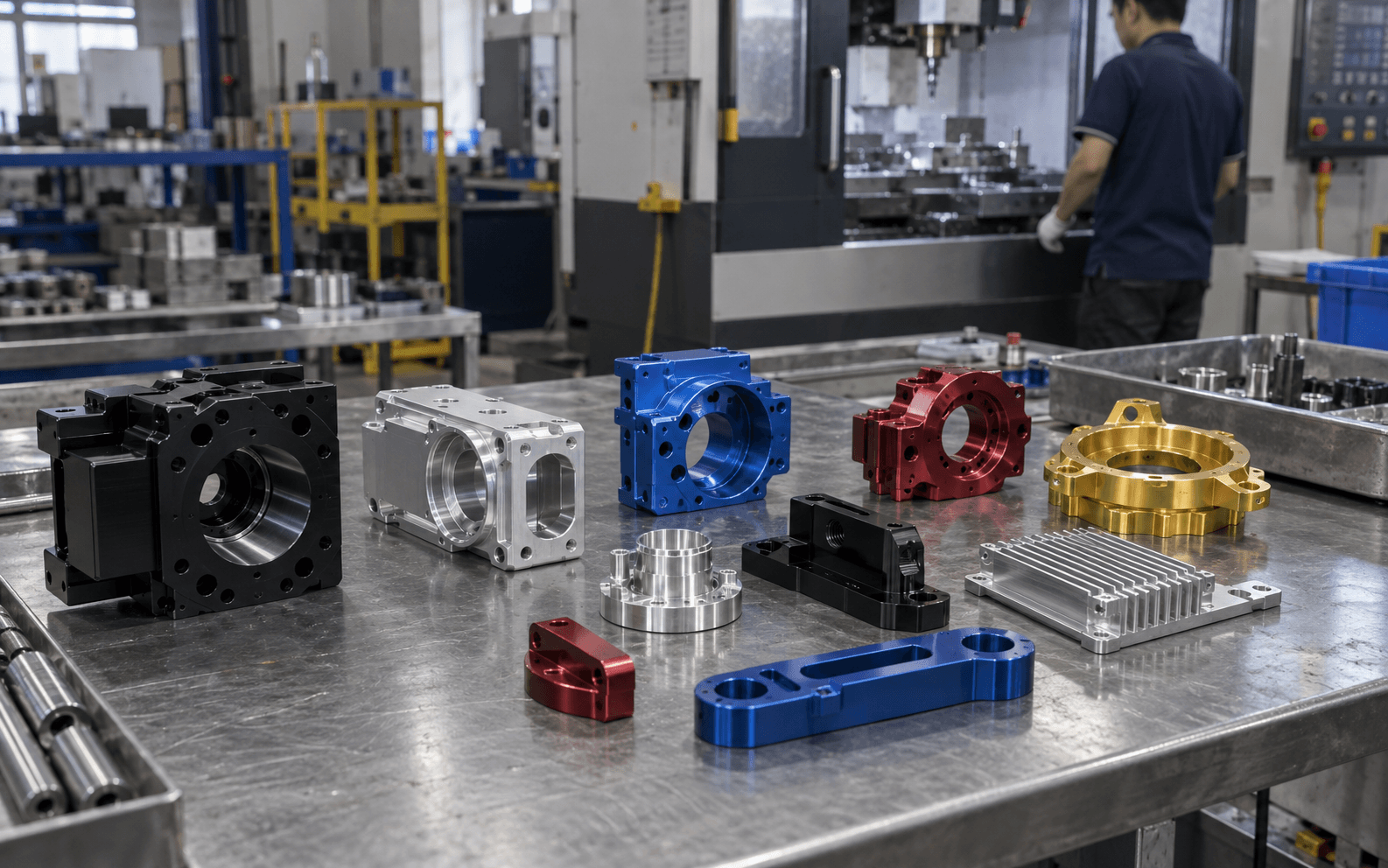
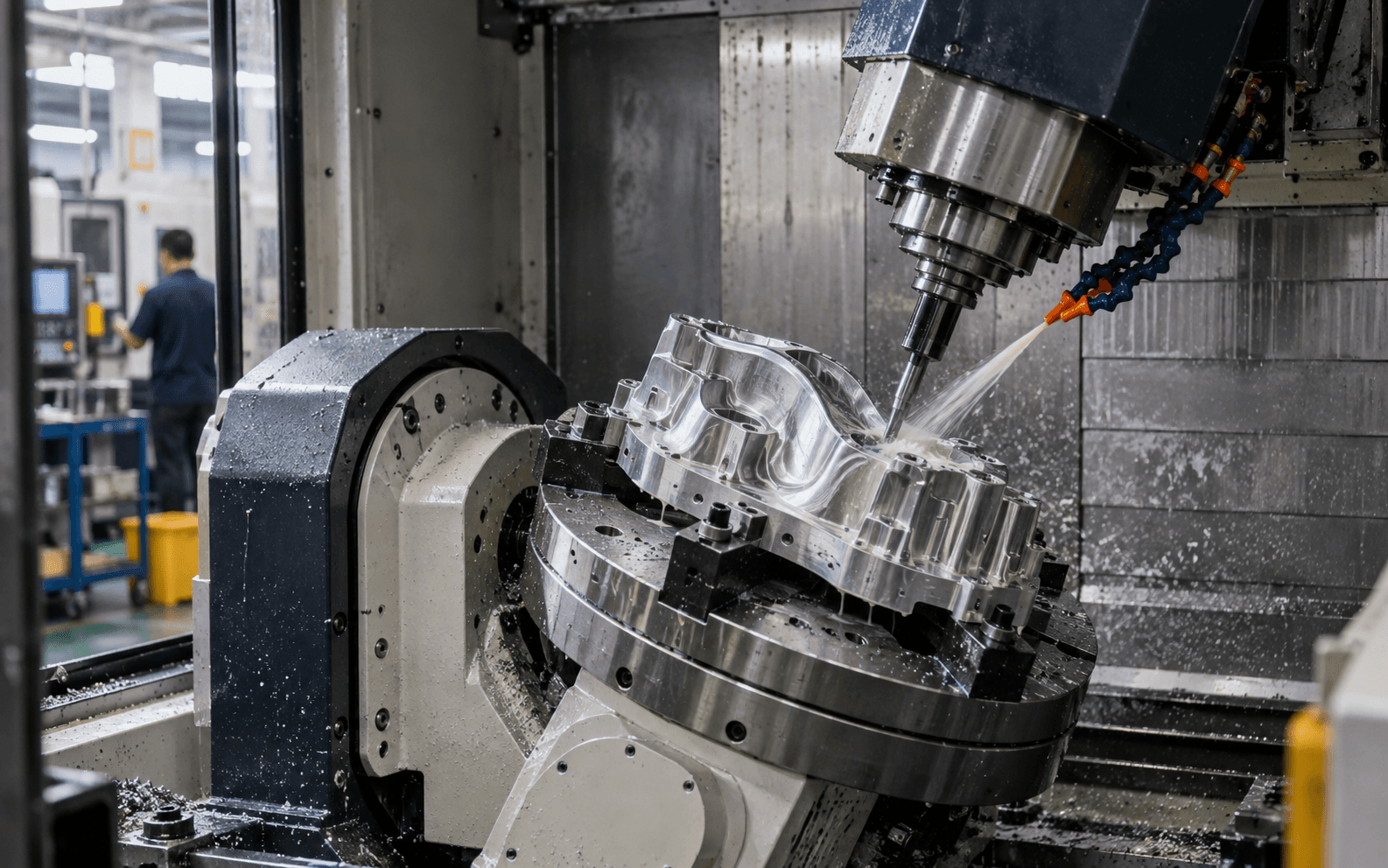
CNC machining: carves parts from solid blocks of real engineering materials (aluminum, POM, ABS). Strong, precise and good-looking. → What is CNC machining?
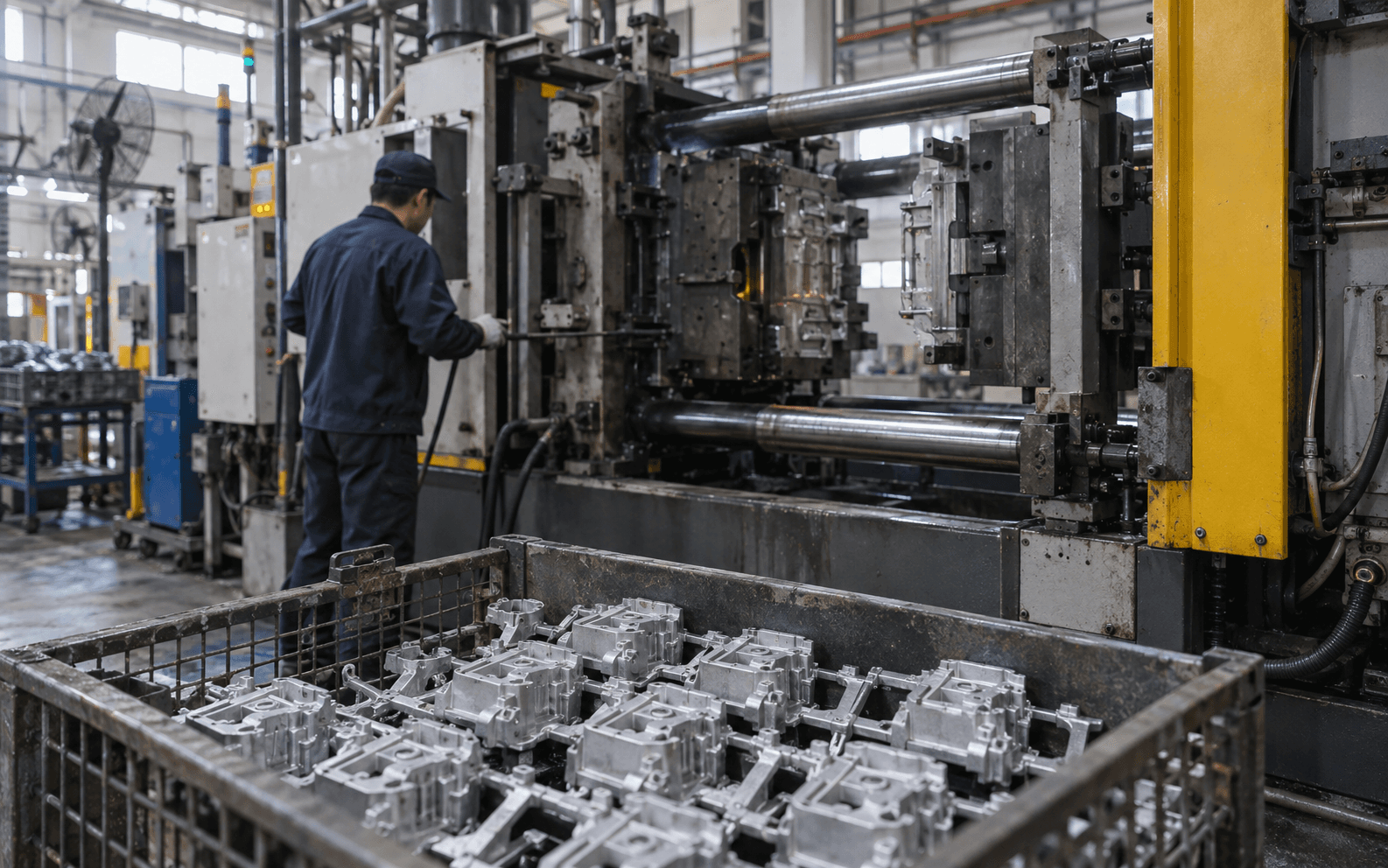
Urethane (vacuum) casting: a silicone mold is made from a master part, then used to cast 10–50 plastic parts that look and feel like molded ones. → Urethane casting hub
Finishing: prototype shops also paint, texture, polish and print logos so a prototype looks like the finished product. → Surface finishing hub
Two kinds of prototypes
- Looks-like: looks and feels like the product, but may not work.
- Works-like: works like the product, but may not look like it.
More in Looks-like vs works-like prototypes.
How many rounds?
Most products go through several rounds: an early rough prototype, a refined one, and one close to production. Each round answers questions and changes the design. Plan time and budget for at least two or three.
How Shenzhen prototype shops work
Shenzhen has hundreds of prototype shops, called 手板厂 (shǒu bǎn chǎng). Many combine CNC, 3D printing, casting and painting under one roof, so one order can cover a whole assembly. A typical flow:
- Send STEP files, the quantity, materials and finish to 3–5 shops.
- Get quotes, usually within a day.
- Parts are made in 3–10 days depending on complexity and finish.
- Check the parts, change the design, and repeat.
Many shops have English-speaking sales teams; others work mainly in Chinese through WeChat. The directory shows which is which.
Keep reading
Next steps
- Browse prototype shops in Shenzhen and Dongguan
- See the Prototyping stage of the Path
Updated 29 September 2026