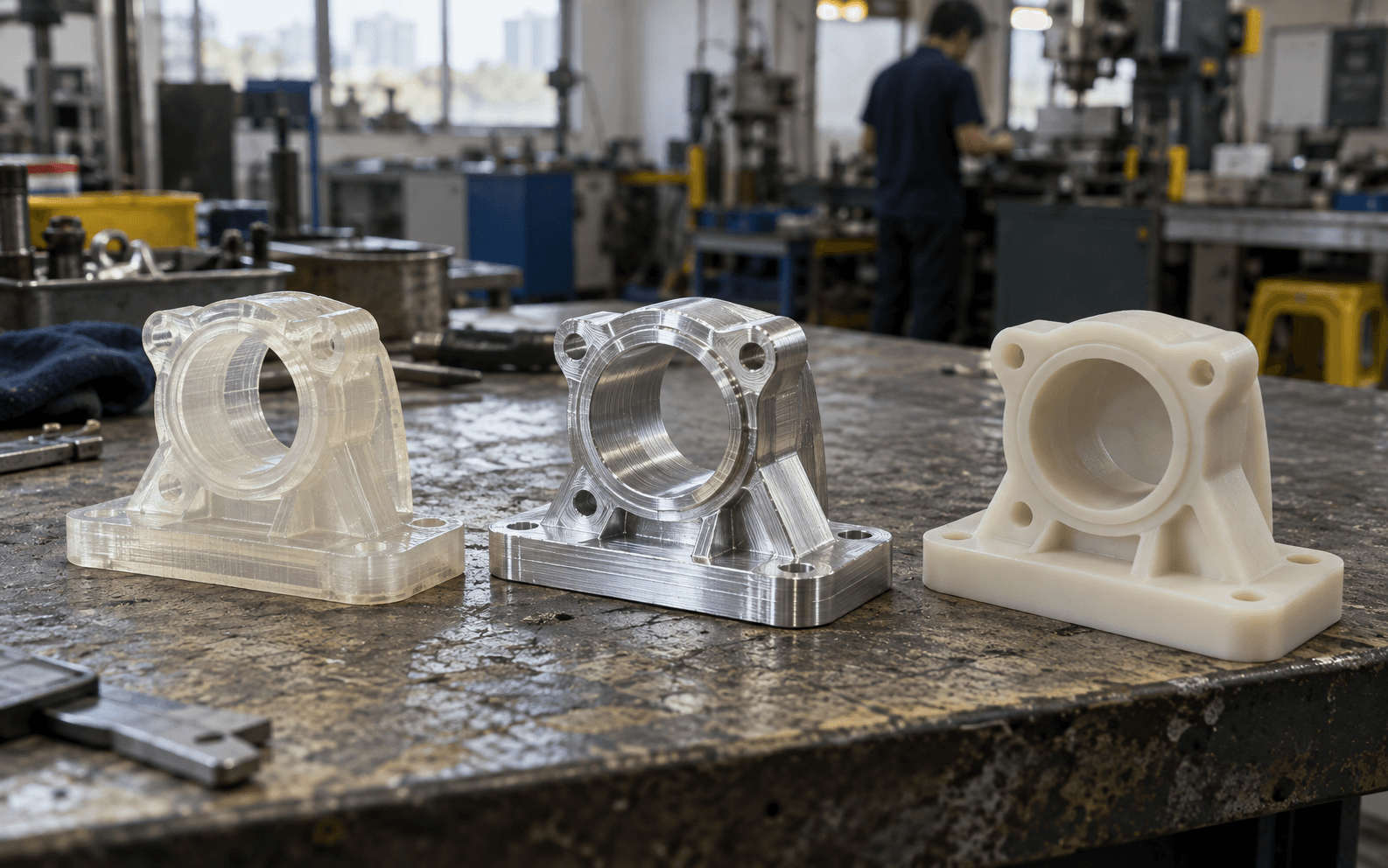
Most prototype shops in Shenzhen offer three main methods. Each is best at something different, and many products use all three for different parts.
At a glance
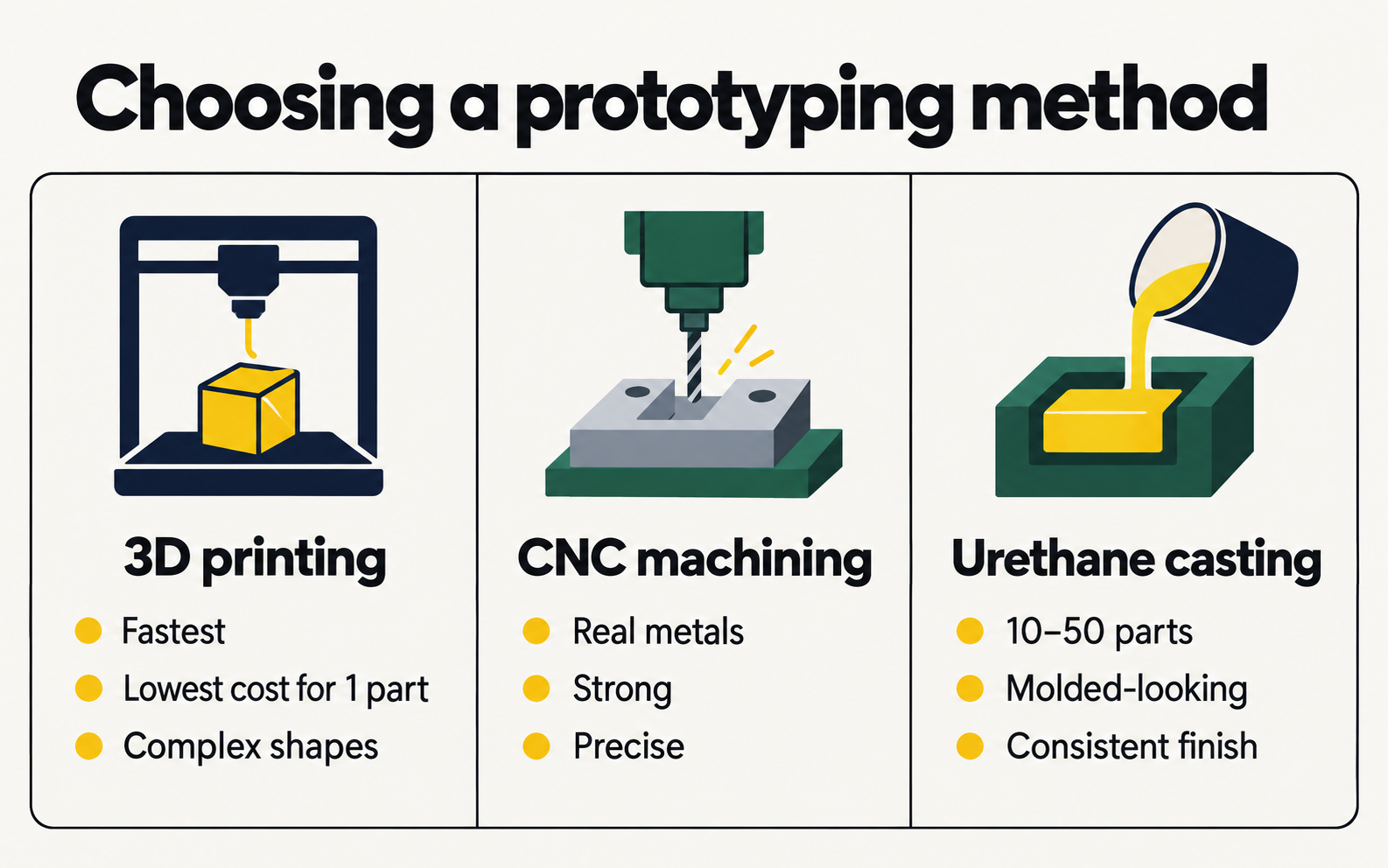
| 3D printing | CNC machining | Urethane casting | |
|---|---|---|---|
| Speed | Fastest (1–4 days) | Fast (3–7 days) | Slower (7–12 days, needs a master and mold first) |
| Cost for 1 part | Lowest | Medium | High (the silicone mold) |
| Cost for 20 parts | Medium | Medium–high | Often lowest per part |
| Materials | Resins, nylon, some metals | Real metals and engineering plastics | Polyurethanes that imitate ABS, PC, rubber, clear |
| Strength | Good (varies by technology) | Excellent | Good |
| Looks like a molded part? | With finishing, somewhat | With finishing, yes | Yes, closest |
| Best for | Early shapes, complex geometry | Metal parts, precise or strong parts | 10–50 molded-looking plastic parts |
(Typical ranges; confirm with shops.)
Pick by the question you're answering
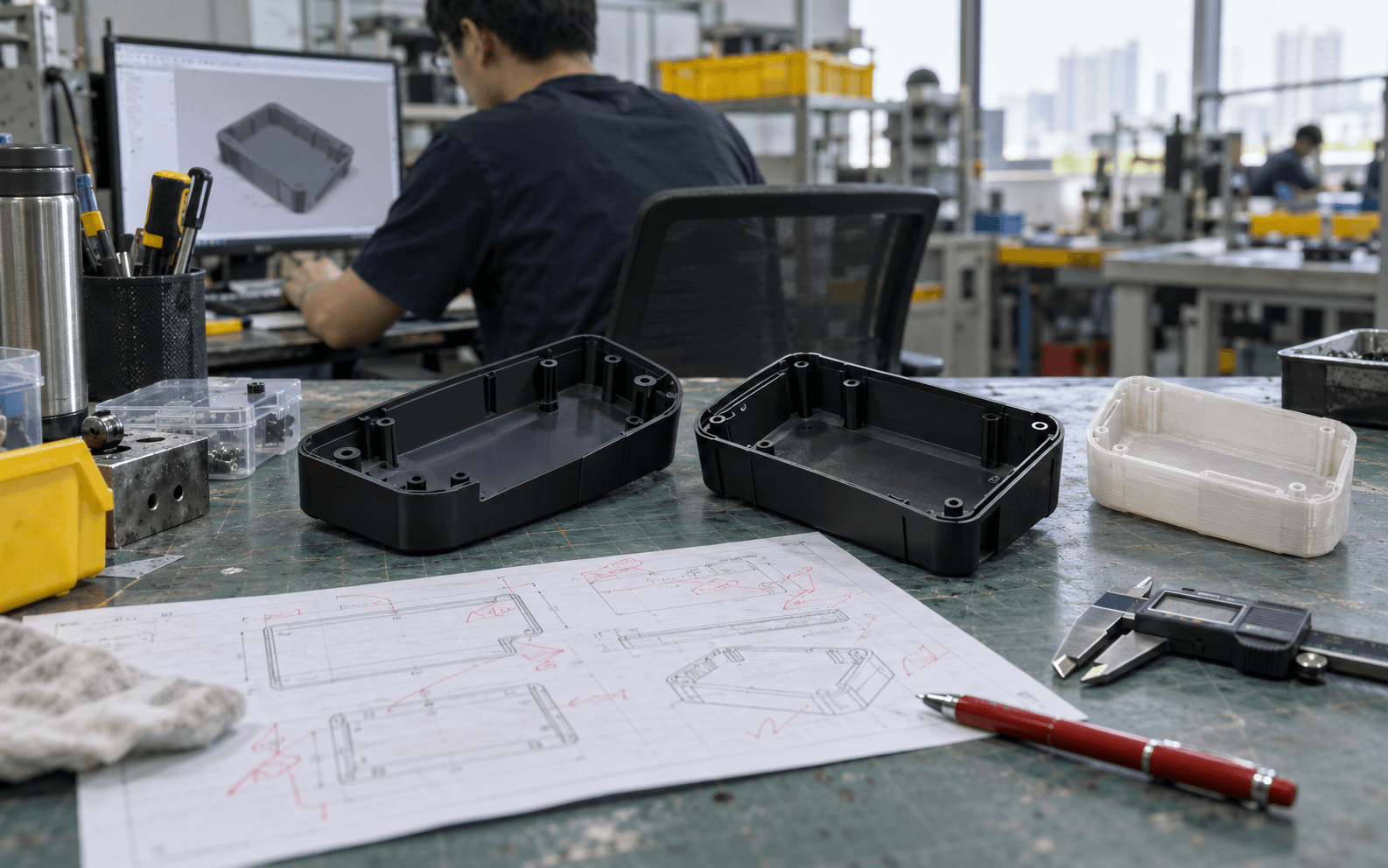
- "Does the shape and fit work?" → 3D printing. Fast and cheap, and you'll change the design anyway.
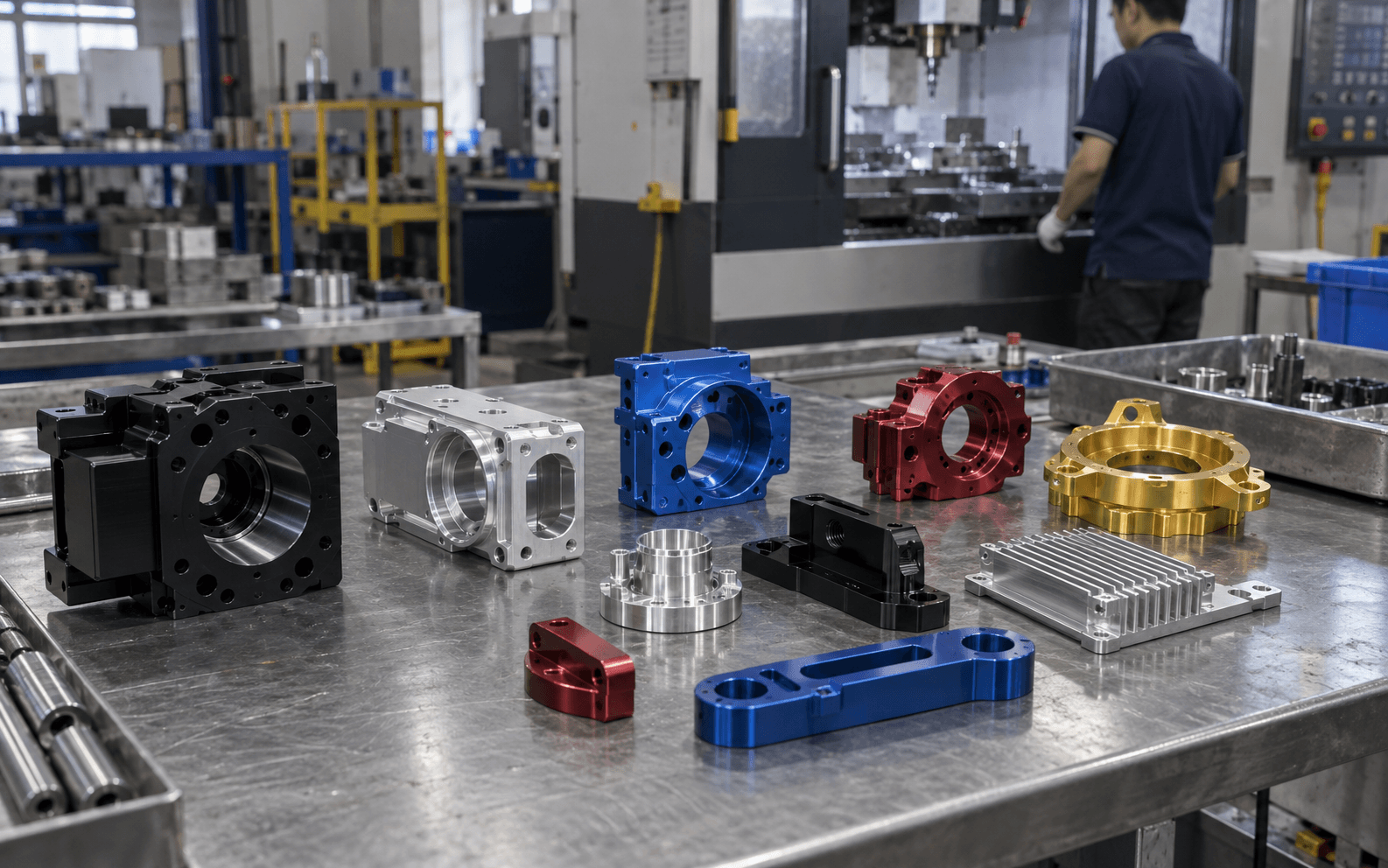
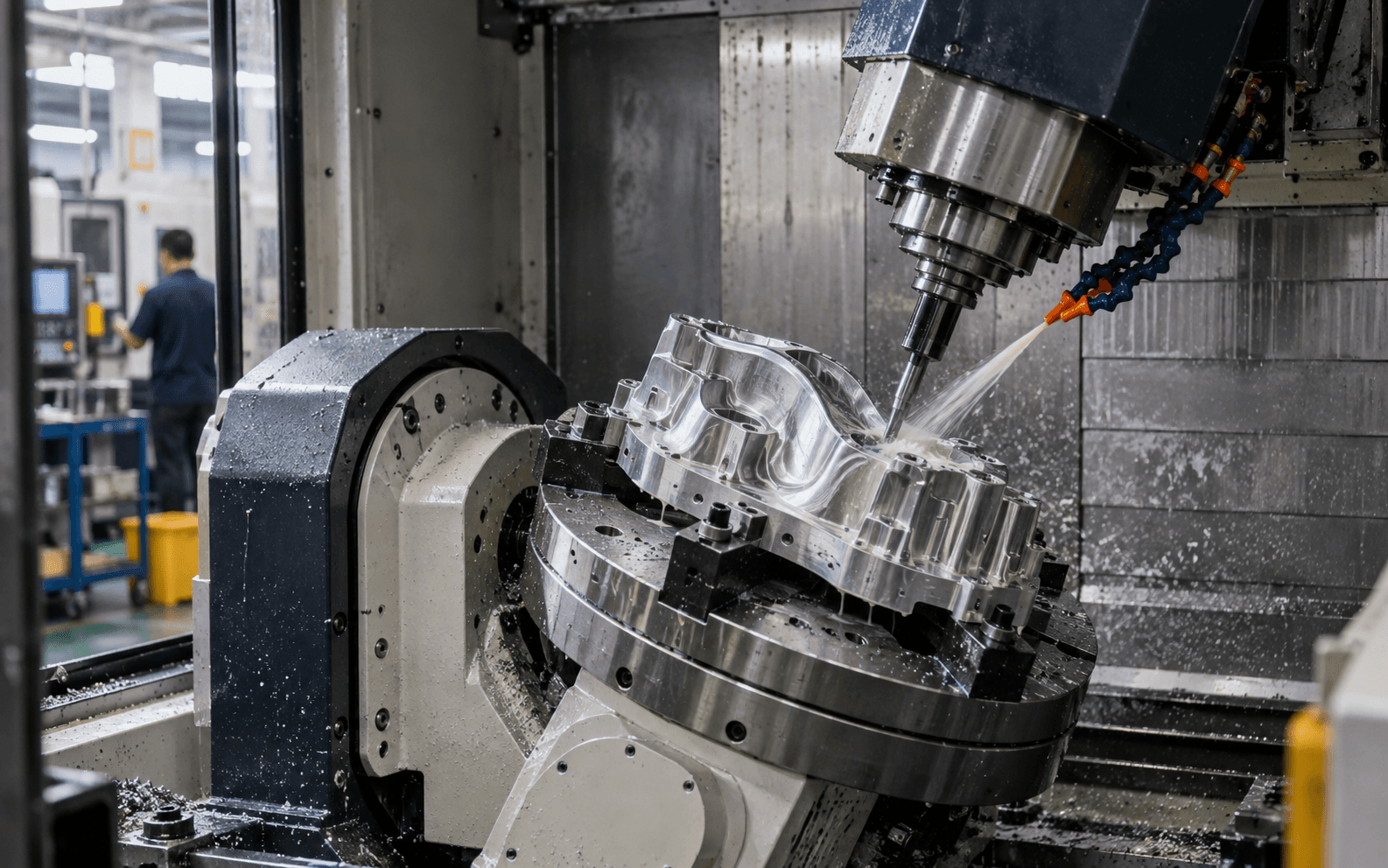
- "Is it strong enough / precise enough / does metal work here?" → CNC machining in the real material.
- "I need 20 units that look like real products" (for user testing, photos or a small launch) → urethane casting.
- "I need something rubbery or clear" → casting (or specific print materials).
Mixing methods
A single prototype often combines them: a CNC-machined aluminum frame, SLA-printed buttons, and a cast rubber seal. Prototype shops that offer everything can build and finish the whole assembly together, which saves you coordinating several suppliers.
When to stop prototyping
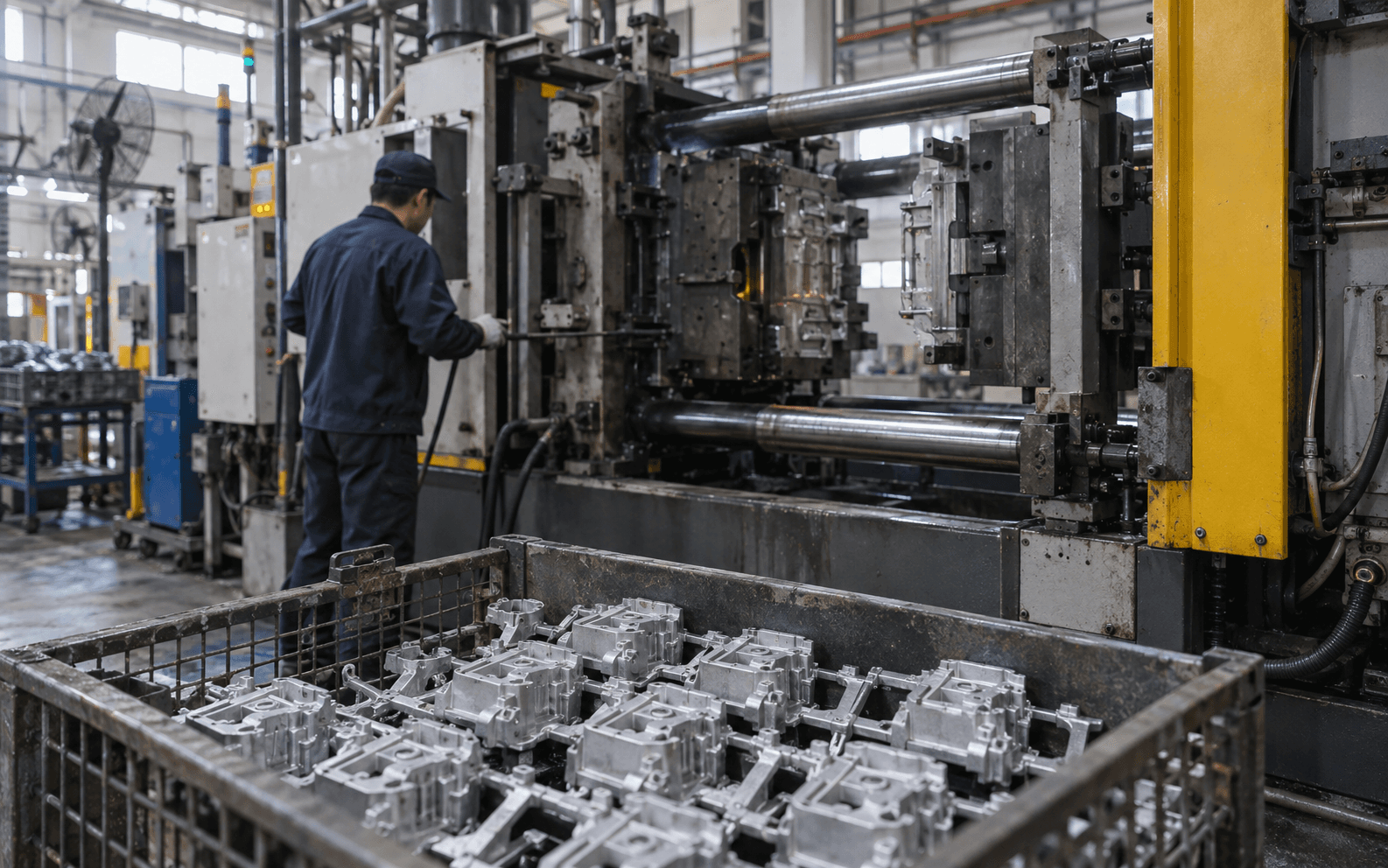
When the design stops changing between rounds and you need hundreds or thousands of units, it's time to look at production tooling like injection molding.
Next steps
Updated 29 September 2026