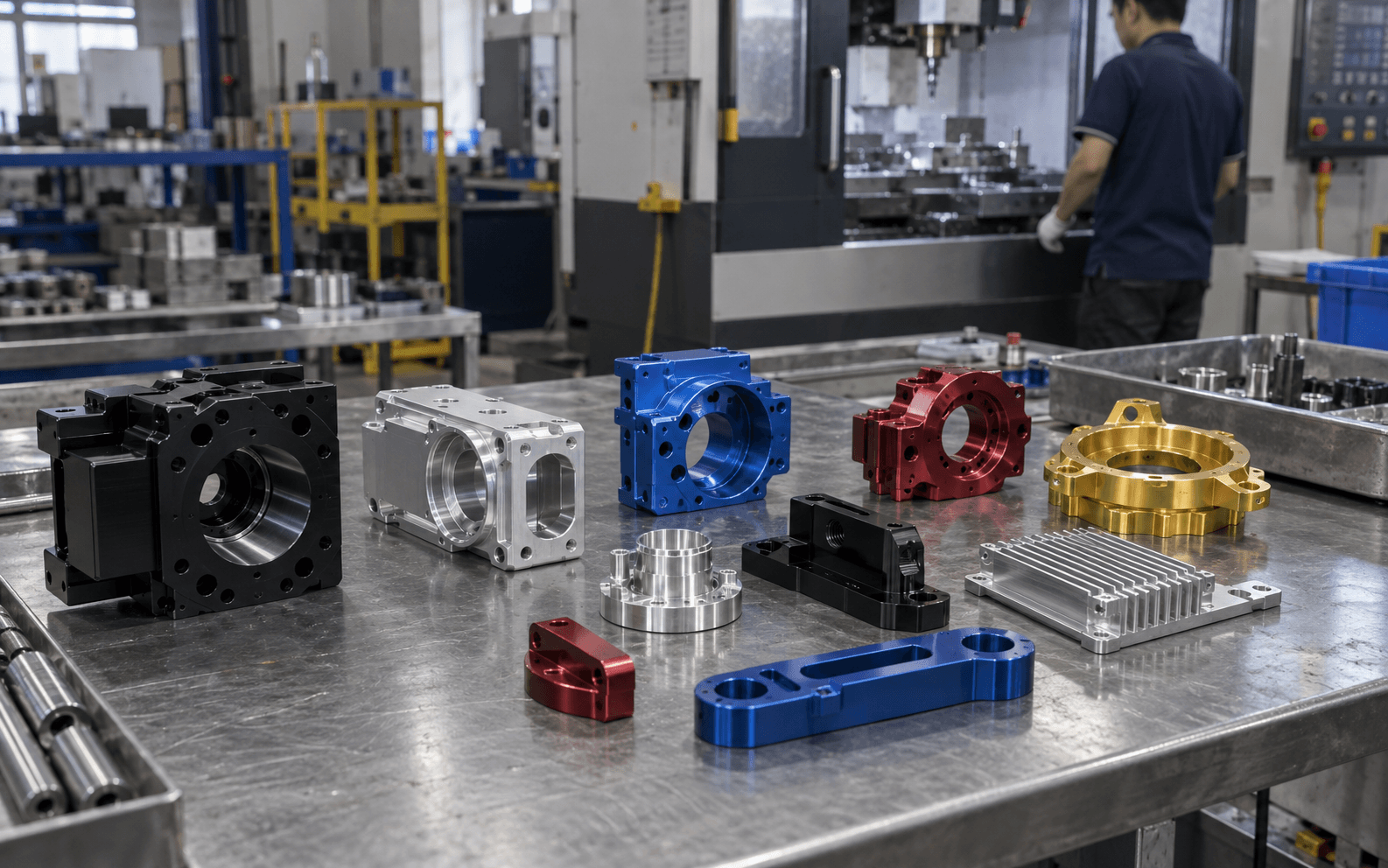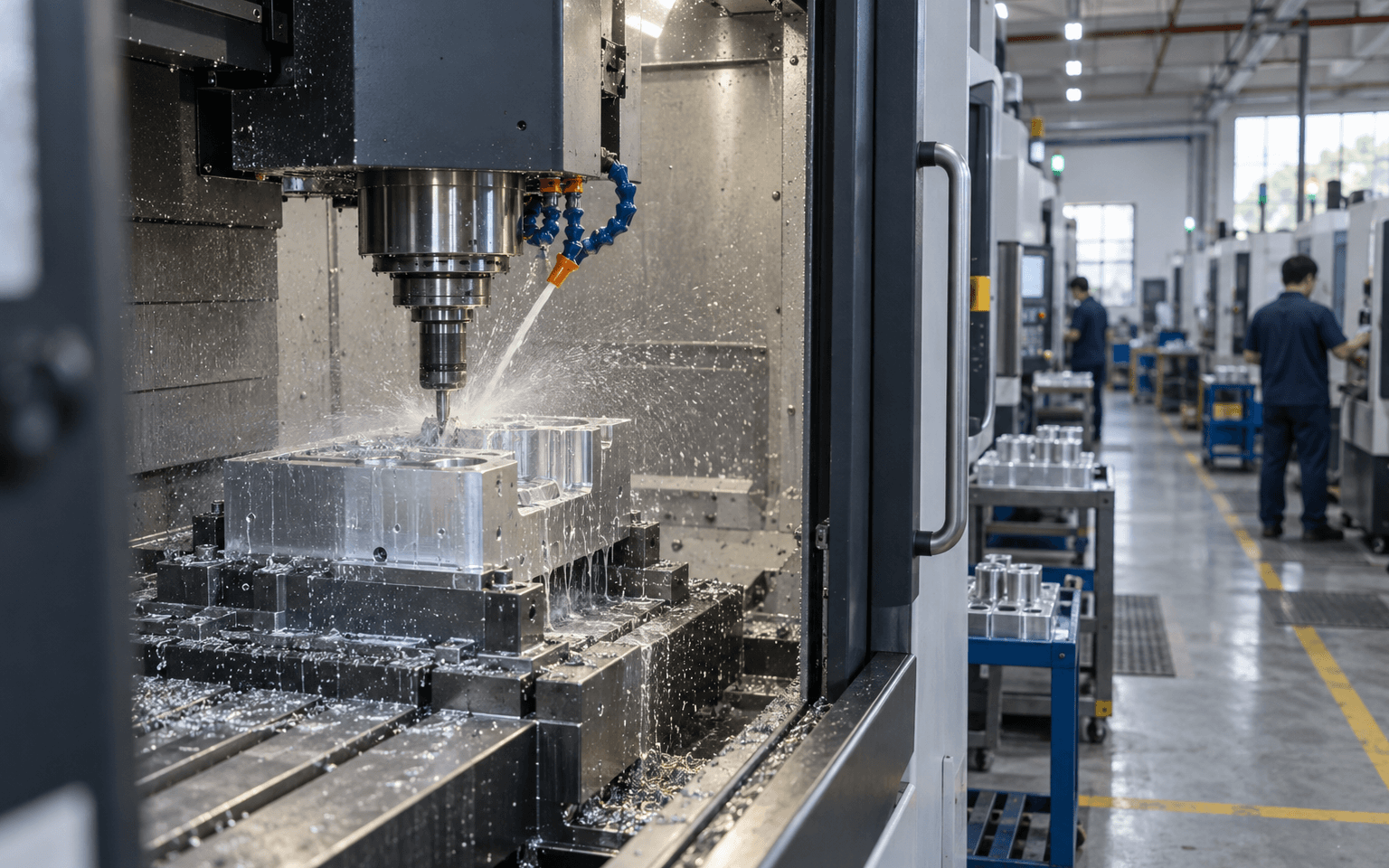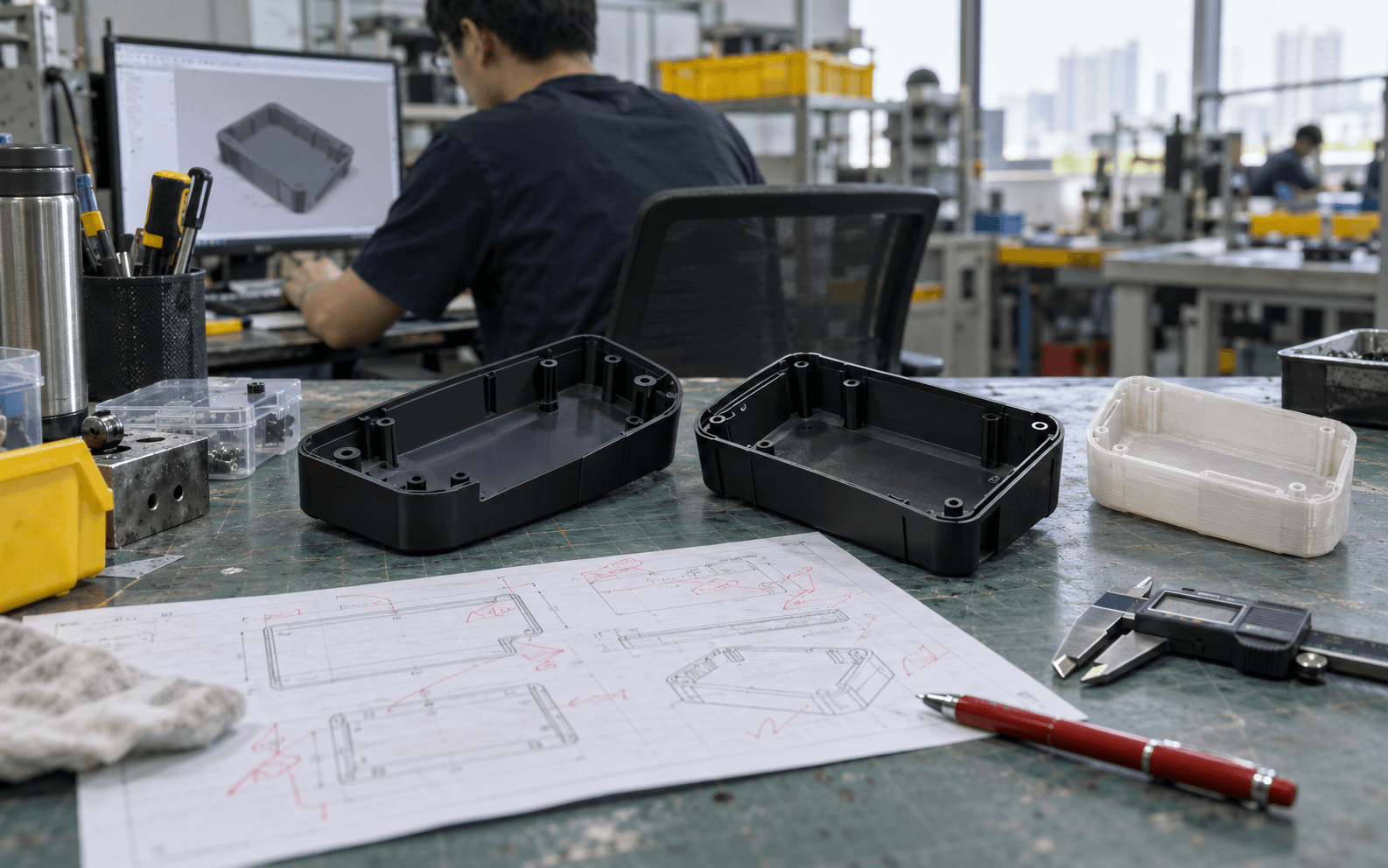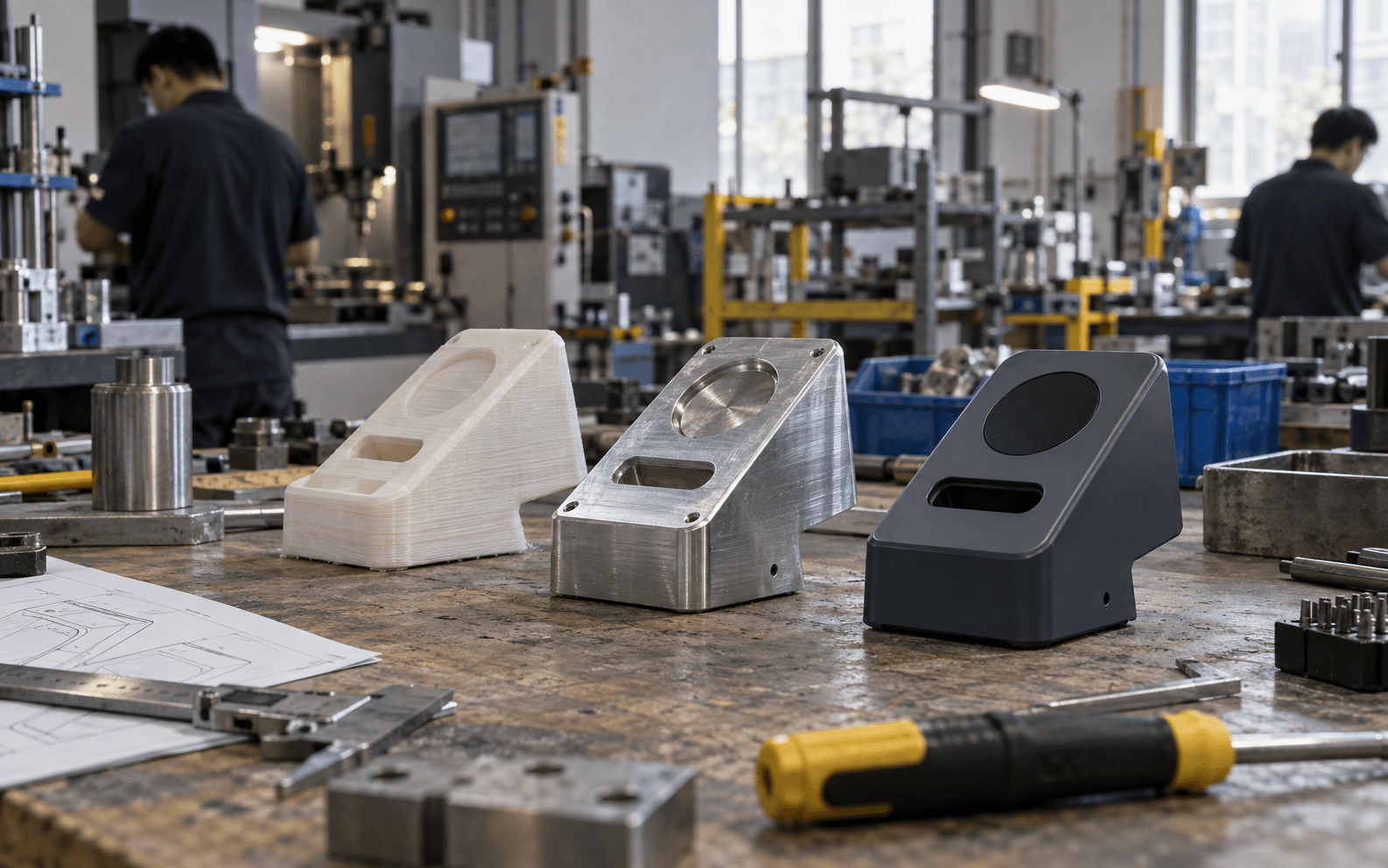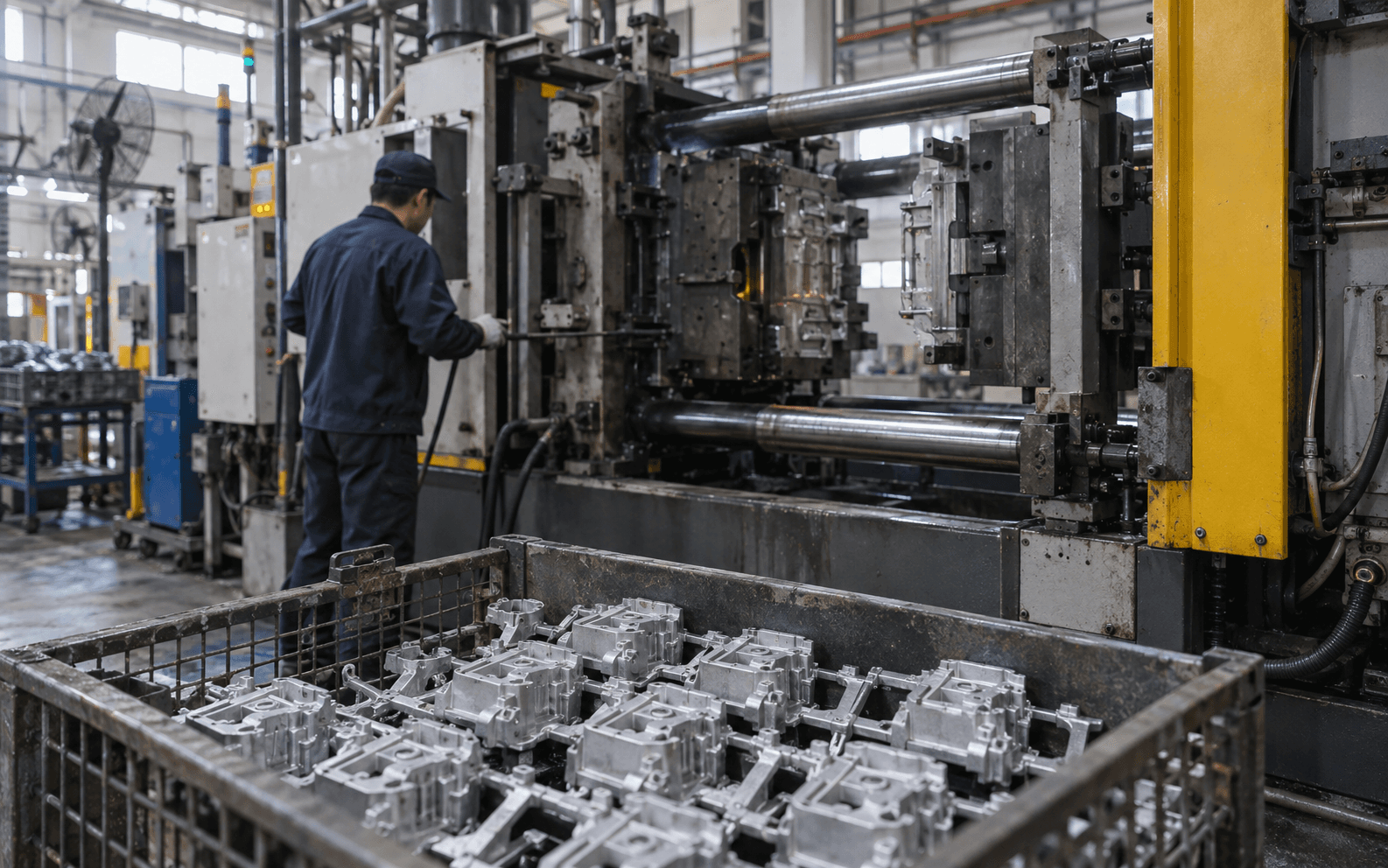
The metal body of a power tool, the housing of an outdoor light, the heavy base of a desk lamp, the frame inside a speaker: many metal parts like these are die cast. It's the metal cousin of plastic injection molding, and it's how metal parts are made in large quantities at a low price per part.
This guide explains die casting from scratch, so you can tell whether your part is a good fit and what to ask a supplier.
Die casting in one sentence
Die casting means forcing molten metal (metal heated until it's liquid) into a steel mold at high pressure, letting it cool and harden, then opening the mold and taking the part out.
The steel mold is called a die, which is where the name comes from. In Chinese, die casting is 压铸 (yā zhù), literally "press-cast".
A simple analogy: an ice-cube tray filled with a pressure hose instead of a tap. The tray (the die) is expensive and very strong, but once you have it, you can make the same shape again and again, very quickly.
How it works, step by step
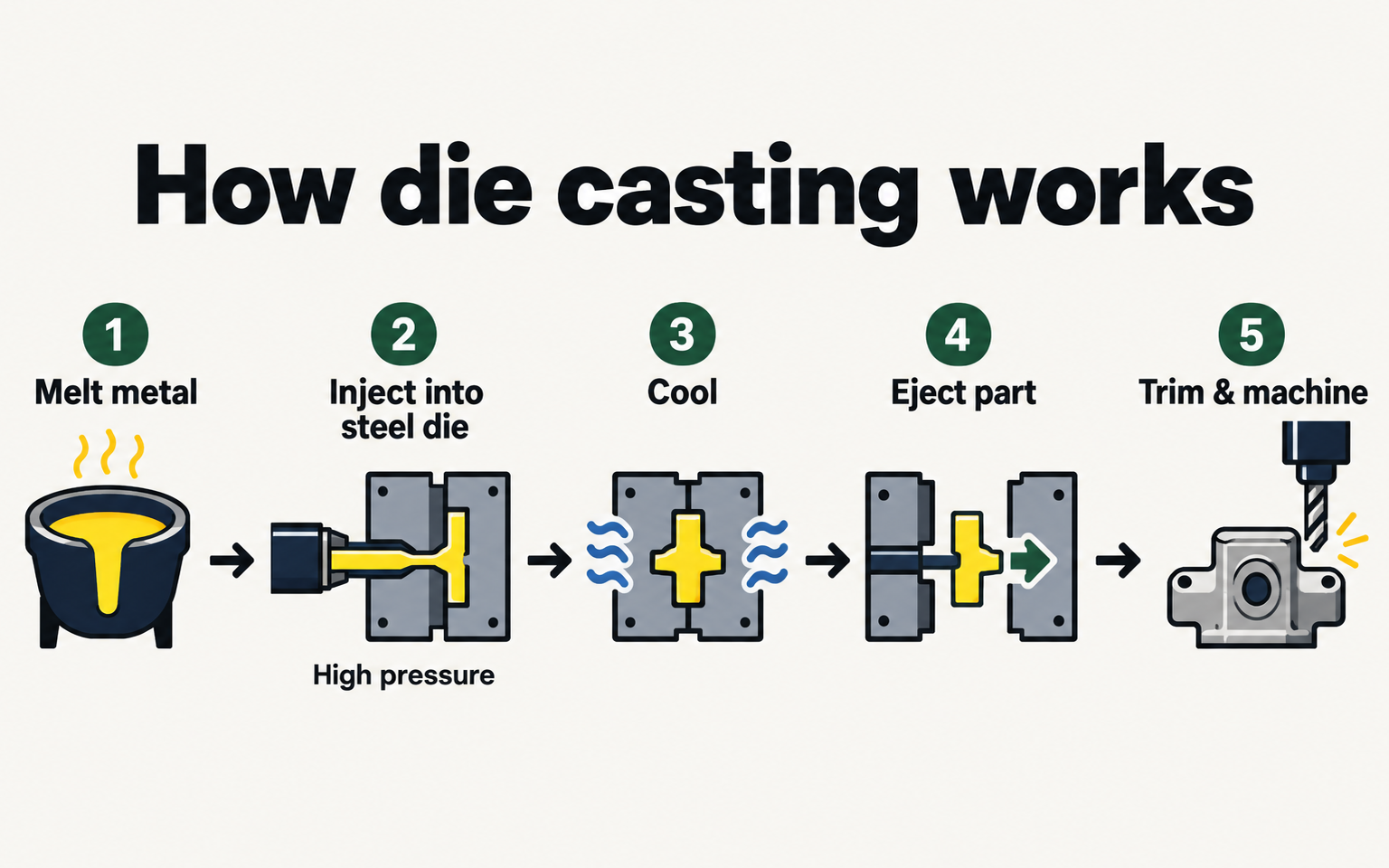
- The die is made. A toolmaker machines the die from hardened tool steel, usually in two halves. This is the slow and expensive part, often several weeks (typical, confirm with your supplier). Commissioning the tool is called "opening a mold": 开模.
- Metal is melted in a furnace.
- Injection. A plunger pushes the molten metal into the closed die at high speed and pressure, so it fills thin walls before it freezes.
- Cooling. The die is water-cooled, so the metal hardens in seconds.
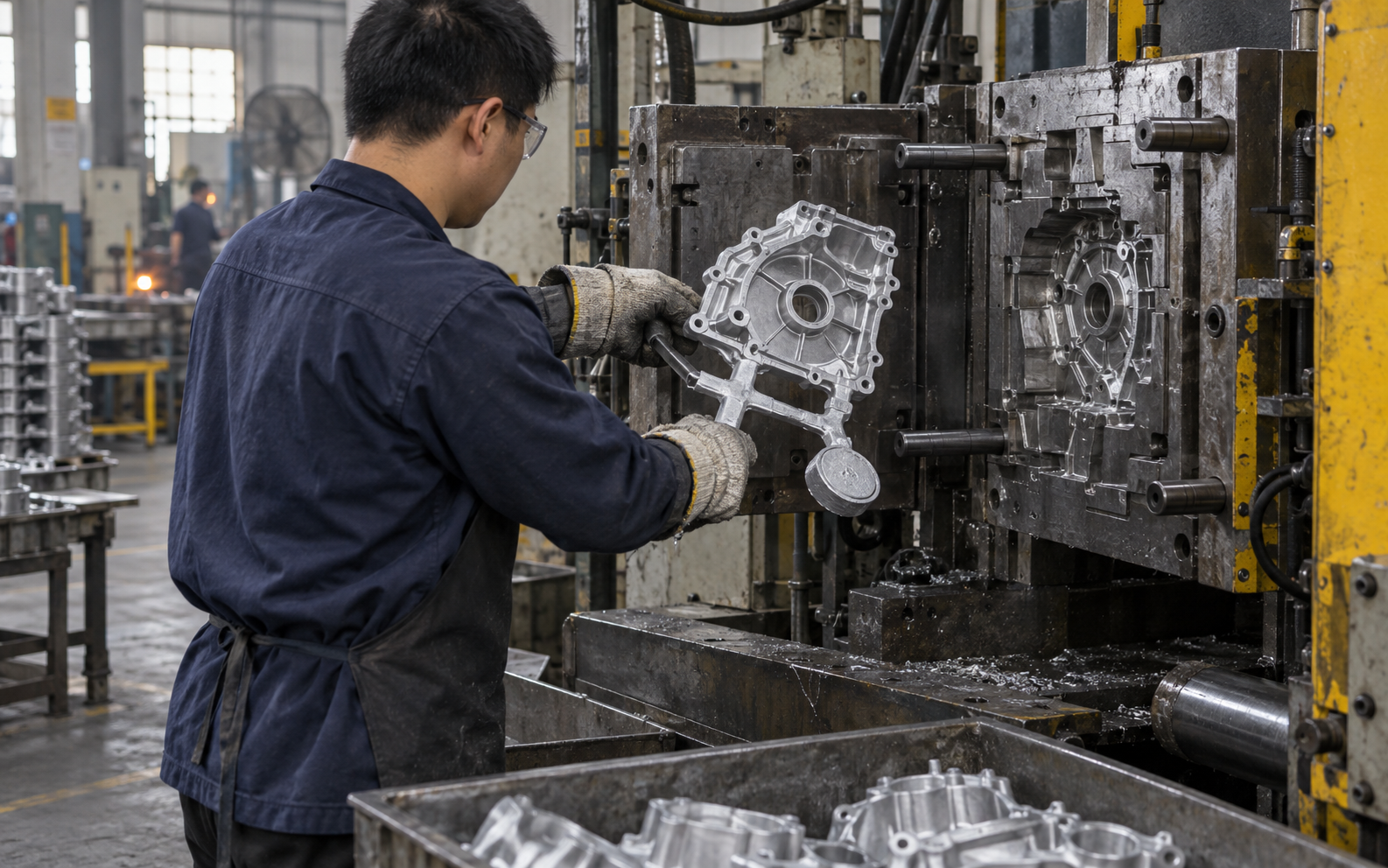
- Ejection. The die opens and pins push the part out.
- Trimming. The part comes out attached to extra metal: the channels the metal flowed through (runners) and thin fins where metal squeezed into the gap between die halves (flash). A trimming press or workers remove these.
- Secondary work. Critical holes and faces are often CNC machined afterwards, then the part is finished (painted, powder coated or plated).
Hot chamber vs cold chamber
You'll hear these two terms on quotes:
- Hot-chamber machines keep the injection mechanism sitting in the molten metal. It's fast, and suits metals with a low melting point, mainly zinc.
- Cold-chamber machines ladle the metal in for each shot, because hotter metals would damage the mechanism. Aluminum is cast this way.
You don't pick this yourself; it follows from the metal you choose.
Which metals can be die cast?
- Aluminum alloys (e.g. ADC12, A380): light, good at spreading heat, the most common choice for housings and heatsinks.
- Zinc alloys (e.g. Zamak 3, Zamak 5): heavy, very detailed, excellent for plating. Common for buckles, handles, small hardware and parts that need a "weighty" feel.
- Magnesium alloys: lighter than aluminum, used in some laptops, cameras and tools. Fewer shops offer it.
The full comparison is in Zinc vs aluminum die casting.
What die casting is great for
- Medium to high volumes of metal parts, typically thousands and up (typical, confirm with your supplier).
- Complex shapes in one piece: ribs, bosses, mounting points and fins that would take a long time to machine.
- Low price per part once the die exists, because each cycle takes only seconds to a minute.
- Good repeatability: part 10,000 looks like part 1.
What it's not great for
- Small quantities. The die cost has to be spread across many parts. For 10 or 100 parts, CNC machining is usually cheaper. See Die casting vs CNC machining.
- A perfect anodized look. Die-cast aluminum contains silicon and small air pockets, so anodizing usually looks grey and blotchy. Powder coating or painting is the norm.
- Pressure-tight or highly stressed parts without extra care. Die castings can contain porosity: tiny gas bubbles trapped inside. They can leak or weaken a part. Good die design and process control reduce it; some parts are sealed afterwards (a process called impregnation).
- Very large, very thick parts. Thick sections cool unevenly and trap more porosity. Other casting methods (sand casting, gravity casting) exist for those.
Designing for die casting
The rules look a lot like injection molding design rules:
- Even wall thickness so the metal cools evenly.
- Draft angles: a slight taper on walls so the part releases from the die.
- Fillets: rounded inside corners help metal flow and reduce cracks.
- Avoid undercuts where possible; each one needs a moving slide in the die (行位), which adds cost.
- Leave machining stock (a little extra metal) on faces you'll machine later.
Ask for a DFM (design for manufacturing) review before the die is cut. It's much cheaper to change a CAD file than hardened steel.
What drives the cost
Like molding, die casting has two costs:
- The die: size, number of slides, number of cavities (parts per shot), and the steel grade all matter. Die costs are often in the thousands to tens of thousands of US dollars, depending on the part (typical, confirm with your supplier).
- The part: metal weight, cycle time, trimming, machining, finishing and inspection.
Aluminum dies wear faster than zinc dies because the metal is much hotter, so a die's expected life (how many shots before it needs repair) is worth asking about.
Getting die-cast parts made in Shenzhen and Dongguan
The Pearl River Delta, and Dongguan in particular, has many die-casting factories, from small zinc hardware shops to large aluminum plants. A typical route:
- Prototype first with CNC-machined parts to prove the design.
- Send your 3D file, drawing and target volume to several die-casting suppliers.
- Compare quotes for die cost, die life, part price, machining, finishing, and who owns the die.
- Get a DFM report, then approve the die design.
- Approve first samples (T1) before production. Die changes after this are called 改模.
Key words
| English | Chinese | Pinyin |
|---|---|---|
| Die casting | 压铸 | yā zhù |
| Die / mold | 模具 | mú jù |
| Aluminum die casting | 铝压铸 | lǚ yā zhù |
| Zinc die casting | 锌压铸 | xīn yā zhù |
| Mold trial | 试模 | shì mó |
Keep reading
- Zinc vs aluminum die casting
- Die casting vs CNC machining
- Anodizing vs powder coating vs painting
- How to get an injection mold made in China
Next steps
- Read the die casting hub
- Browse die-casting suppliers in Shenzhen and Dongguan
- See the Tooling stage of the Path
- Glossary: 压铸 die casting, 开模 opening a mold, 试模 mold trial
- Not sure where to start? Get an intro
Updated 29 September 2026