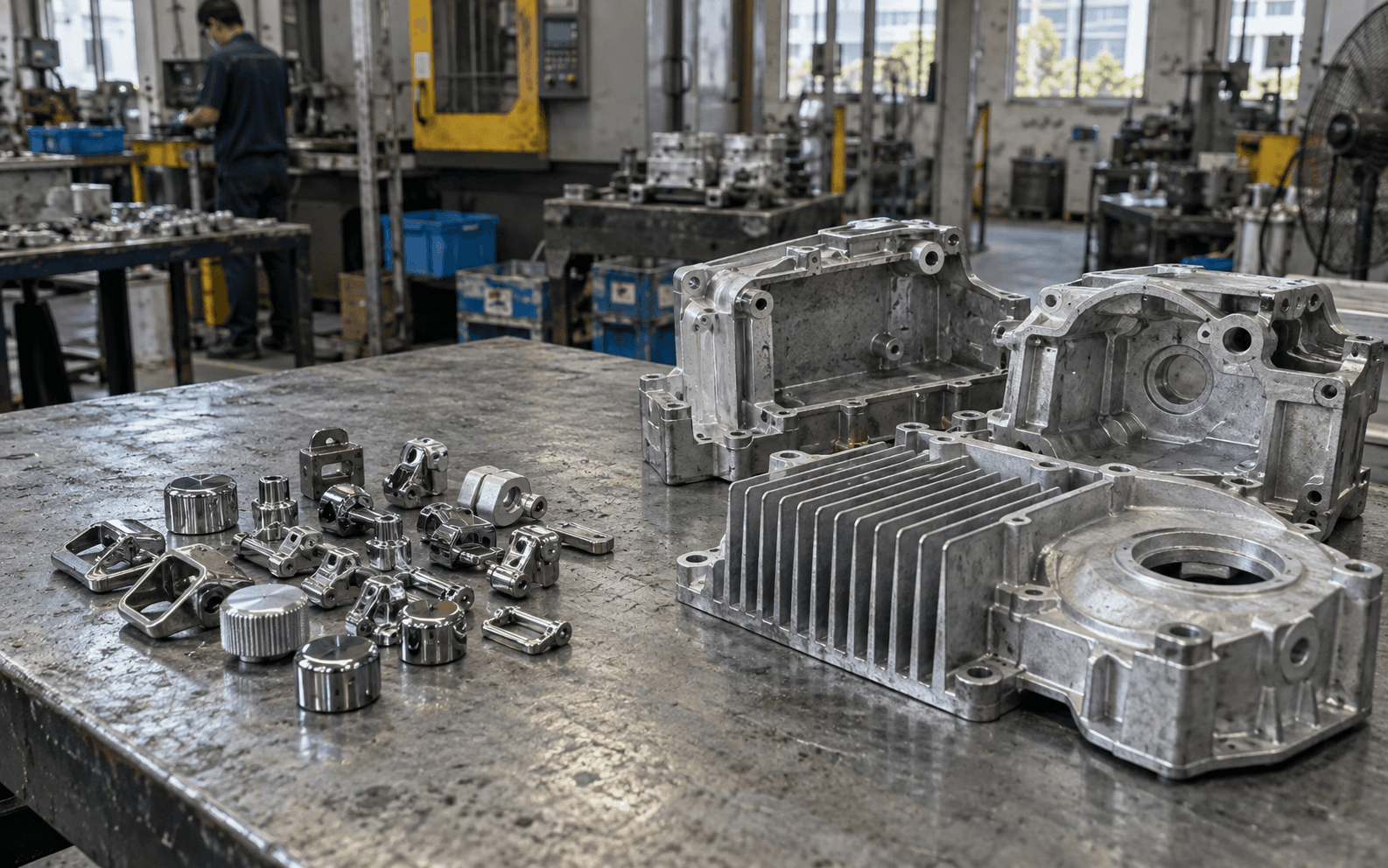
Most die-cast parts are made from one of two metal families: zinc alloys or aluminum alloys. They are cast on different machines, feel different in the hand, take finishes differently and wear out dies at different speeds. Picking the right one early saves a redesign later.
New to the process? Start with What is die casting?
The short version
- Zinc: heavy, very detailed, thin walls, beautiful plating, long die life. Best for small parts.
- Aluminum: light, stiff, good at moving heat, cheaper per kilogram. Best for larger parts and anything where weight matters.
Meet the alloys
You'll see these names on quotes. You don't need to memorise them, just recognise them.
- Zinc: usually a Zamak alloy (zinc with small amounts of aluminum, magnesium and copper). Zamak 3 is the common default; Zamak 5 is a little stronger and harder.
- Aluminum: in China the most common die-casting alloy is ADC12 (a Japanese standard name). The closest US equivalent you'll see is A380. These contain silicon, which helps the metal flow into the die.
Weight and feel
Zinc alloys are roughly two and a half times as dense as aluminum alloys (zinc around 6.6–6.7 g/cm³, aluminum around 2.7 g/cm³). So the same part in zinc is much heavier.
That's a disadvantage for a drone or a handheld tool. But it's a feature for things that should feel solid and expensive: a door handle, a bag buckle, a luxury pen, a heavy knob. That "weighty" feel is one reason zinc is common in consumer hardware.
Detail and wall thickness
Zinc melts at a much lower temperature than aluminum (Zamak alloys melt at roughly 380–390 °C; common aluminum die-casting alloys melt somewhere around 500–600 °C, and both are poured hotter than that; typical figures, confirm for your alloy). Because it's more fluid and is cast on fast hot-chamber machines, zinc can fill:
- thinner walls,
- sharper details such as fine text and knurling,
- tighter dimensions straight out of the die, sometimes with little or no machining.
Aluminum is cast on cold-chamber machines. It's very capable, but generally needs slightly thicker walls and more machining for precise features.
Finishing
- Zinc is excellent for plating: chrome, nickel, gold-coloured and black finishes on bathroom fittings and hardware are often zinc underneath. It also paints and powder coats well.
- Aluminum die castings are usually powder coated or painted. They can be plated, but it's harder. Because of the silicon and small internal bubbles (porosity), die-cast aluminum usually does not anodize nicely. If you need an anodized metal look, consider CNC machining from wrought aluminum instead, or extrusion.
For the finish options in detail, see Anodizing vs powder coating vs painting.
Strength, heat and outdoor use
- Aluminum stays strong at higher temperatures and conducts heat well, which is why LED lamp bodies, motor housings and heatsinks are usually aluminum.
- Zinc is strong and tough at room temperature, but it can slowly deform under constant load, especially when warm (this is called creep). Avoid zinc for parts that are always loaded and get hot.
- Corrosion: both need a protective finish for harsh outdoor use. Ask your supplier what finish they recommend for your environment.
Tooling cost and die life
This is where zinc often surprises people:
- Hot aluminum is hard on the steel die. It causes heat cracking over time, so aluminum dies wear out faster.
- Zinc runs much cooler, so zinc dies usually last much longer before needing repair.
- Zinc machines cycle faster, so the cost per shot can be lower.
But zinc costs more per kilogram and you need more kilograms for the same part. For large parts, the metal cost quickly outweighs the tooling benefits.
Side-by-side summary
| Zinc (Zamak) | Aluminum (ADC12 / A380) | |
|---|---|---|
| Weight | Heavy | Light |
| Typical part size | Small | Small to large |
| Fine detail, thin walls | Excellent | Good |
| Plating | Excellent | Harder |
| Anodizing | No | Usually poor |
| Heat conduction | Moderate | Good |
| High-temperature strength | Lower (creep) | Better |
| Die life | Longer | Shorter |
| Metal cost per part | Higher for big parts | Lower for big parts |
How to decide
- Is the part bigger than your hand, or does weight matter? Start with aluminum.
- Does it need to dissipate heat or run hot? Aluminum.
- Is it small, detailed, and meant to feel premium or be chrome plated? Zinc.
- Is it a high-volume small part where die life matters? Zinc is worth quoting.
- Still unsure? Ask two or three suppliers to quote both. The numbers usually make the answer obvious.
Magnesium is a third option for very light parts (some laptop and camera frames), but fewer shops offer it, and it needs more care in handling and finishing.
Keep reading
- What is die casting? (pillar)
- Die casting vs CNC machining
- Choosing a material for CNC parts
- How to specify colour and finish
Next steps
- Read the die casting hub
- Get quotes from die-casting suppliers
- See the Tooling stage of the Path
- Glossary: 压铸 die casting
- Not sure where to start? Get an intro
Updated 29 September 2026