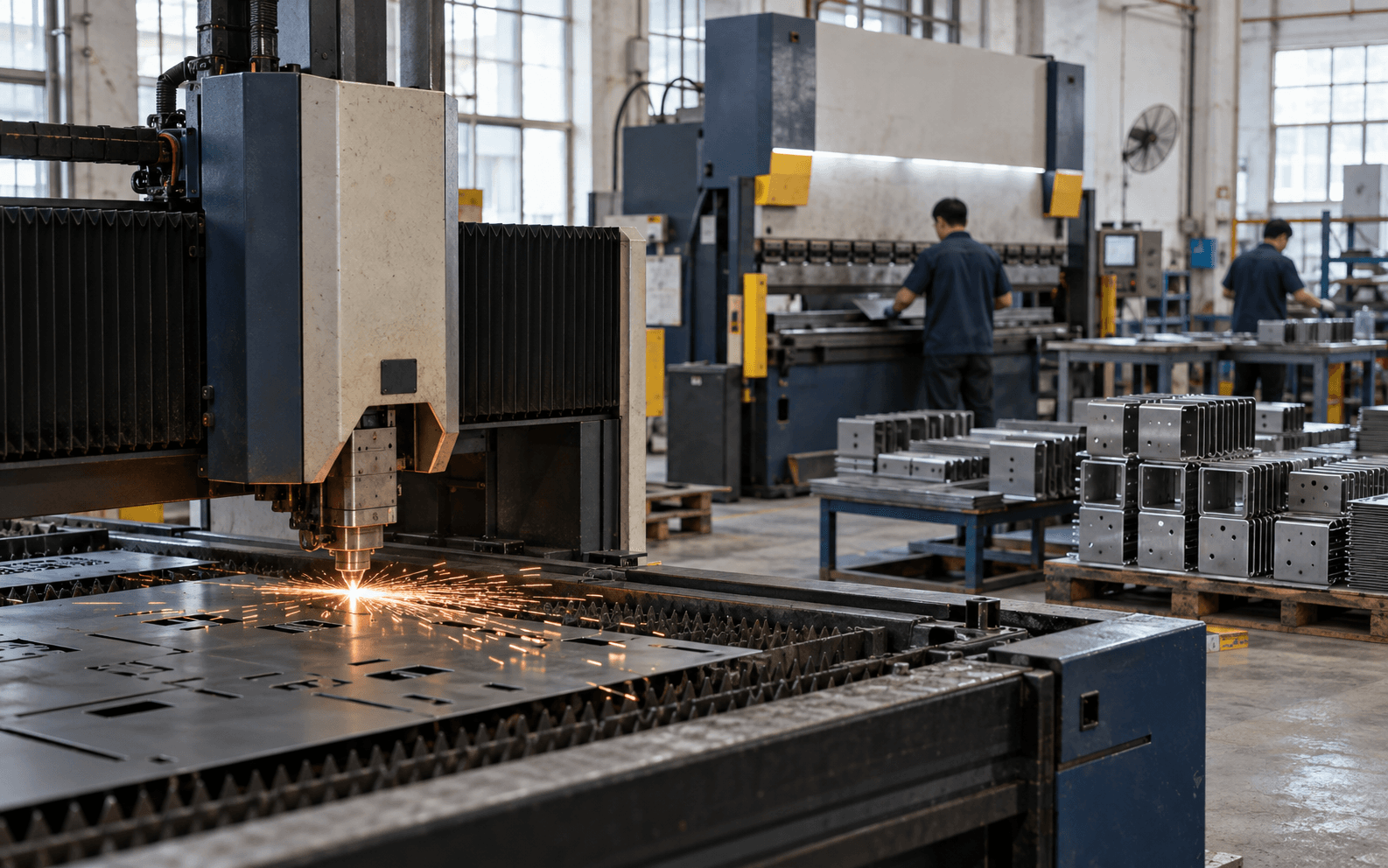
Look inside a desktop computer, a server rack, a kiosk, an electrical cabinet or a piece of lab equipment, and you'll see metal boxes and brackets with neat folded edges. They started life as flat sheets of metal. Turning those sheets into 3D parts is called sheet metal fabrication.
It's one of the cheapest and fastest ways to make strong metal parts in small and medium quantities, and it's often overlooked by first-time hardware teams who jump straight to CNC or 3D printing.
Sheet metal fabrication in one sentence
Sheet metal fabrication means cutting a flat metal sheet into a shape, bending it into 3D, and joining and finishing it into a part.
In Chinese it's 钣金 (bǎn jīn). Think of it like folding a cardboard box: you cut a flat shape with tabs and flaps (the flat pattern), then fold it along lines until it becomes a box. The difference is that metal needs machines to cut and fold, and stays folded.
How it works, step by step
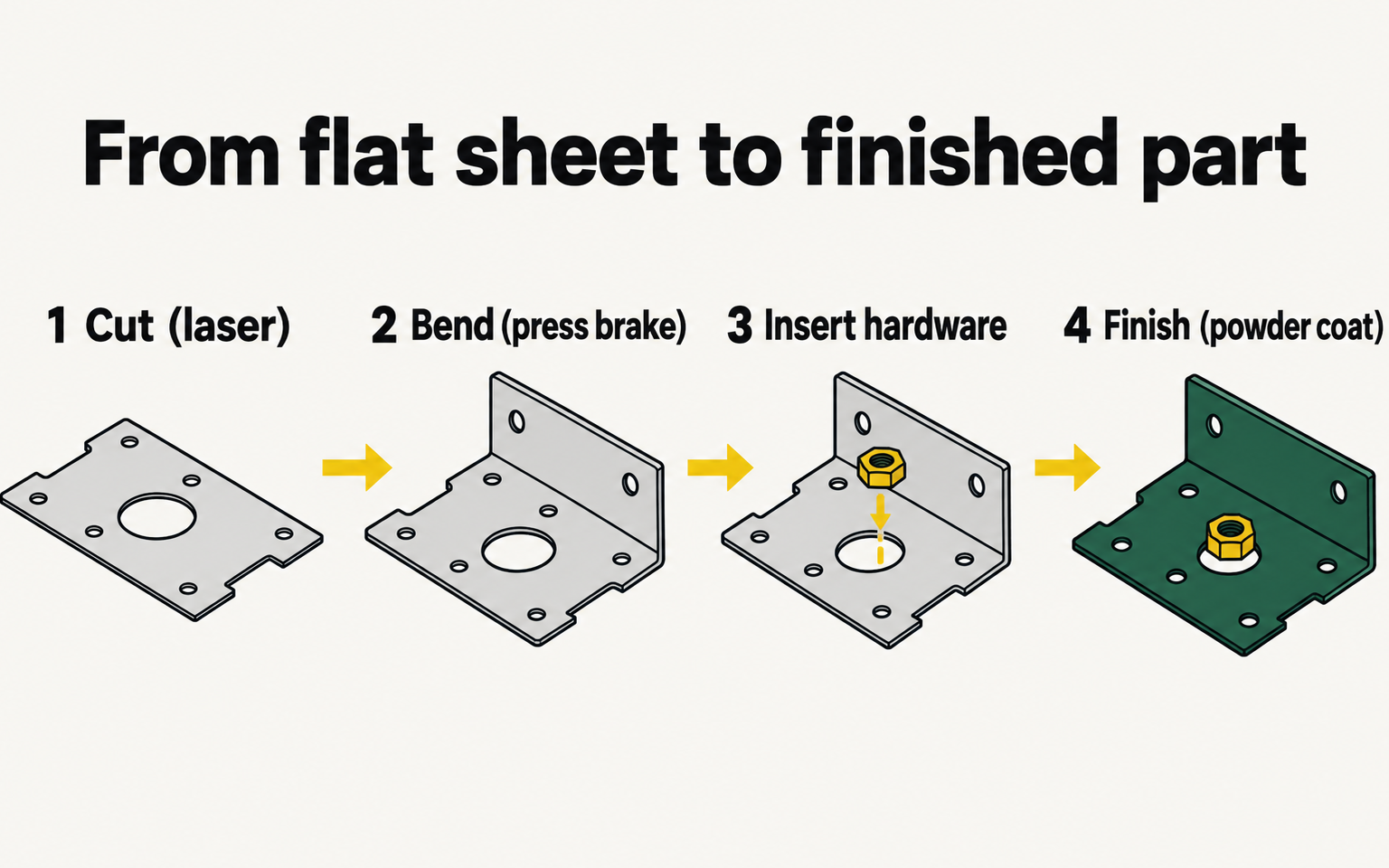
- You send a 3D model. Designed in CAD with a sheet metal tool, so the software knows the thickness and where the bends are.
- The flat pattern is made. The shop "unfolds" your model into a flat outline, with the right allowance for how metal stretches at each bend.
- Cutting. The outline and holes are cut from a large sheet, usually by a laser cutter (a focused beam that melts through the metal) or a turret punch (a machine that punches holes and shapes with a set of standard tools).
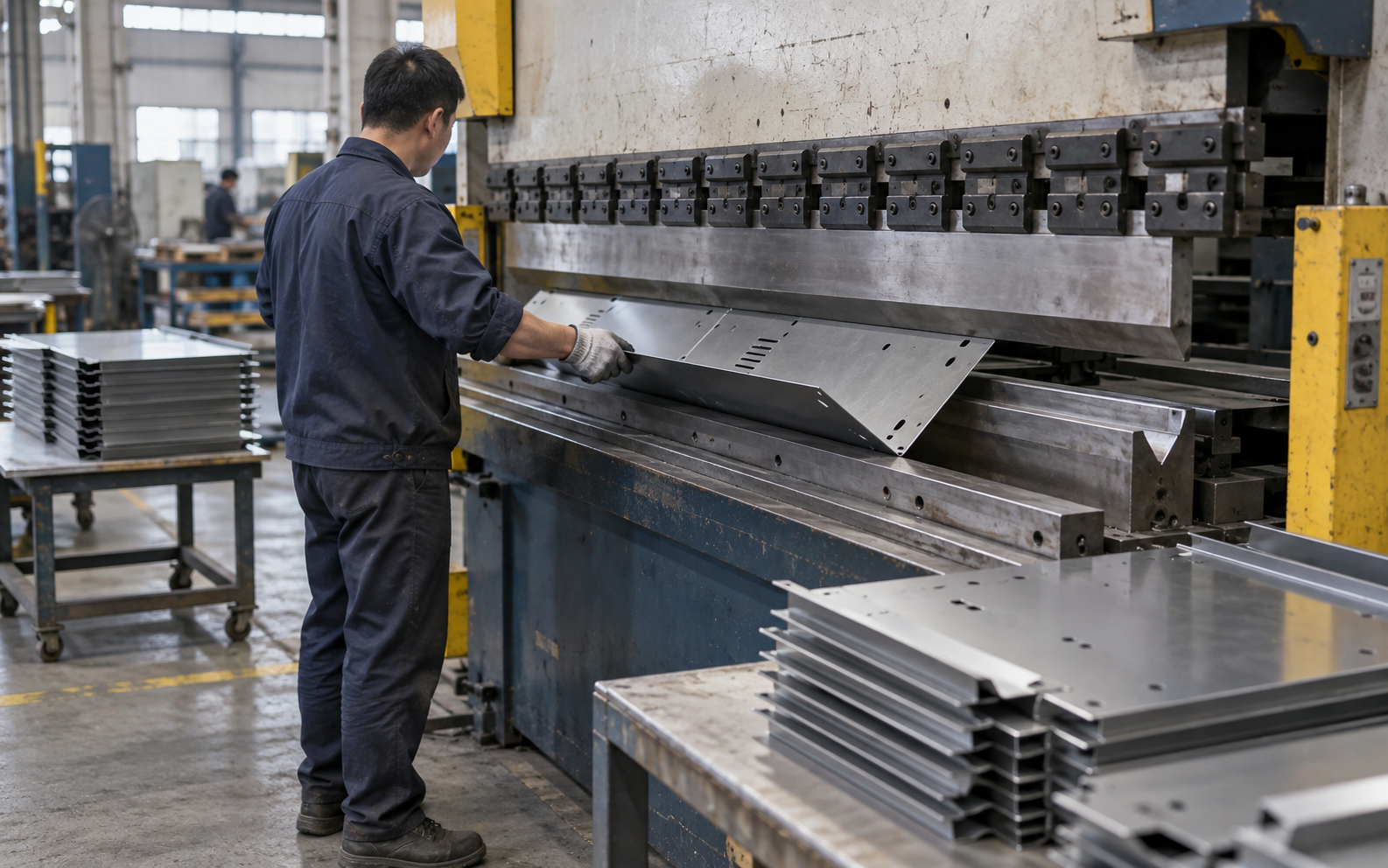
- Bending. A press brake folds the metal. The sheet is placed between a long punch and a V-shaped die, and the punch presses down to make a precise bend. In Chinese this is 折弯 (zhé wān).
- Hardware. Threaded nuts, studs and standoffs are pressed into holes so you can screw things to thin metal. These are called self-clinching fasteners (often known by the brand name PEM).
- Joining. Pieces may be welded, riveted or screwed together.
- Finishing. Parts are deburred (sharp edges removed), then usually powder coated, painted, plated or, for aluminum, anodized.
Common materials
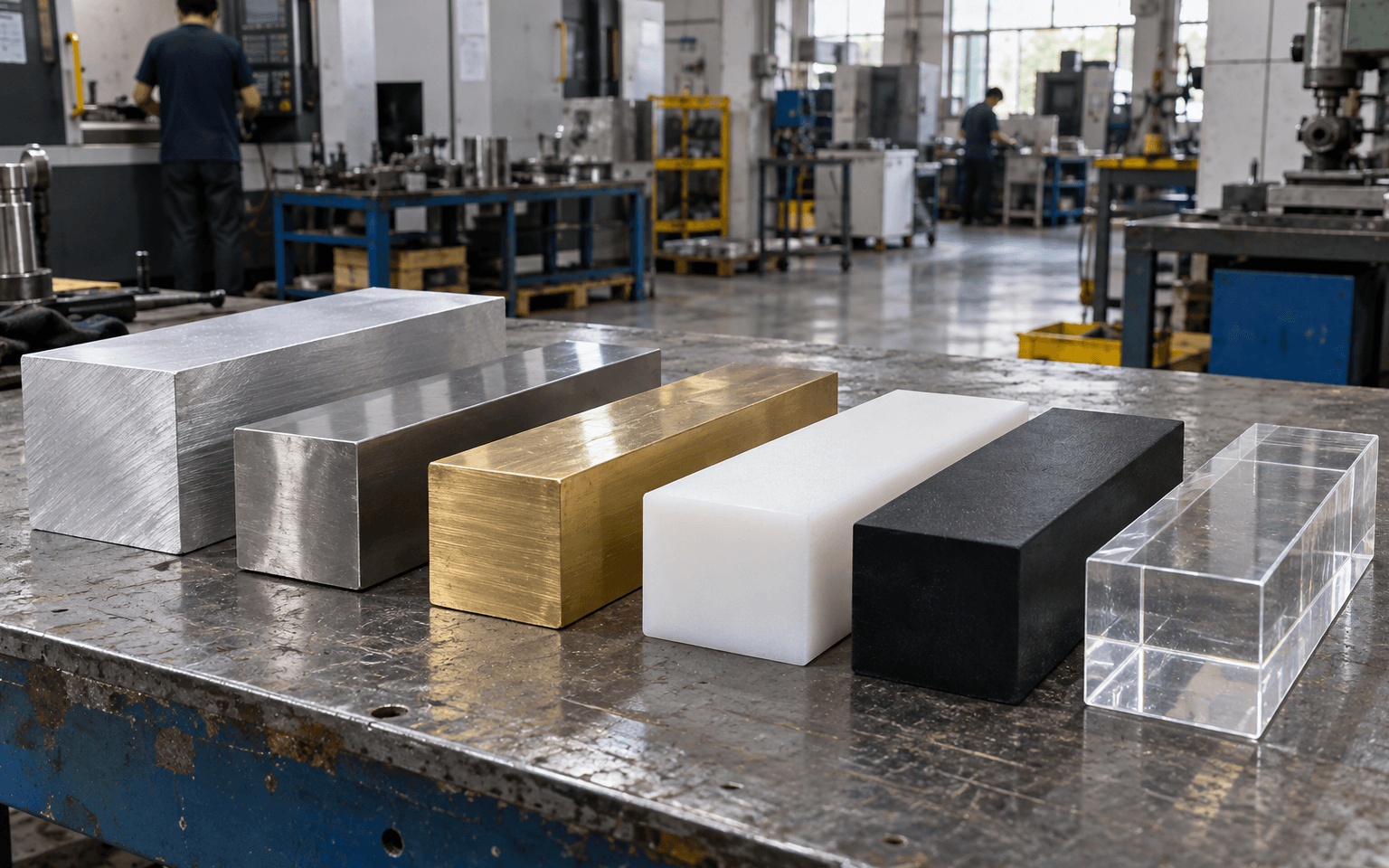
- Cold-rolled steel (often called SPCC in China): cheap, strong, easy to bend. It rusts, so it's always painted or powder coated.
- Galvanized steel (SGCC or electro-galvanized SECC): steel with a zinc coating for rust protection. Common for chassis inside electronics.
- Stainless steel (304, 316): corrosion-resistant and good-looking brushed, but harder to cut and bend, so pricier.
- Aluminum (commonly 5052): light and bends well. The popular machining alloy 6061 tends to crack on tight bends, so 5052 is the usual choice for bent parts.
- Copper and brass: for electrical busbars and decorative parts.
Thickness is given in millimetres (sometimes in gauge numbers, where a bigger number means thinner metal). Enclosures often use roughly 0.8–2 mm (typical, confirm with your supplier).
What sheet metal is great for
- Enclosures, chassis, brackets, panels and covers.
- Low to medium quantities, from one prototype to thousands, with no expensive tooling.
- Strong, stiff parts at low cost. A folded steel box is much cheaper than machining the same shape from a solid block.
- Fast turnaround. Simple parts are often ready in days (typical, confirm with your supplier).
- Easy changes. A new flat pattern is just a new file.
What it's not great for
- Complex 3D curves. Sheet metal bends in straight lines. Organic, sculpted shapes need casting, molding or deep drawing.
- Varying wall thickness. The whole part is one thickness.
- Very tight tolerances across bends. Each bend adds a little variation. Tolerances are usually looser than CNC.
- Very high volumes of small parts. Once you need tens of thousands, metal stamping (pressing parts in a dedicated die) is usually cheaper per part.
Fabrication vs stamping
This is worth knowing early:
- Fabrication uses general-purpose machines (laser, press brake) and needs no custom tooling. Good for prototypes to a few thousand parts.
- Stamping uses custom dies in a press. The dies cost money and take time, but each part takes a second. Good for high volumes.
Many products start in fabrication and move to stamping once volumes grow. If you design with standard bends and holes, that move is easier.
What drives the cost
- Material type and thickness. Stainless is pricier than steel.
- Cutting time: the length of all the edges and the number of holes.
- Number of bends and how many times the part must be repositioned.
- Hardware inserts, welding and grinding (welding is manual and adds up quickly).
- Finishing: powder coating, silk-screen printing, masking.
Designing to a shop's standard tools (bend radii, hole sizes) keeps costs down. See Designing a sheet-metal enclosure.
Getting sheet metal parts made in Shenzhen
Shenzhen and Dongguan have many sheet metal shops, from small laser-and-bend workshops to large factories that also weld, coat and assemble.
- Send a 3D model (STEP) plus a 2D drawing with material, thickness, finish, hardware and key dimensions.
- If you have one, also send the flat pattern as a DXF file, but let the shop confirm it for their tools.
- Ask for a DFM review: they'll flag bends that are too close to holes, flanges that are too short, and so on.
- Approve a first sample before a larger batch.
Key words
| English | Chinese | Pinyin |
|---|---|---|
| Sheet metal | 钣金 | bǎn jīn |
| Bending | 折弯 | zhé wān |
| Laser cutting | 激光切割 | jī guāng qiē gē |
| Stamping | 冲压 | chōng yā |
| Powder coating | 喷粉 | pēn fěn |
Keep reading
- Designing a sheet-metal enclosure
- Anodizing vs powder coating vs painting
- What is CNC machining?
- How to write an RFQ
Next steps
- Read the sheet metal hub
- Browse sheet metal shops in Shenzhen and Dongguan
- Compare with metal stamping for higher volumes
- See the Prototyping stage of the Path
- Glossary: 钣金 sheet metal, 折弯 bending
- Not sure where to start? Get an intro
Updated 29 September 2026