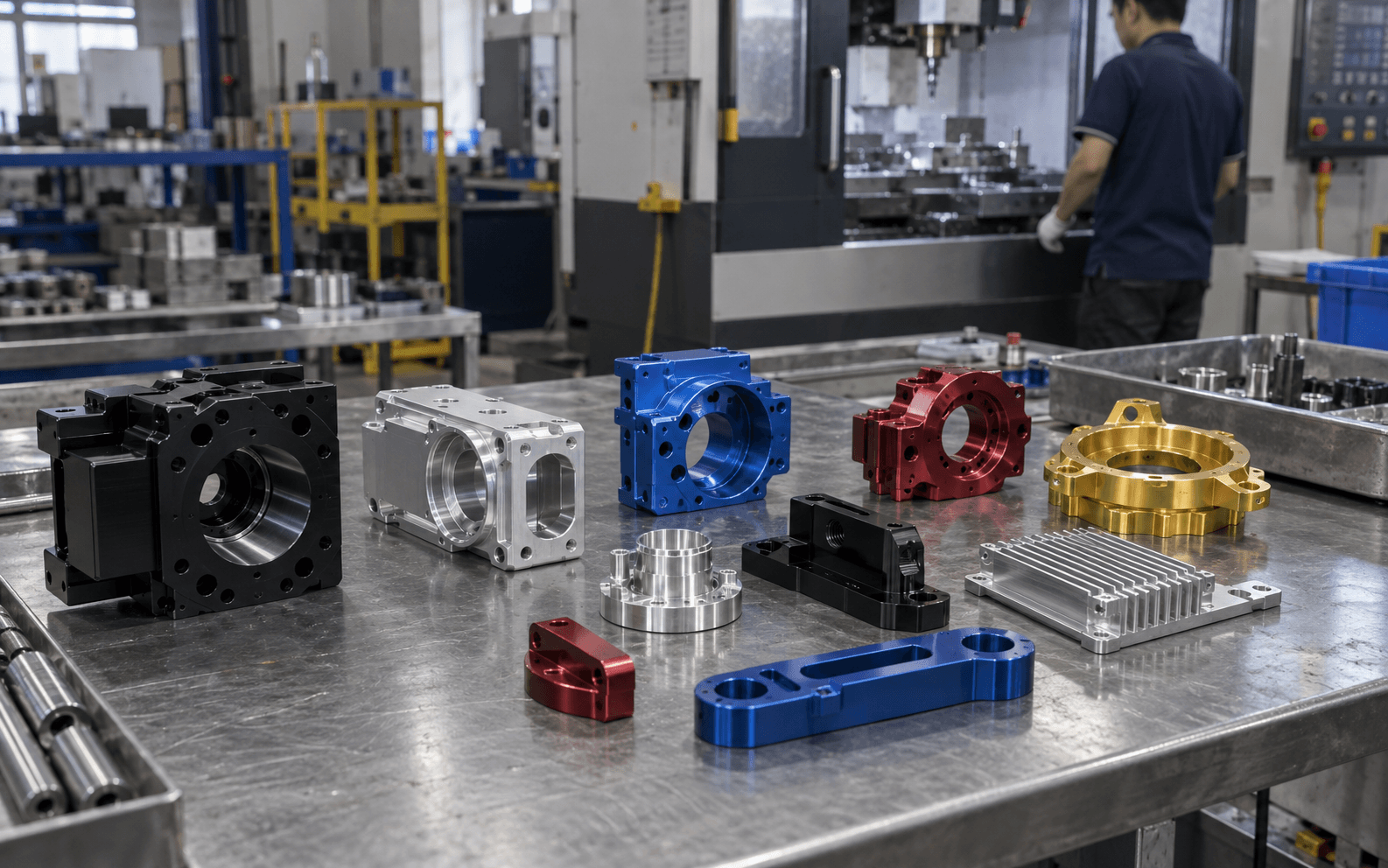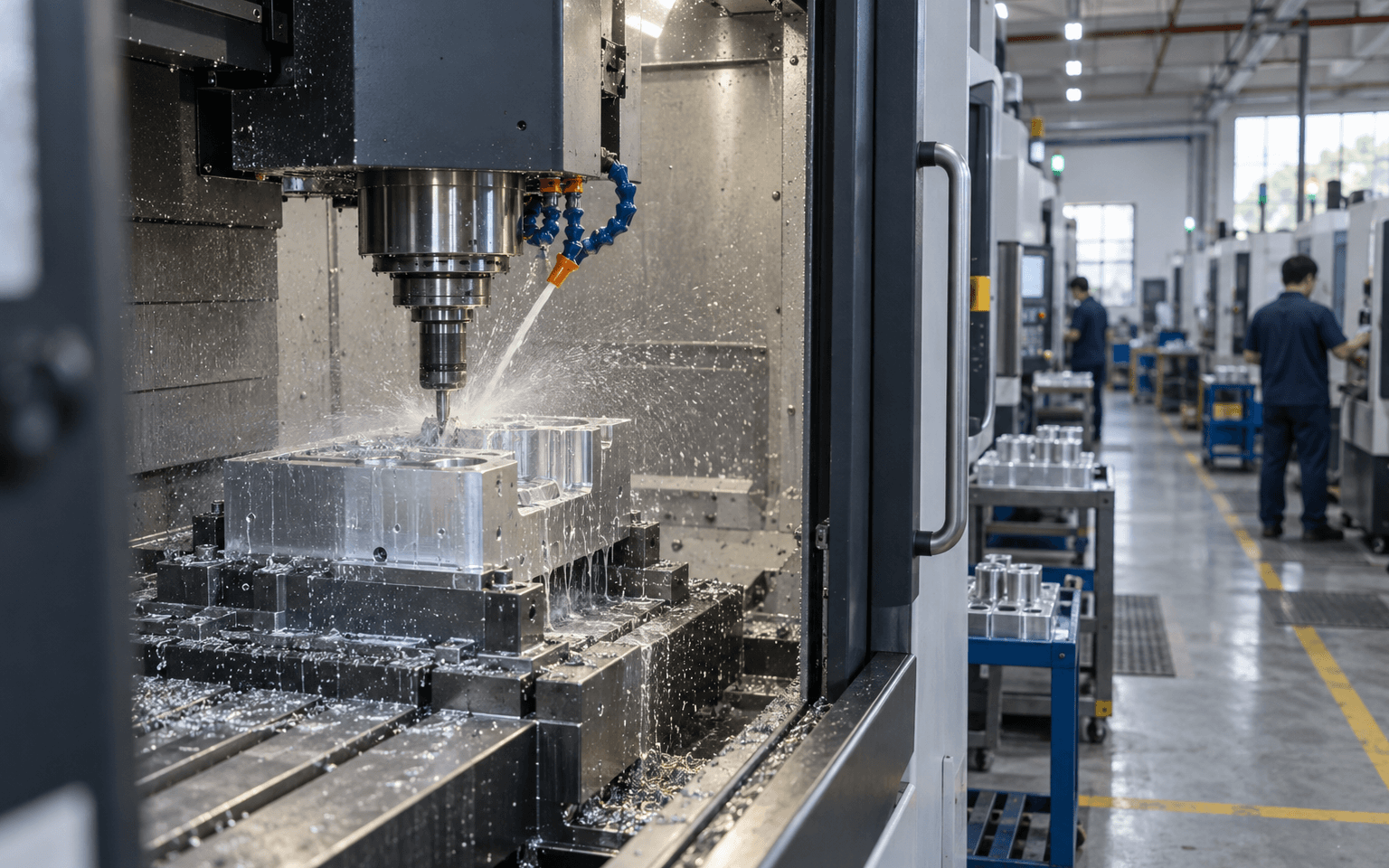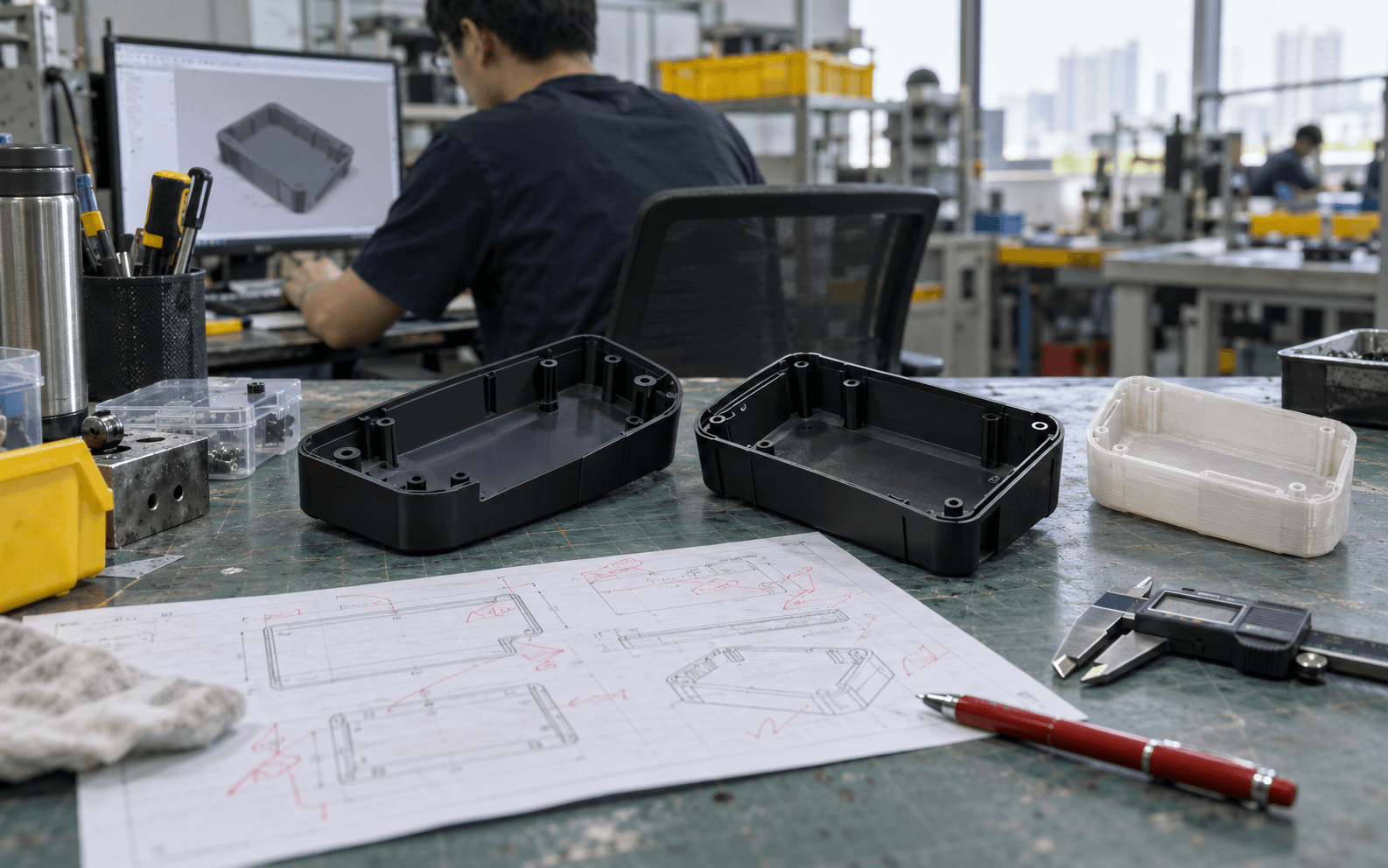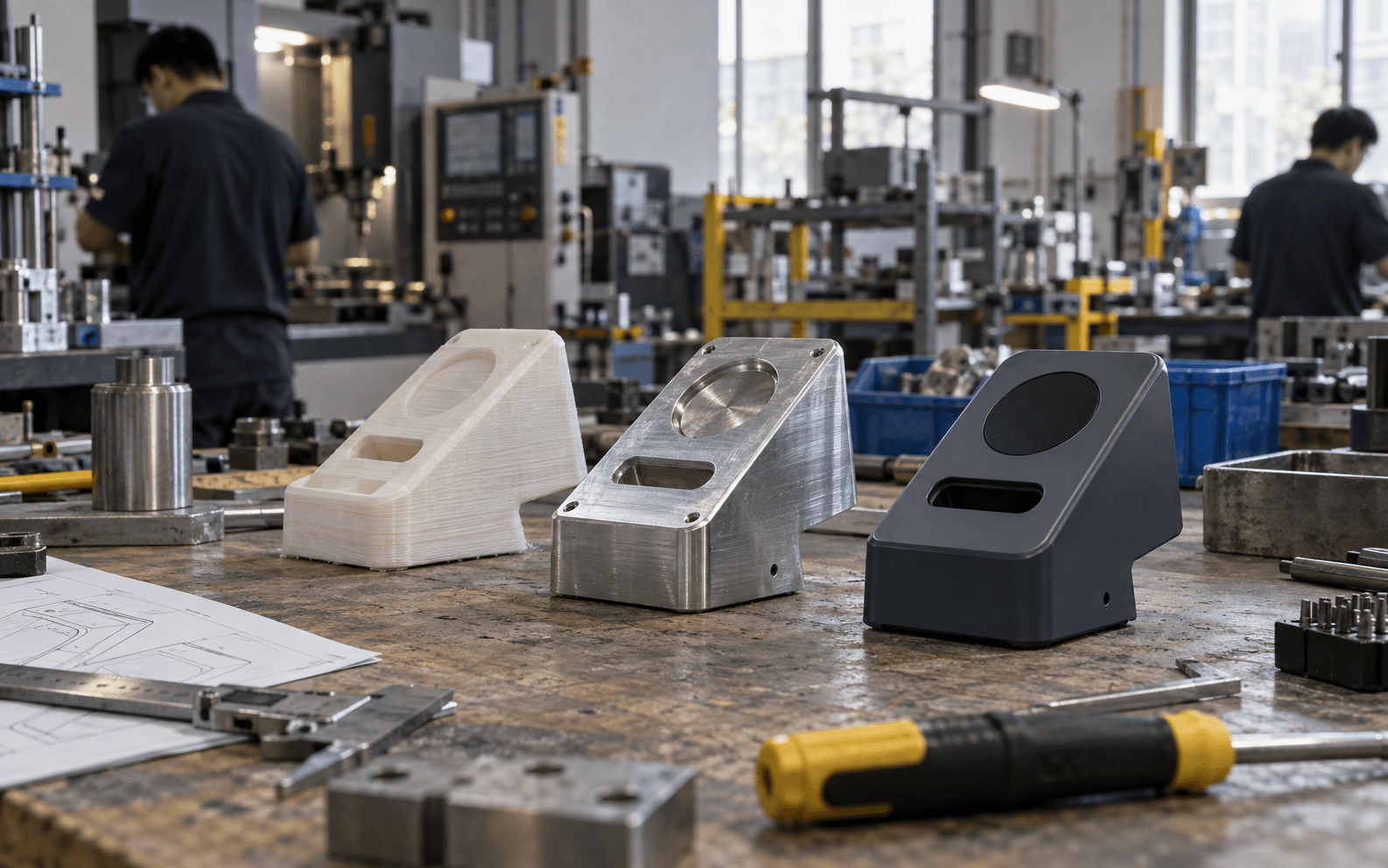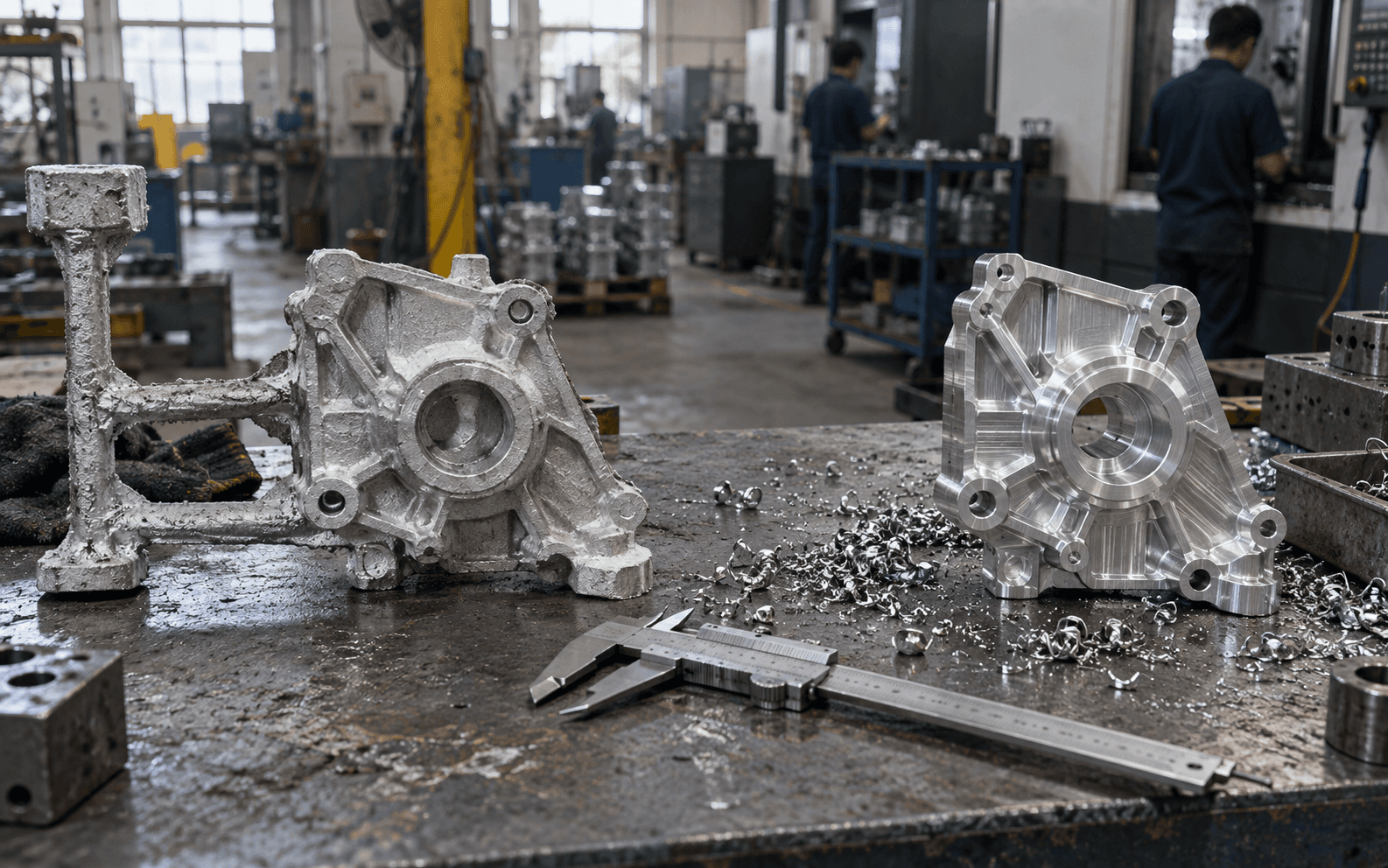
If your product has a metal part, you'll probably meet this question: should we keep CNC machining it, or invest in a die-casting tool? The answer depends mostly on how many parts you need, but also on how the part must look and perform.
New to these processes? Start with What is die casting? and What is CNC machining?
Two opposite ways to make a metal part
- CNC machining starts with a solid block of metal and cuts away everything that isn't the part. No special tool is needed; the shop just writes a program. Each part takes minutes to hours of machine time.
- Die casting pours molten metal into a hardened steel mold (the die) under high pressure. The die costs a lot and takes weeks to make, but then each part takes seconds to a minute.
A kitchen analogy: machining is like carving each cookie out of a slab of dough with a knife. Die casting is like buying a cookie cutter. The cutter costs money up front, but after that every cookie is fast and identical.
The cost difference, explained
Machining has low set-up cost and high cost per part. Die casting has high set-up cost and low cost per part.
So there's always a quantity where the two lines cross: the break-even point. Below it, machining is cheaper overall. Above it, die casting wins.
Here's the method, with made-up numbers just to show the sum:
- CNC: no tooling, $40 per part
- Die casting: $12,000 die, then $6 per part (including trimming and a little machining)
For 200 parts: CNC = $8,000; die casting = $12,000 + $1,200 = $13,200. CNC wins. For 1,000 parts: CNC = $40,000; die casting = $12,000 + $6,000 = $18,000. Die casting wins.
Break-even here is where $40 × N = $12,000 + $6 × N, which is about 350 parts. Your real numbers will be different. Get quotes for both at two or three quantities and do this sum yourself.
Remember that the die is paid once, but you may reorder parts many times. Think about lifetime volume, not just the first order.
Quality and material differences
The two processes don't produce identical parts, even in "aluminum".
Material. Machined parts are cut from wrought aluminum (metal that was rolled or extruded, like 6061). Die castings use casting alloys (like ADC12 or A380) designed to flow. Wrought alloys are generally stronger and more ductile (they bend before they break). If your part is highly stressed, ask an engineer to check it in the cast alloy.
Porosity. Castings can contain tiny trapped gas bubbles. Machined parts from solid stock generally don't have this problem. It matters for pressure-tight parts and for surfaces that will be machined, where a bubble can open up.
Precision. CNC can hold tight tolerances directly. Die castings come out close to size, but critical holes and faces are often machined afterwards anyway.
Finish. Machined 6061 aluminum anodizes beautifully. Die-cast aluminum usually doesn't; it's normally powder coated or painted. If the product's look depends on anodized metal, that can decide the question on its own. See Anodizing vs powder coating vs painting.
Design freedom. Die casting needs draft angles, even walls and no (or few) undercuts. CNC needs features a cutting tool can reach: no deep narrow pockets, no sharp inside corners. Each process shapes the design.
Time differences
- CNC: parts in days, and you can change the design for the next batch just by editing the file.
- Die casting: several weeks to make the die, then samples, possible die changes, and approval. Once running, output is fast and large.
This is why most teams prototype with CNC and only move to die casting when the design is stable.
The common path: both, in order
- Prototypes (1–50 parts): CNC machine them. Change the design freely.
- Early production (tens to low hundreds): keep machining, or look at cheaper options for your specific shape (sheet metal or extrusion, for example).
- Stable design, larger volume: redesign the part for die casting (add draft, even out walls), get a DFM review, and make the die.
- Production: die cast, then CNC-machine only the critical features, then finish.
Step 3 matters: a part designed for machining usually needs changes before it can be die cast. Budget engineering time for it.
Quick decision guide
| Your situation | Usually better |
|---|---|
| Fewer than a few hundred parts | CNC machining |
| Design still changing | CNC machining |
| Needs a premium anodized look | CNC machining |
| Thousands of parts, stable design | Die casting |
| Complex shape with many ribs and bosses | Die casting |
| Lowest possible price per part | Die casting |
These are rules of thumb, not fixed limits. Your part size, complexity and material change where the line falls.
Keep reading
- What is die casting? (pillar)
- Zinc vs aluminum die casting
- How much does CNC machining cost?
- 3D printing vs CNC for prototypes
Next steps
- Read the die casting hub and the CNC machining hub
- Compare quotes from die-casting suppliers and CNC shops
- See the Tooling stage of the Path
- Not sure where to start? Get an intro
Updated 29 September 2026