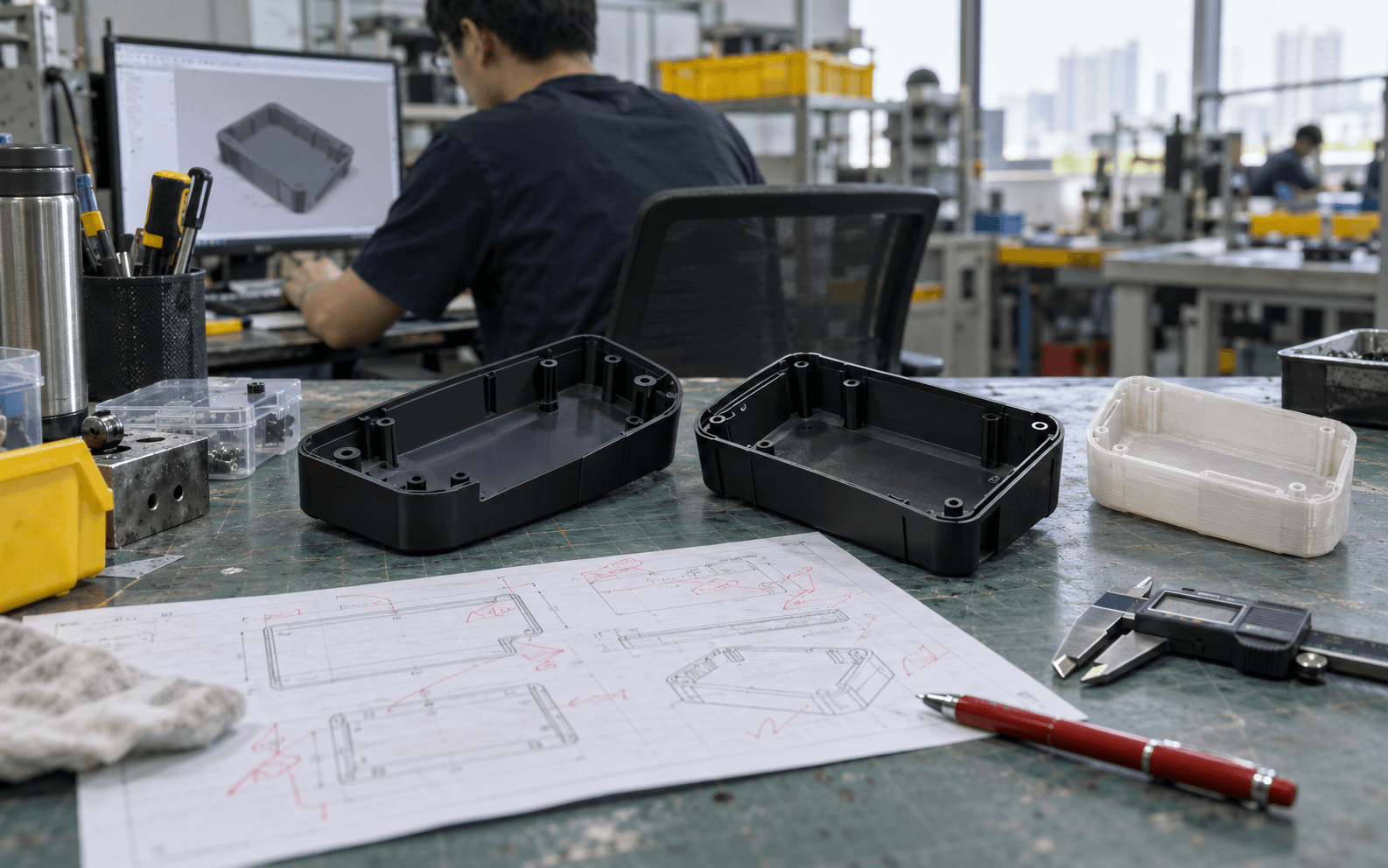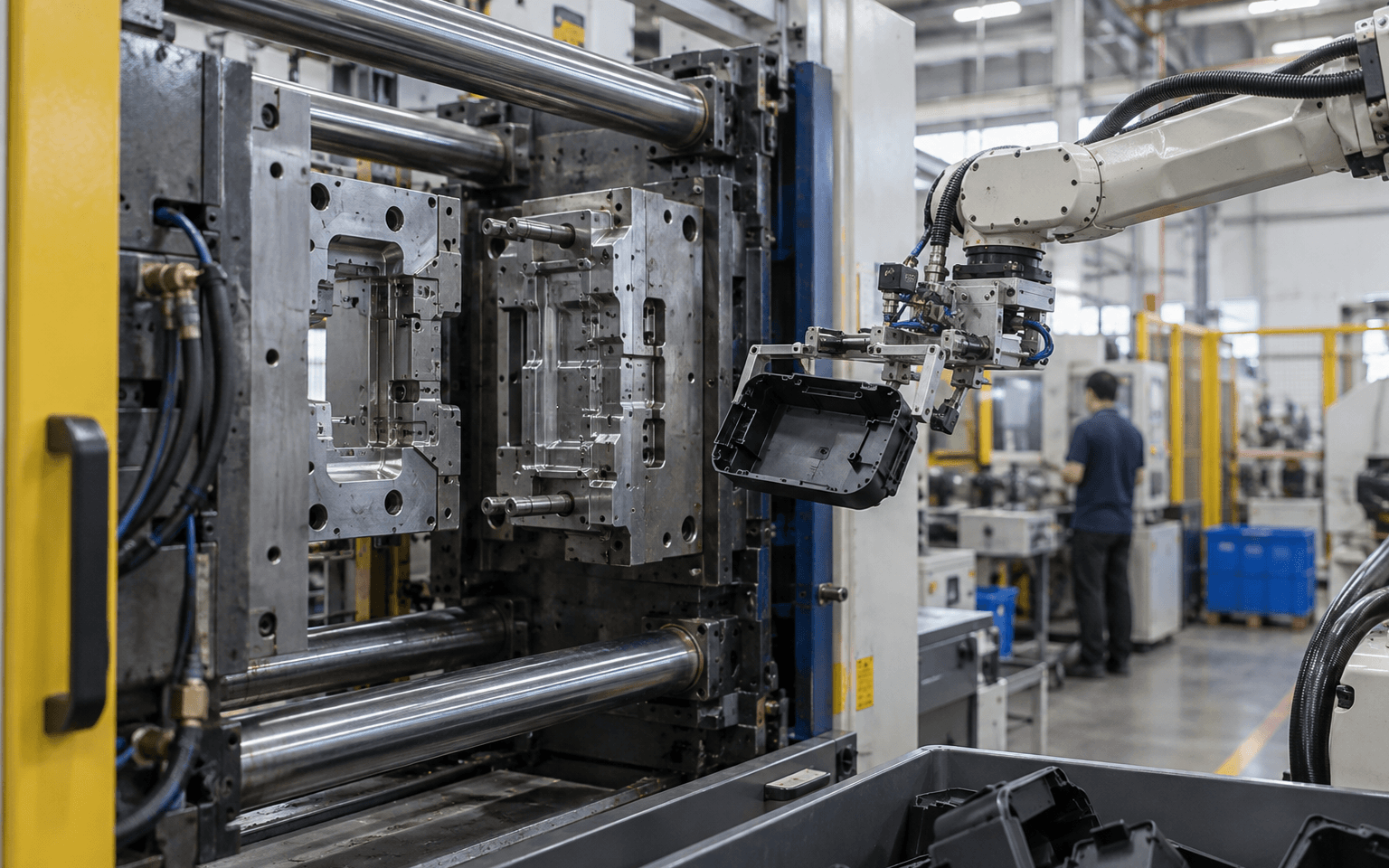
Look around you: phone chargers, remote controls, bottle caps, keyboard keys, car dashboards. Almost every plastic part you can see was injection molded. It's the main way plastic products are mass-produced.
This guide explains how it works and what it means for you if you're making a product for the first time.
The idea in one sentence
Melted plastic is forced into a metal mold shaped like your part, it cools in seconds, the mold opens, and out comes a finished part, then the machine does it again, thousands of times a day.
A simple analogy
Think of a waffle iron. You pour batter in, close the lid, wait, open it and take out a waffle in exactly that shape. Every waffle comes out the same.
An injection molding machine is a very powerful, very precise waffle iron for plastic. The "waffle iron" part is the mold (also called the tool). It's custom-made for your part.
How the machine works
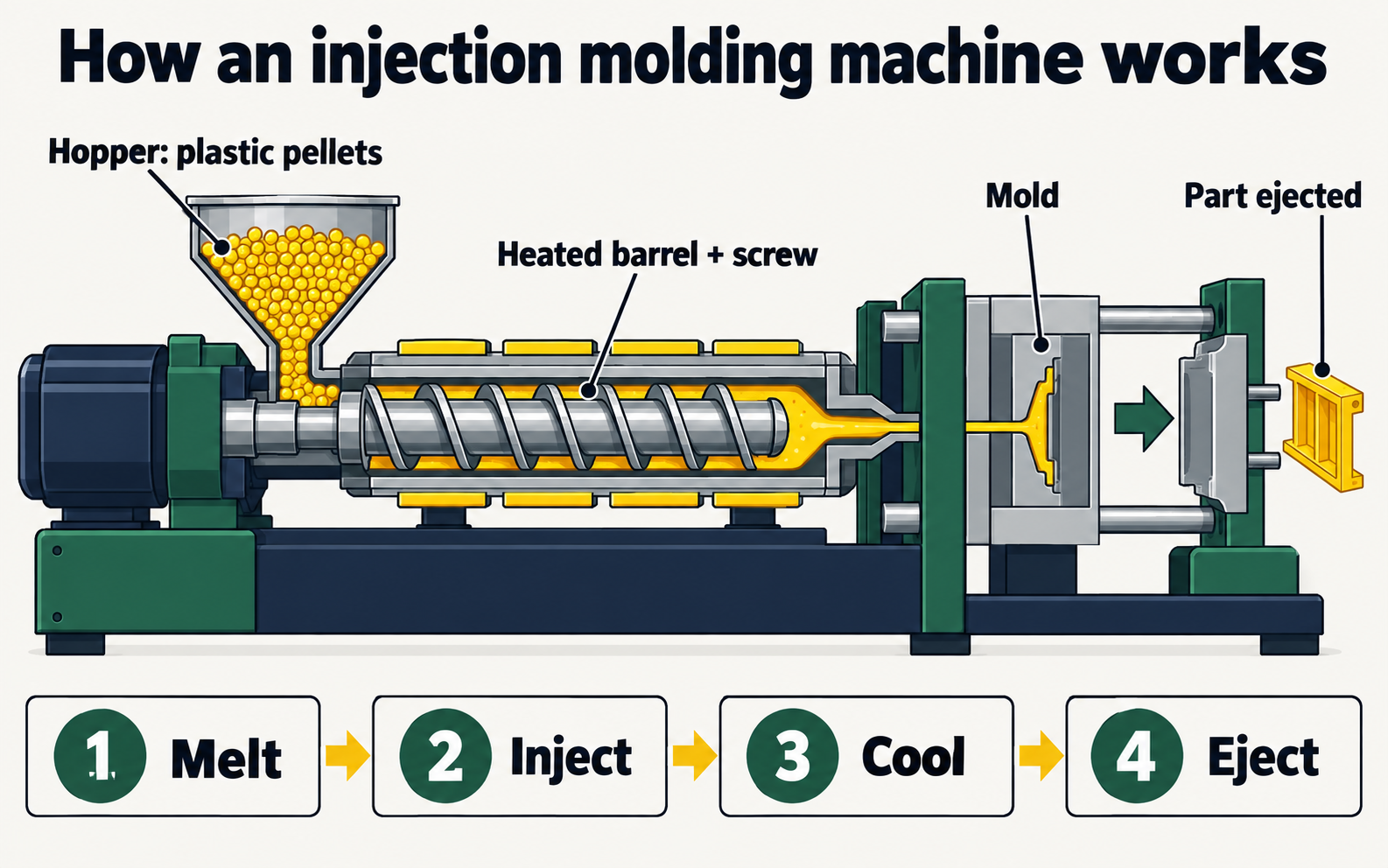
- Pellets: plastic arrives as small granules, called pellets or resin.
- Melting: a heated barrel with a screw inside melts the pellets and pushes them forward.
- Injection: the melted plastic is shot into the closed mold at high pressure.
- Cooling: water channels inside the mold cool the plastic until it's solid, usually in seconds.
- Ejection: the mold opens and pins push the part out.
One full cycle is called a shot. A small part might take 15–60 seconds per shot.
Why it's so cheap per part
Once the mold exists, each part costs only:
- the plastic in it (often just cents),
- a few seconds of machine time, and
- a little labour.
So making 10,000 parts can cost far less per part than any other method.
The catch: the mold
The mold is the expensive, slow part:
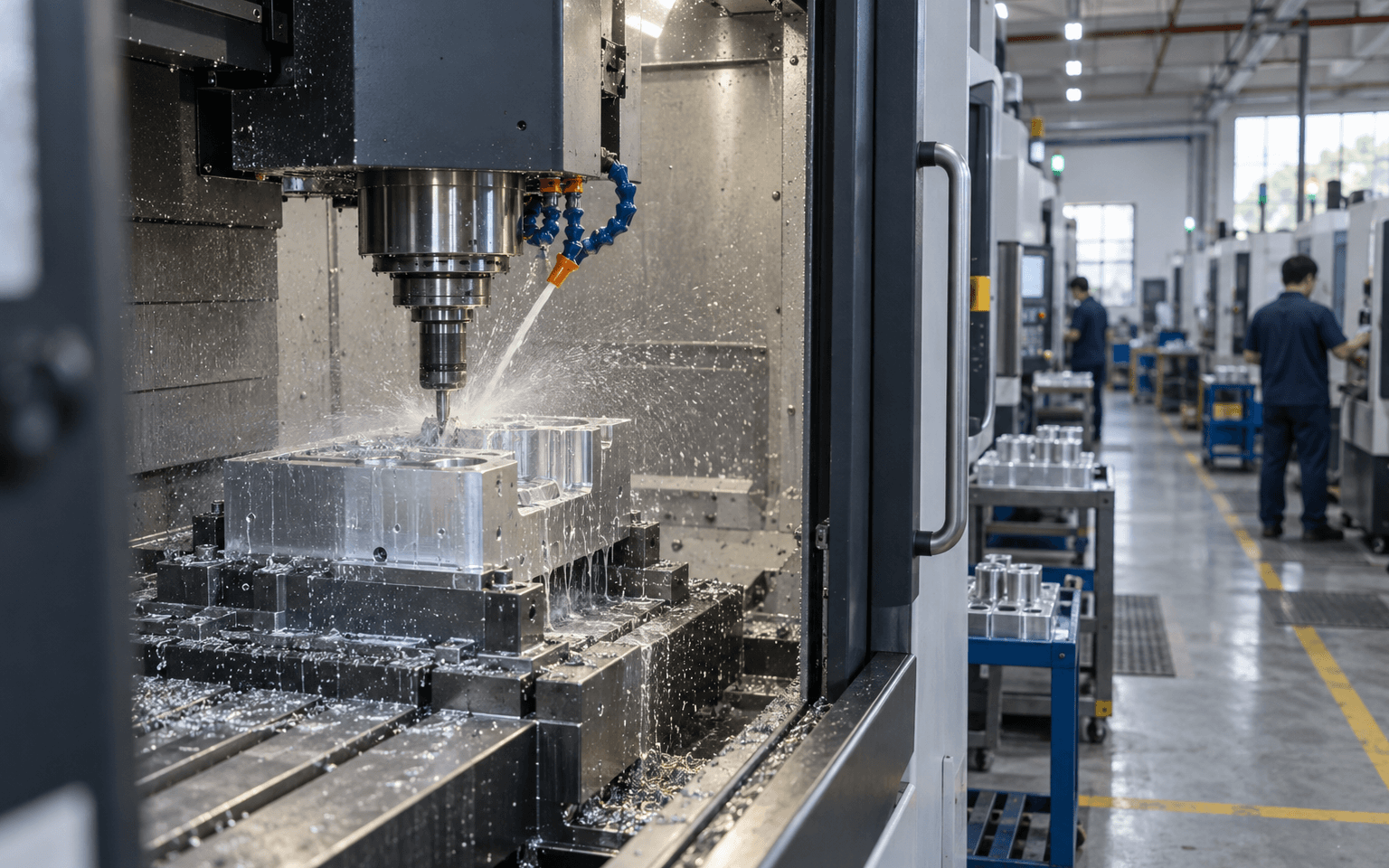
- It's machined from solid steel (or aluminum) by skilled toolmakers.
- A simple small mold might cost a few thousand US dollars. A large, complex one can cost tens of thousands.
- It usually takes 3–6 weeks to make and test.
- Changing it is hard. Once steel is cut, many design changes are expensive or impossible.
That's why the rule is: only make a mold when your design is final. In Chinese factories this step is called 开模 (kāi mó, "opening a mold").
When is injection molding right for you?
It's a good fit when:
- you need thousands of identical plastic parts (or more),
- your design has been tested with prototypes and has stopped changing, and
- you can afford the up-front mold cost.
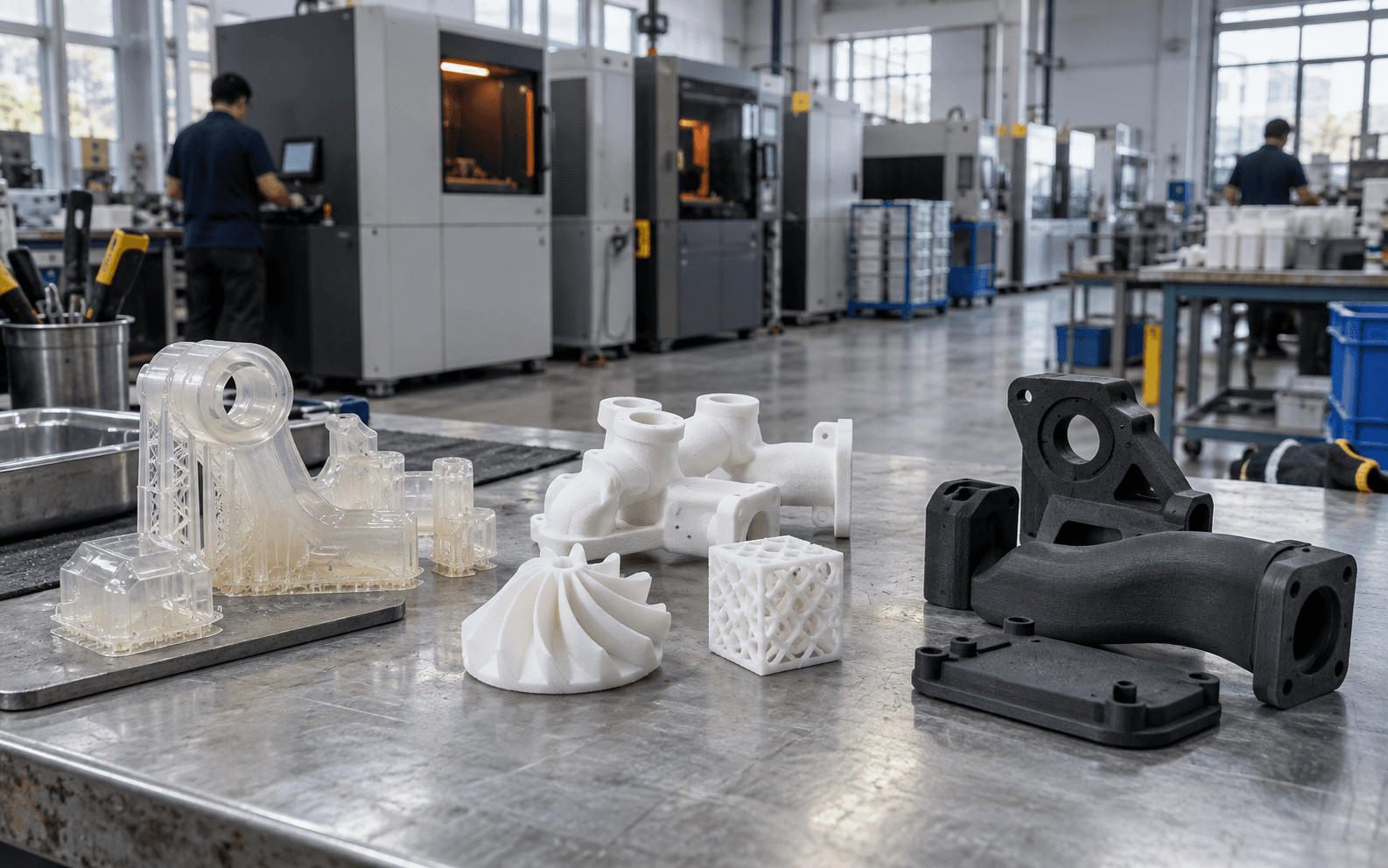
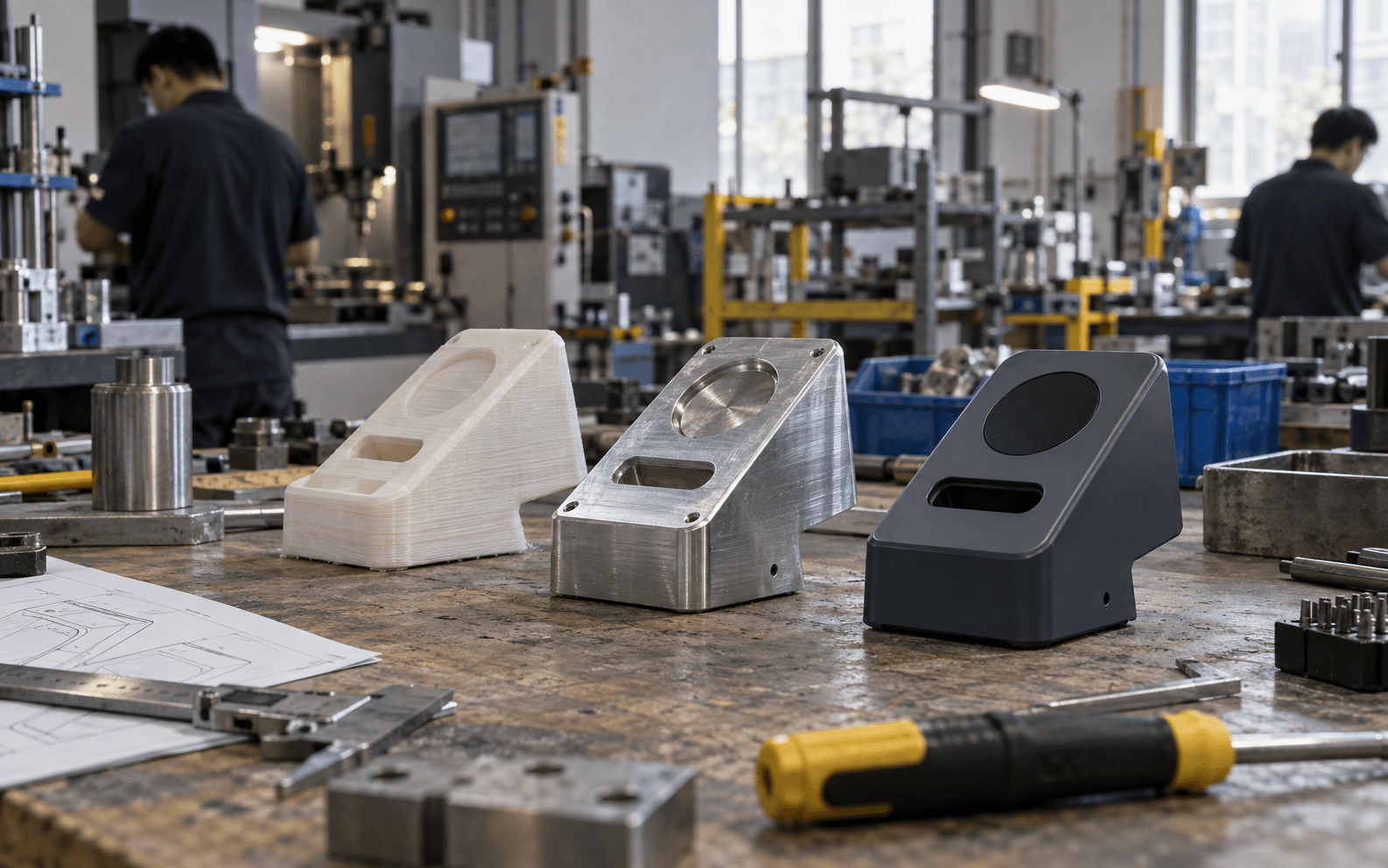
If you need fewer than about a hundred parts, or you're still changing the design, look at urethane casting, 3D printing or CNC machining instead. There's also a middle option, aluminum or "rapid" tooling. It's cheaper and faster but wears out sooner.
Designing for injection molding
Molded parts follow some rules that 3D-printed parts don't:
- Draft: a slight slope on walls so the part slides out of the mold.
- Even wall thickness: thick areas shrink more and cause dents (sink marks) and bending (warping).
- Avoid undercuts: features that "hook" the part in the mold need extra moving parts, which adds cost.
Your mold maker will check these in a DFM review (design for manufacturing) before cutting steel.
Common plastics
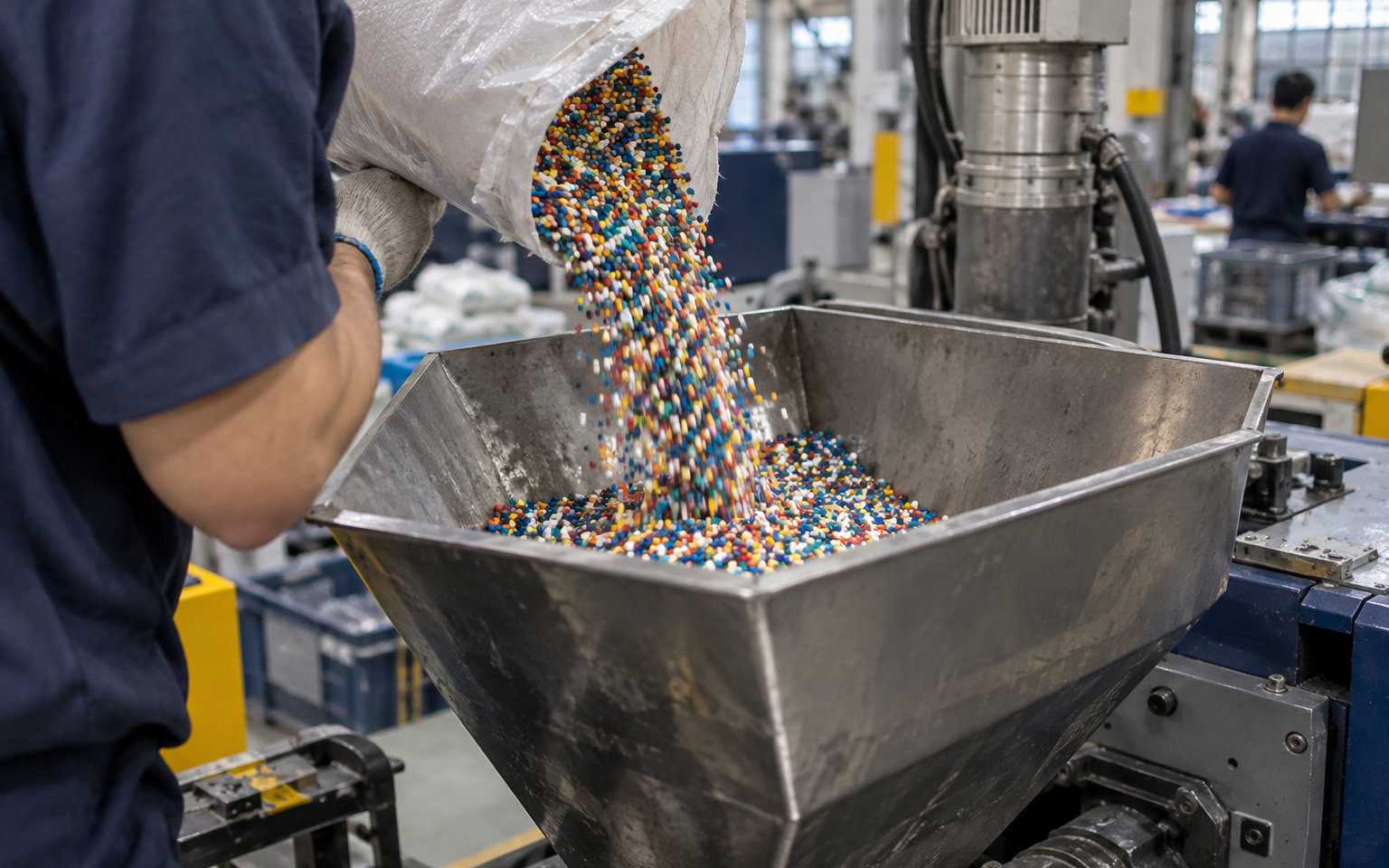
- ABS: cheap, tough, easy to colour; common for cases
- PC: very tough, can be clear
- PC/ABS: a blend with the best of both; common for electronics
- PP: flexible and chemical-resistant; used for living hinges and containers
- Nylon (PA), often glass-filled: strong, for structural parts
- TPU / TPE: rubbery; used for grips, seals and overmolding
Keep reading
- How much does injection molding cost?
- Design rules for injection-molded parts
- Aluminum vs steel molds
- Overmolding and insert molding explained
- How to get an injection mold made in China: the step-by-step process with a Chinese factory
Next steps
- Browse injection molding and mold shops in Shenzhen and Dongguan
- See the injection molding hub
- Get an intro to mold makers that fit your project
Updated 29 September 2026