Guides · 21 guides
Injection molding guides
 Start here
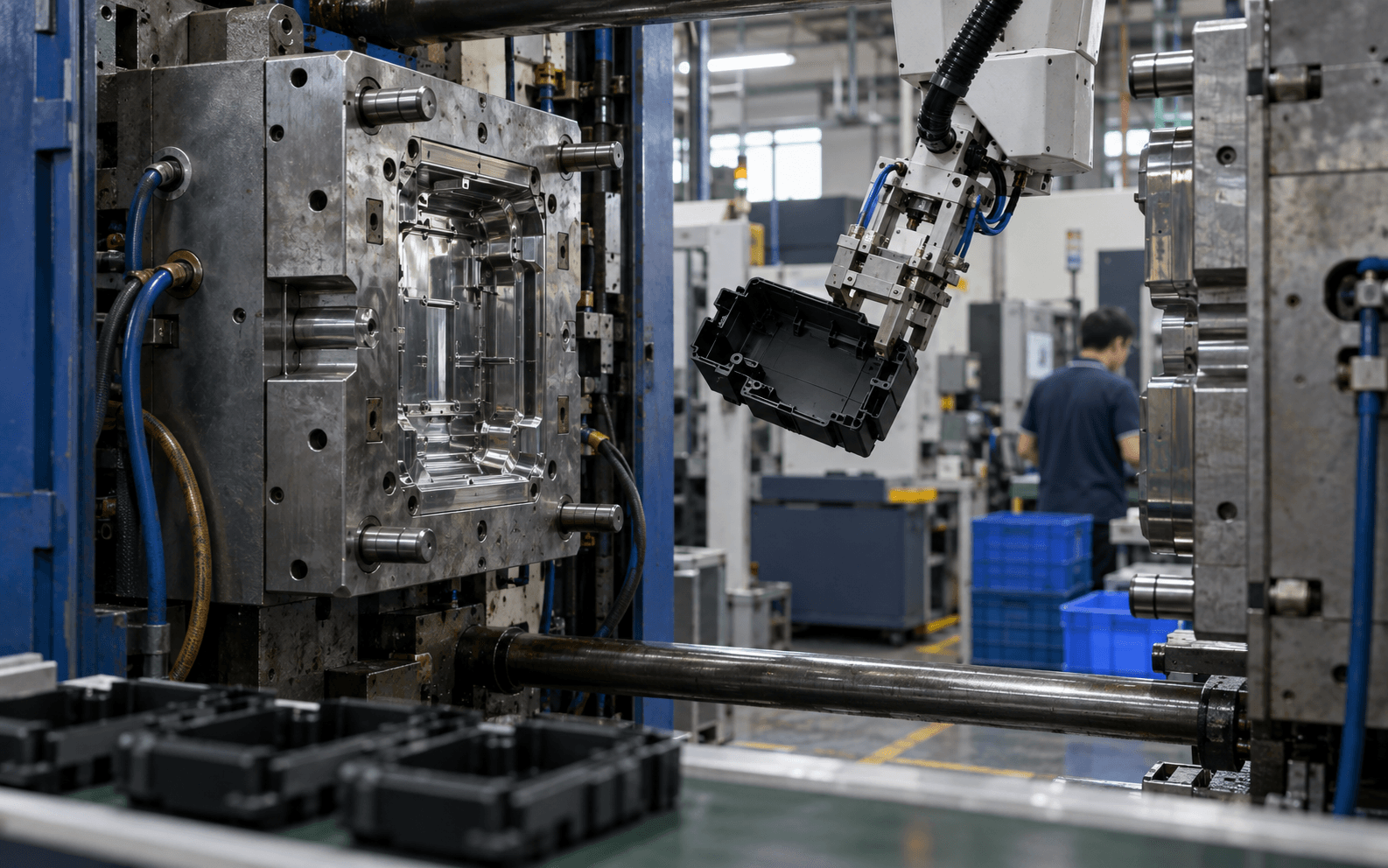
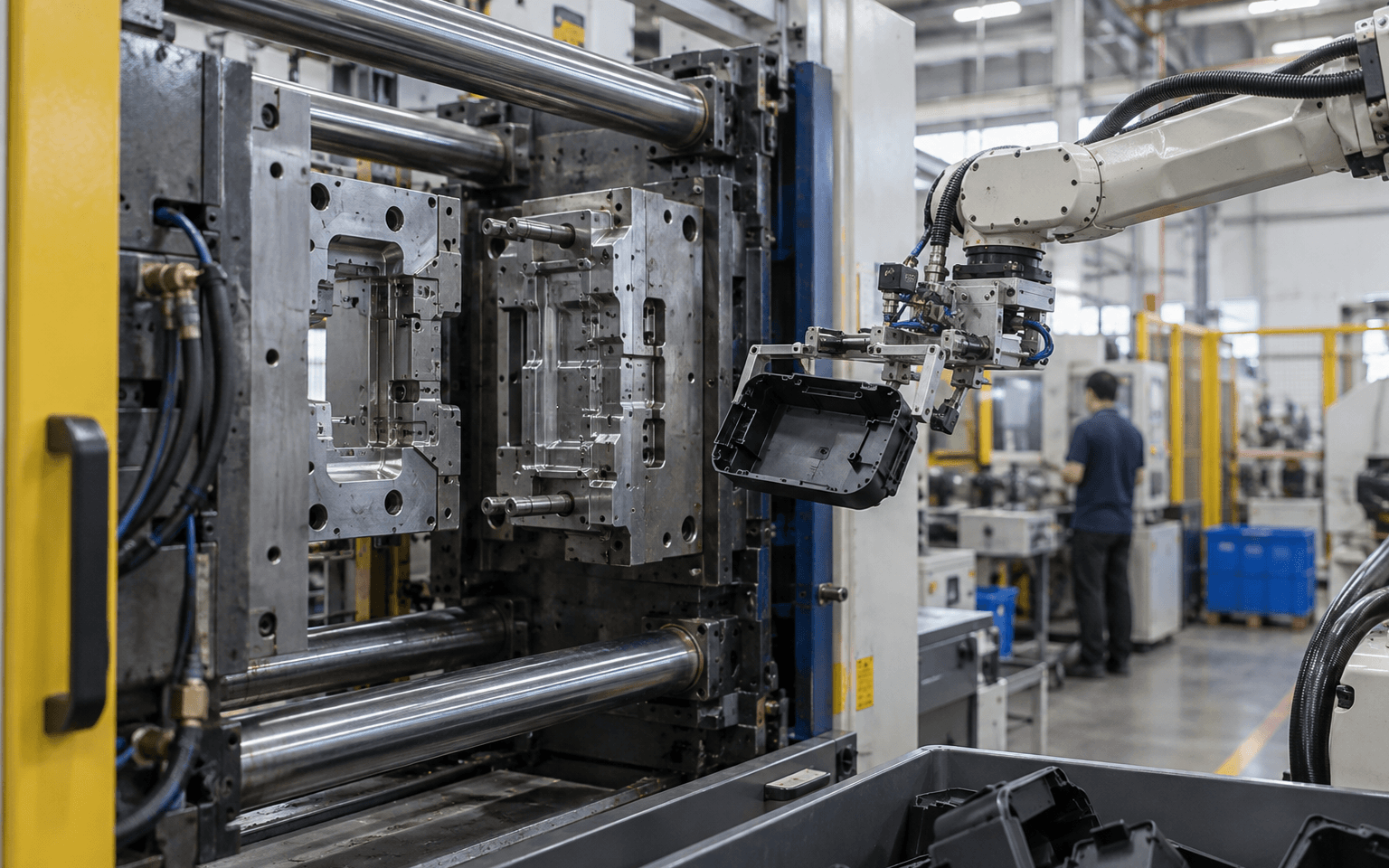
What is injection molding? A plain-English guide
How injection molding works, why it makes plastic parts so cheap at volume, what the catch is, and when your product is ready for it.
→ 01Choosing · 7 min
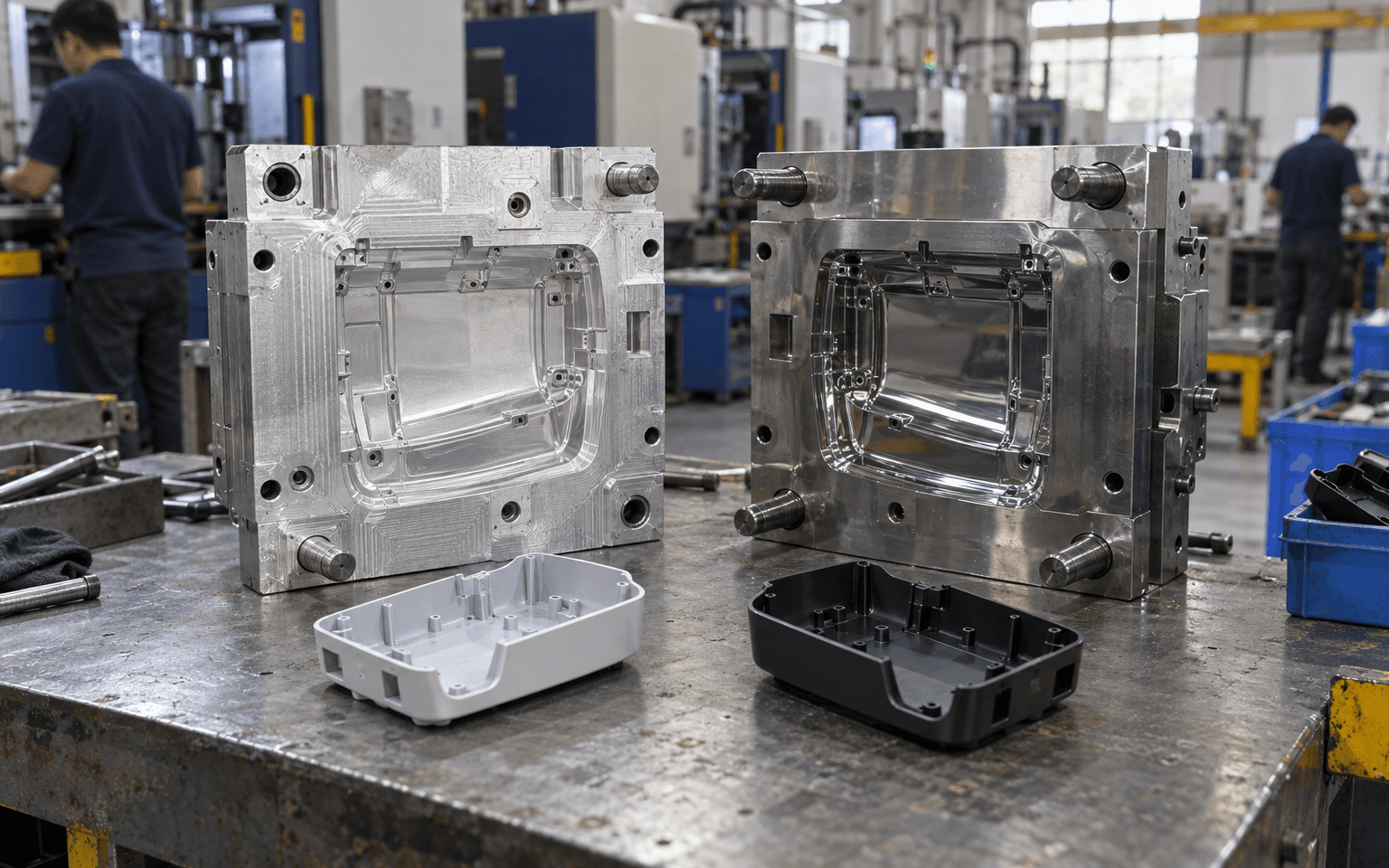
Aluminum vs steel molds (rapid tooling explained)
The difference between aluminum "rapid" tooling and hardened steel production molds, with cost, speed and lifetime compared in plain English, and how to choose for your first run.
 02Working in China · 18 min
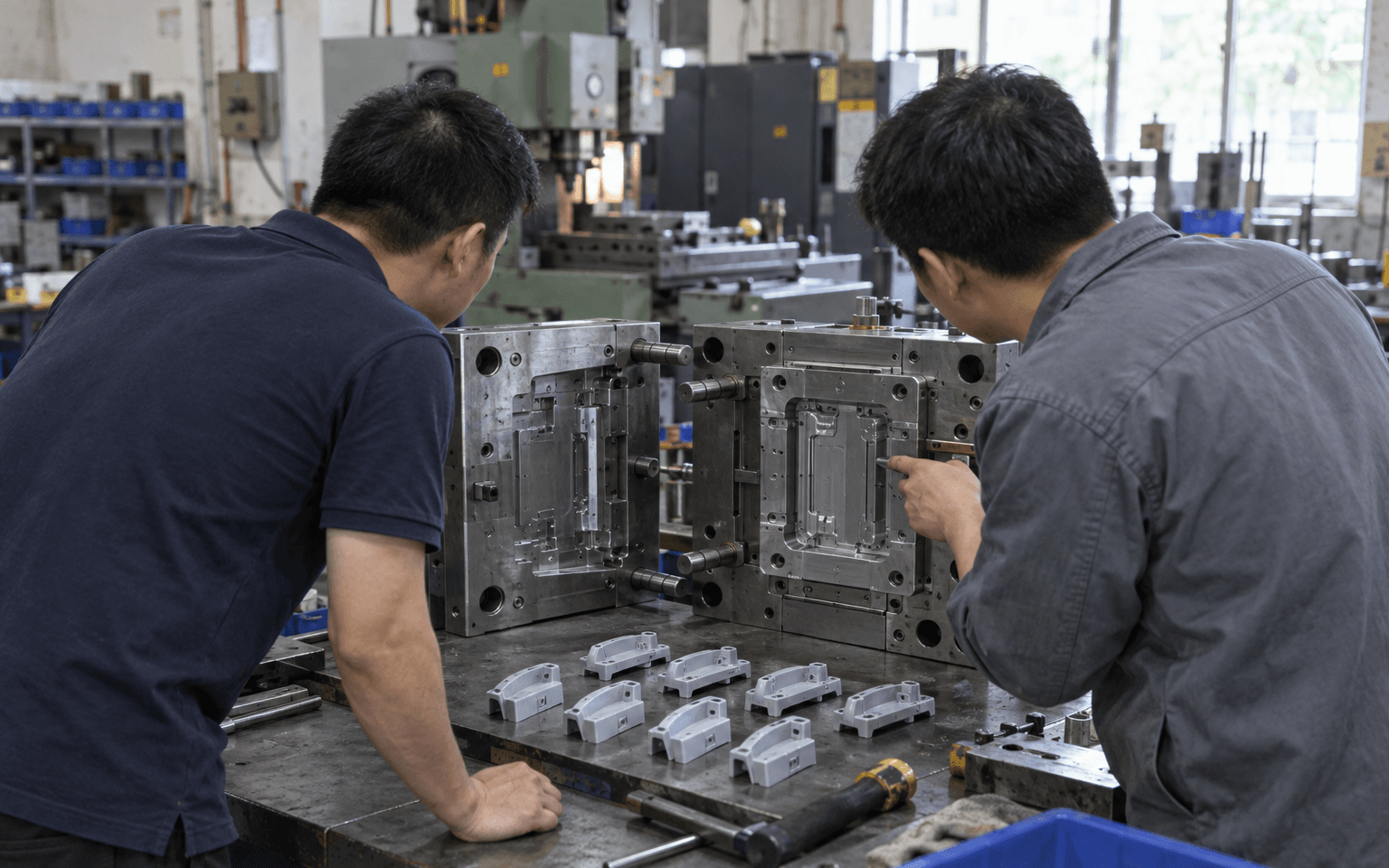
How to get an injection mold made in China
A plain-English walkthrough for first-timers. What an injection mold is, when you need one, what it costs, how long it takes, and how to make sure the mold belongs to you.
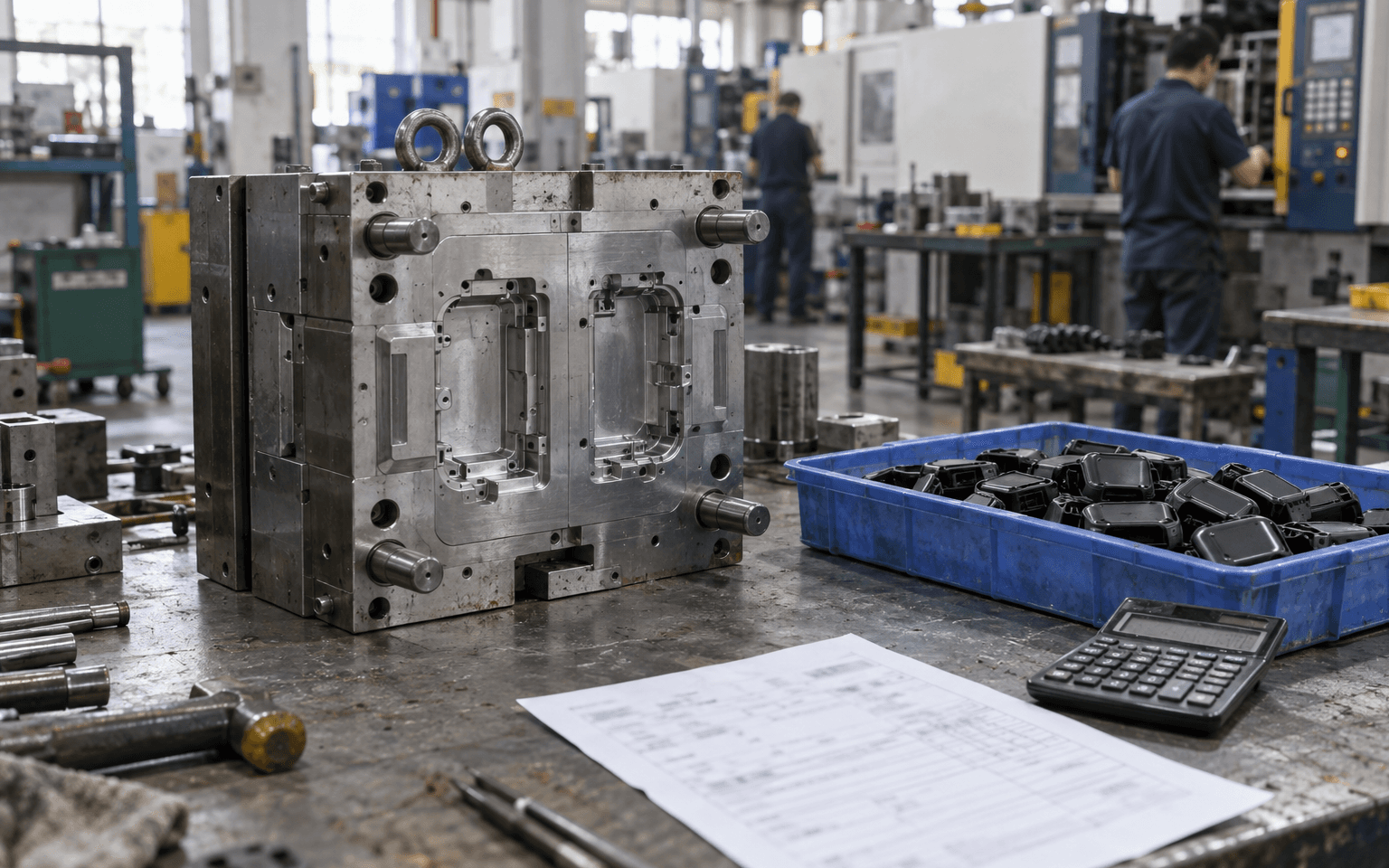 03Cost · 9 min
How much does injection molding cost?
The two costs of injection molding (the mold and each part) explained for first-timers, with a simple way to work out when molding becomes cheaper than prototyping methods.
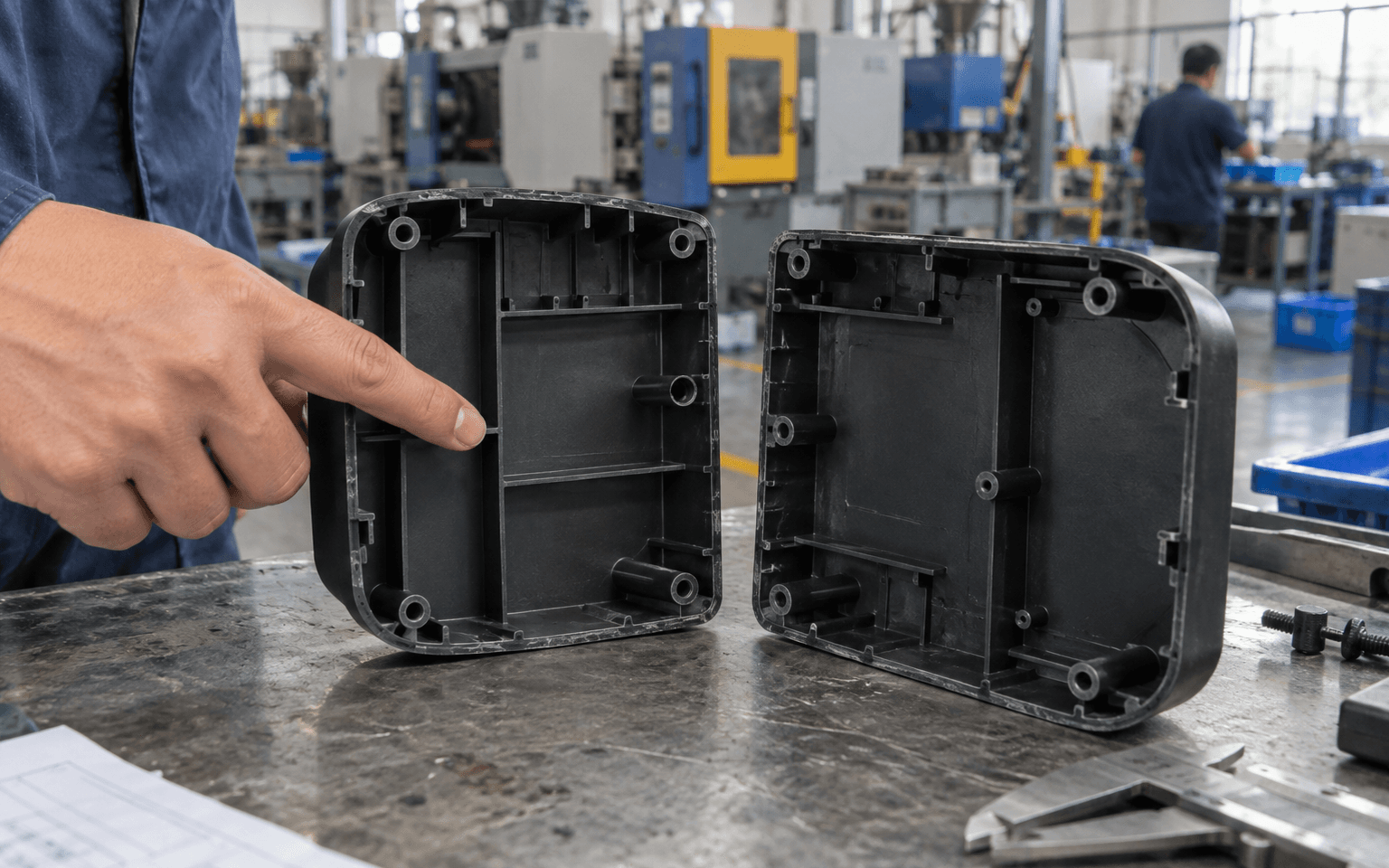 04Design · 10 min
Design rules for injection-molded parts
The handful of design rules that make plastic parts moldable and cheap. Draft, wall thickness, ribs, bosses and undercuts, explained simply with the reason behind each.
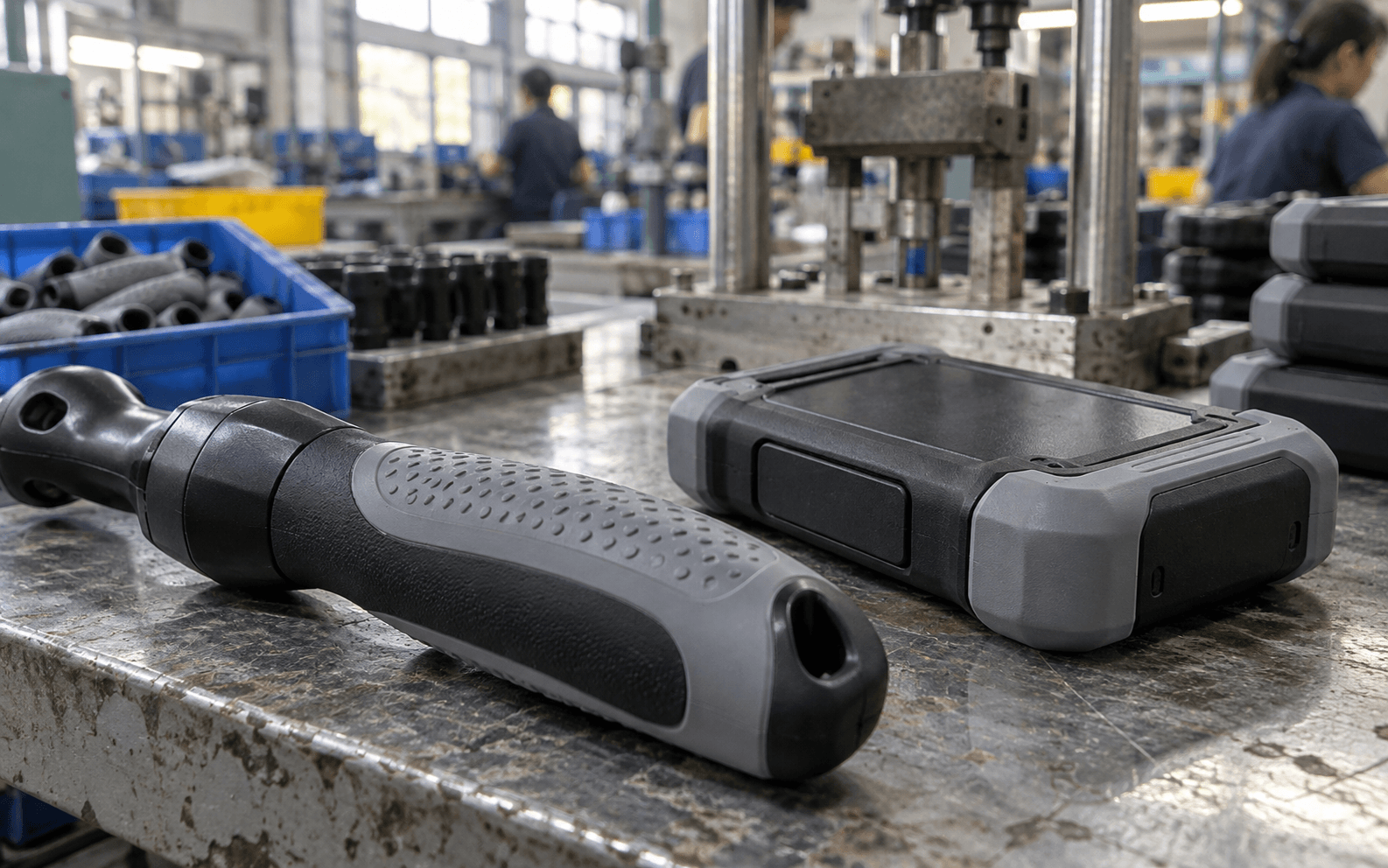 05Basics · 6 min
Overmolding and insert molding explained
How products get soft-touch grips, rubber seals and molded-in metal parts. Overmolding, two-shot molding and insert molding explained simply.
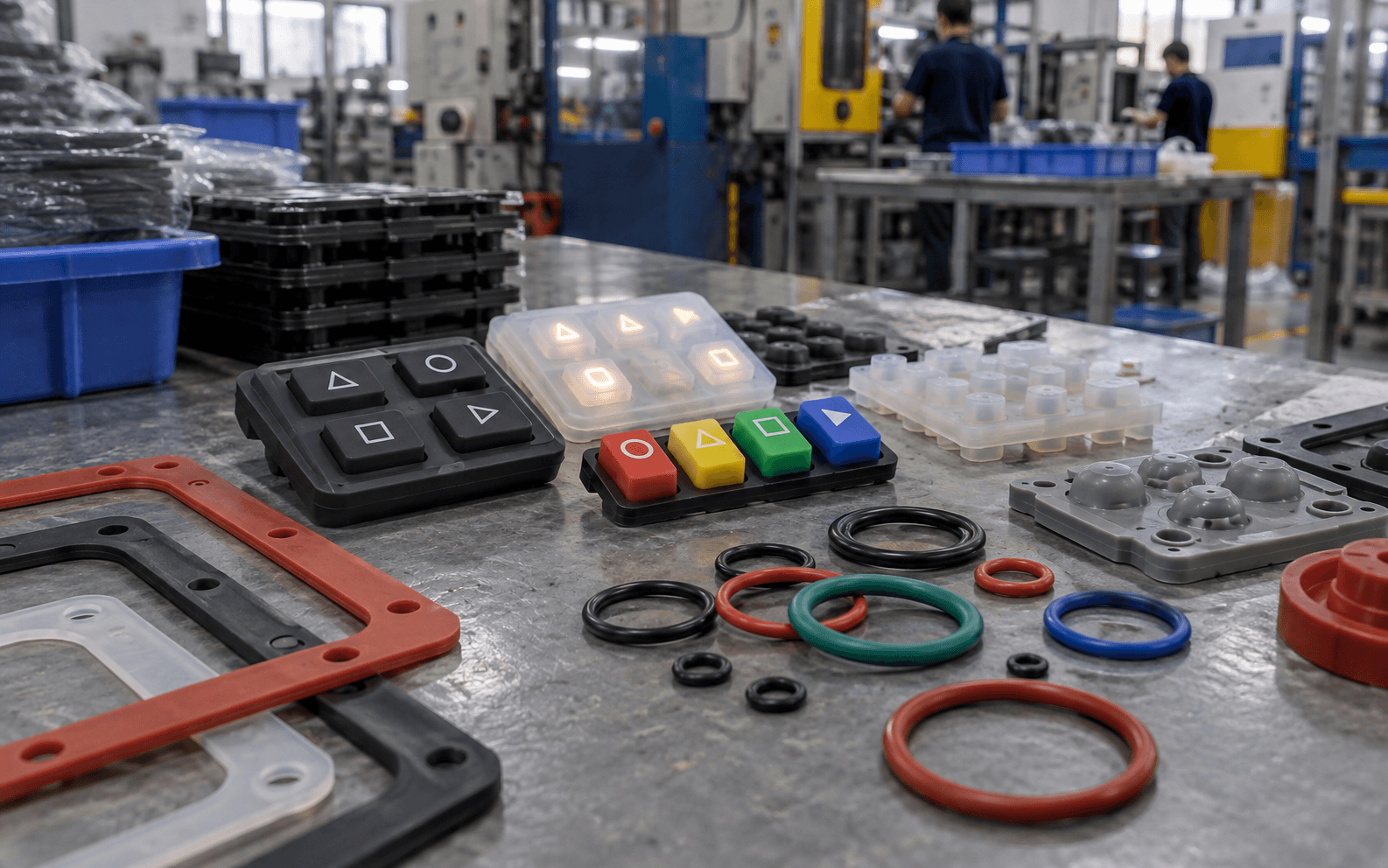 06Basics · 10 min
Silicone keypads and seals: a beginner's guide
How custom silicone parts like keypads, buttons, gaskets and seals are made, what hardness and key feel mean, compression molding vs LSR, and how to order them in Shenzhen and Dongguan.
 07Design · 9 min
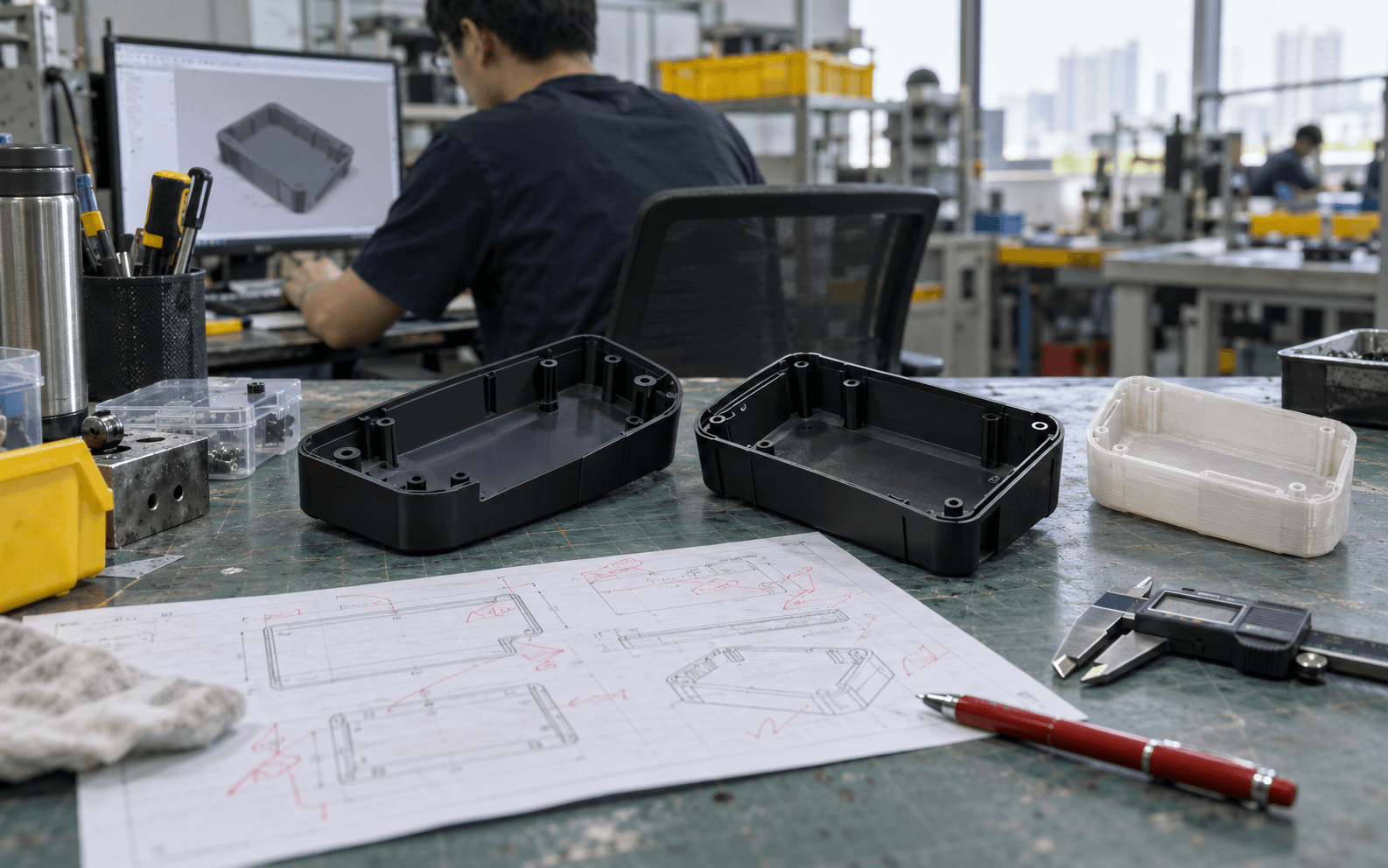
What is DFM? Design for manufacturing explained
What design for manufacturing (DFM) means, why it decides most of your product's cost, the core rules, when to do a DFM review, and how DFM feedback from Shenzhen suppliers works.
 08Design · 7 min
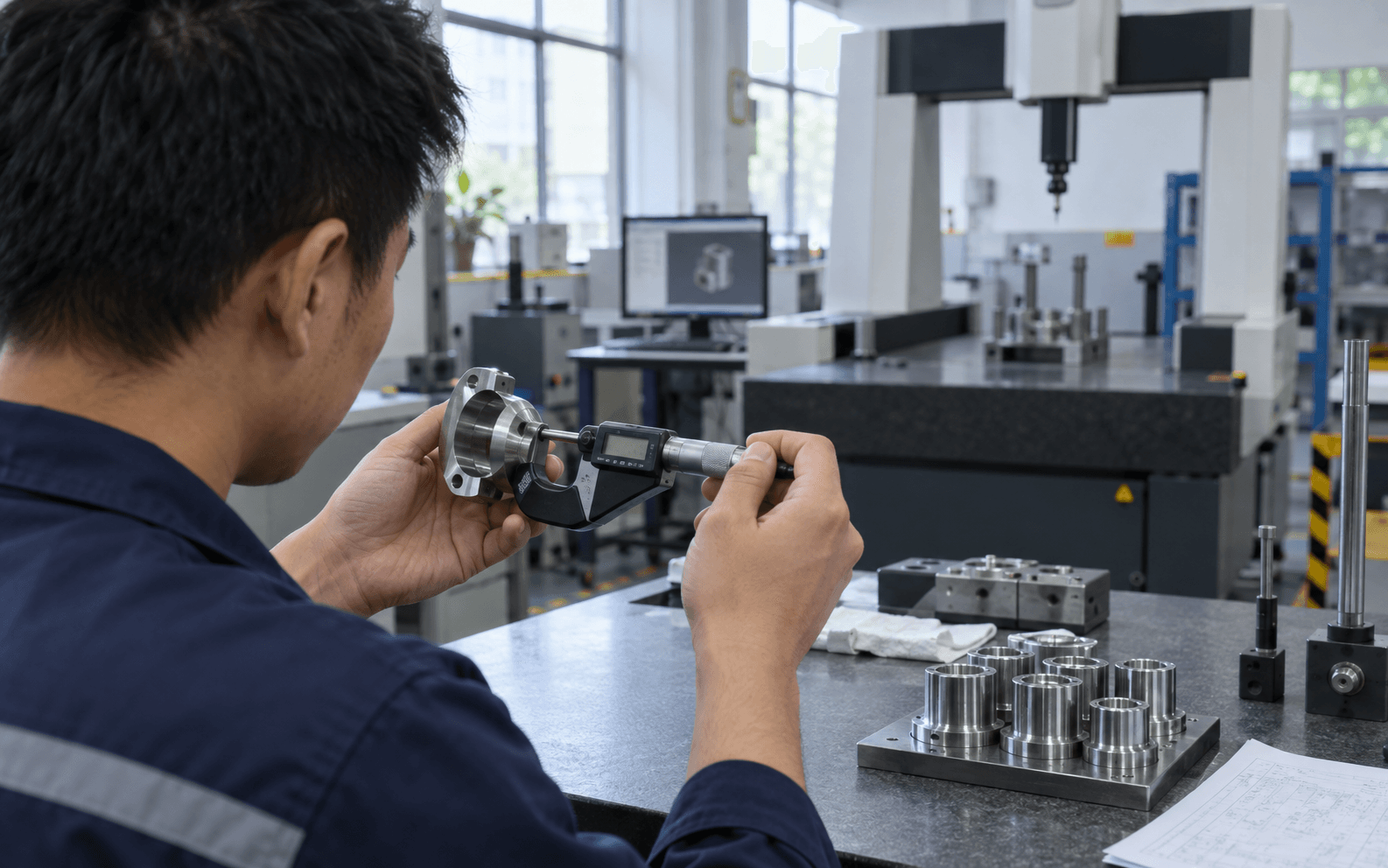
Tolerances explained for first-timers
What "±0.05 mm" means, why tighter tolerances cost more, and how to decide which features of your part actually need them.
 09Design · 9 min
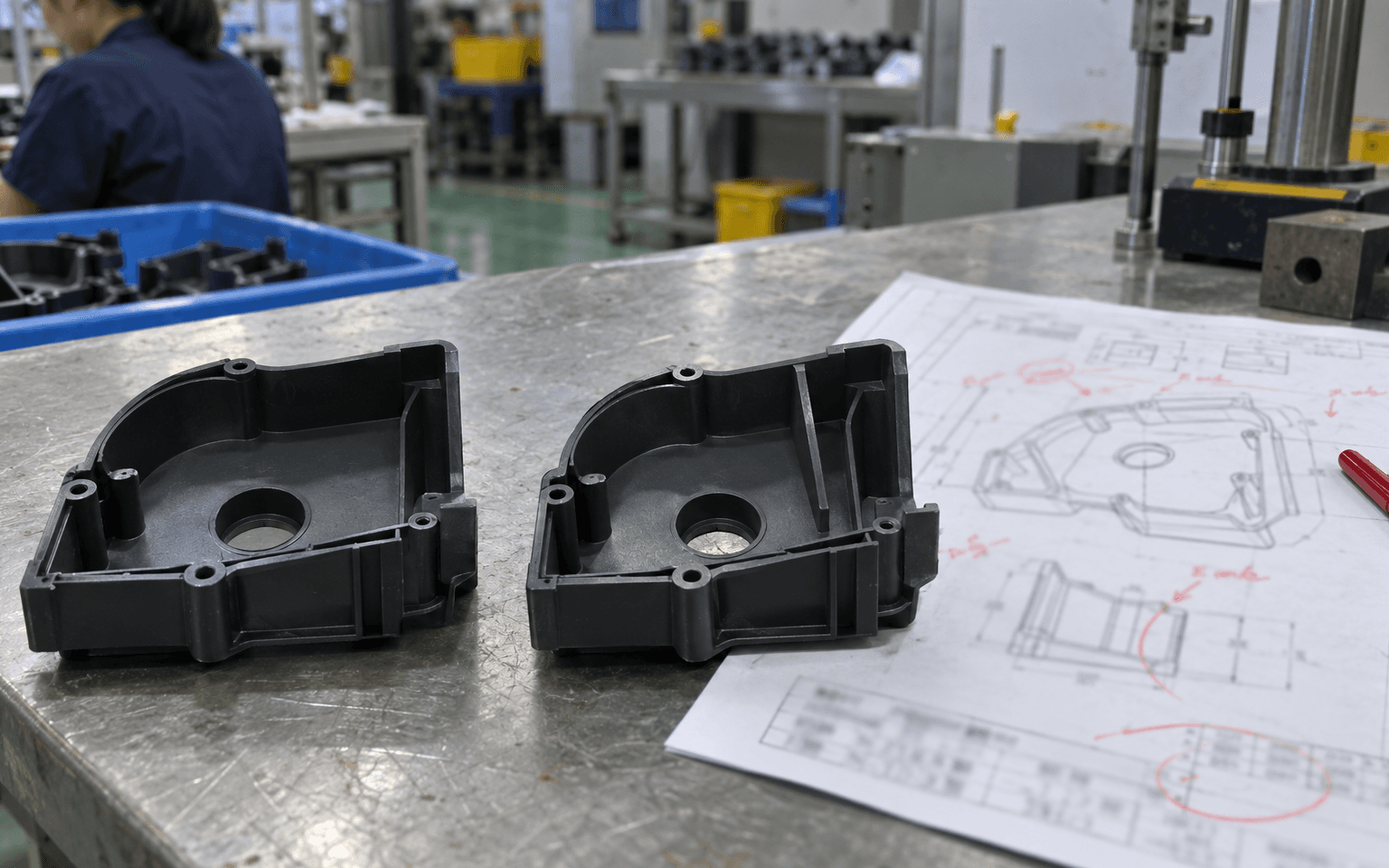
Engineering change orders (ECOs) and design freeze, explained
What design freeze means, why late changes are so expensive in hardware, and how engineering change requests, orders and notices (ECR, ECO, ECN) keep you and your factory on the same version.
 10Basics · 12 min
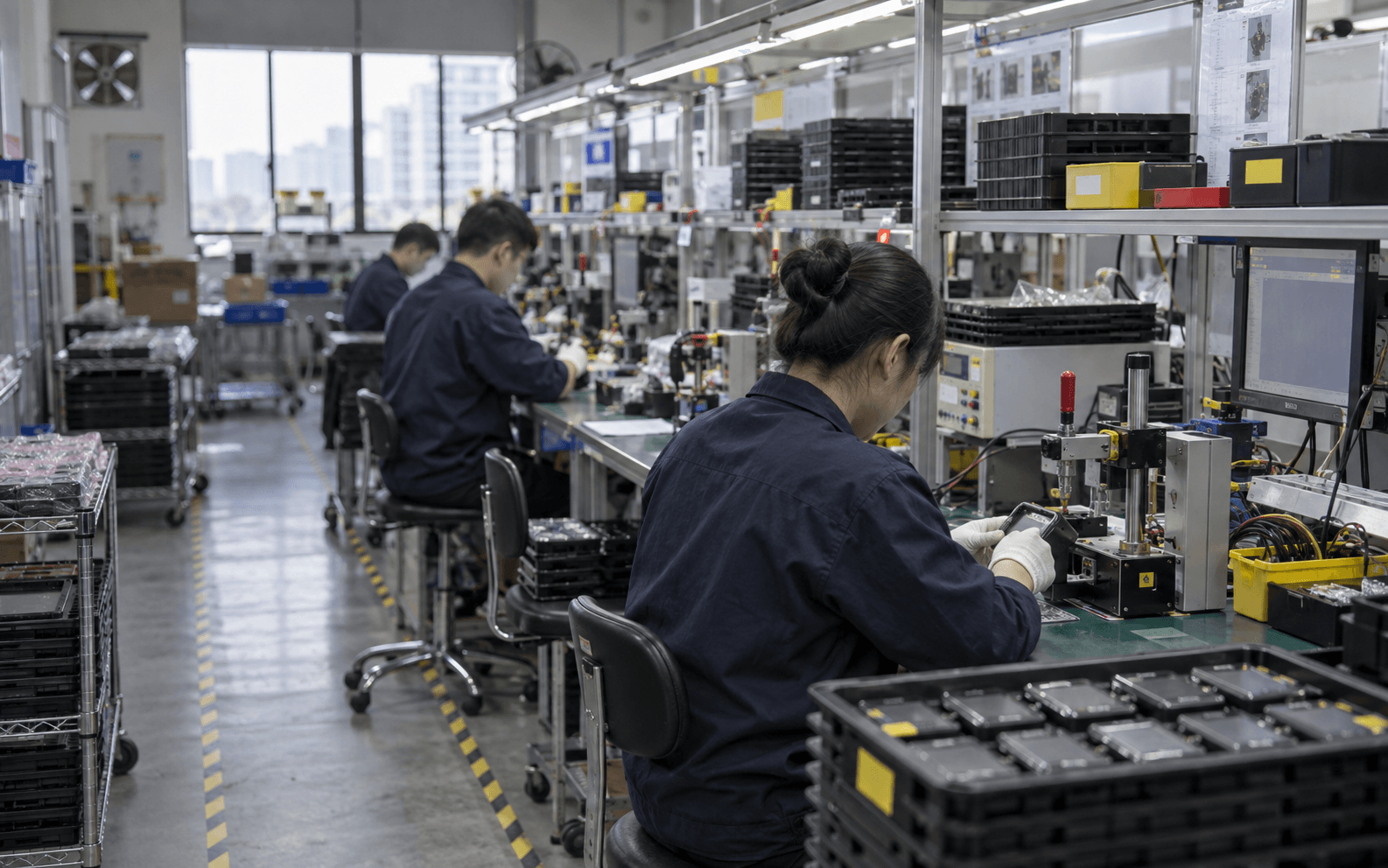
EVT, DVT, PVT explained
The three test builds between a working prototype and mass production, explained for first-time founders. What each build is for, roughly how many units you make, and what usually goes wrong.
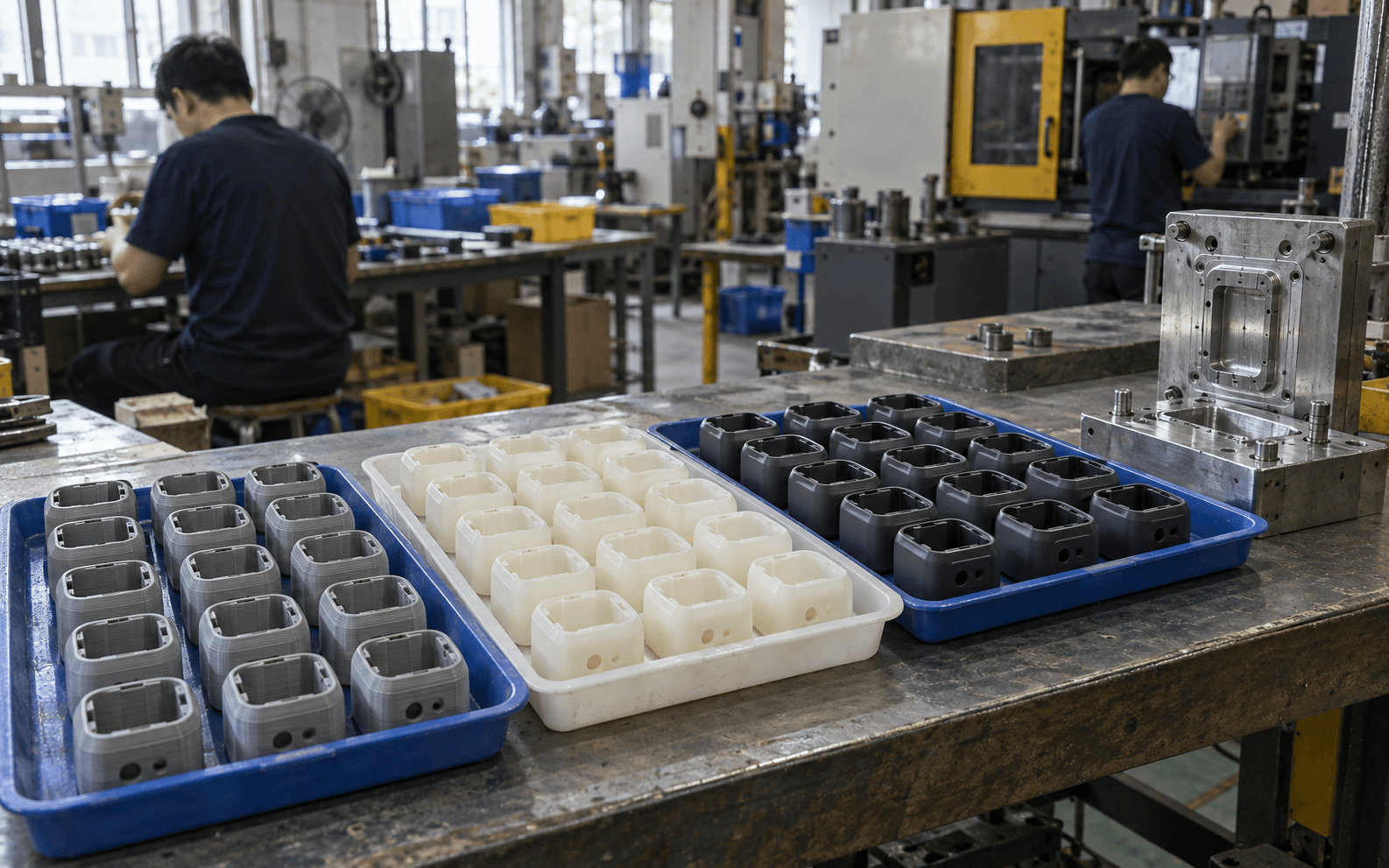 11Cost · 8 min
50 parts: casting vs printing vs molding
You need around 50 plastic parts. Should you 3D print them, vacuum cast them, or make a mold? A plain-English comparison of cost, speed, looks and material, with a simple way to compare quotes.
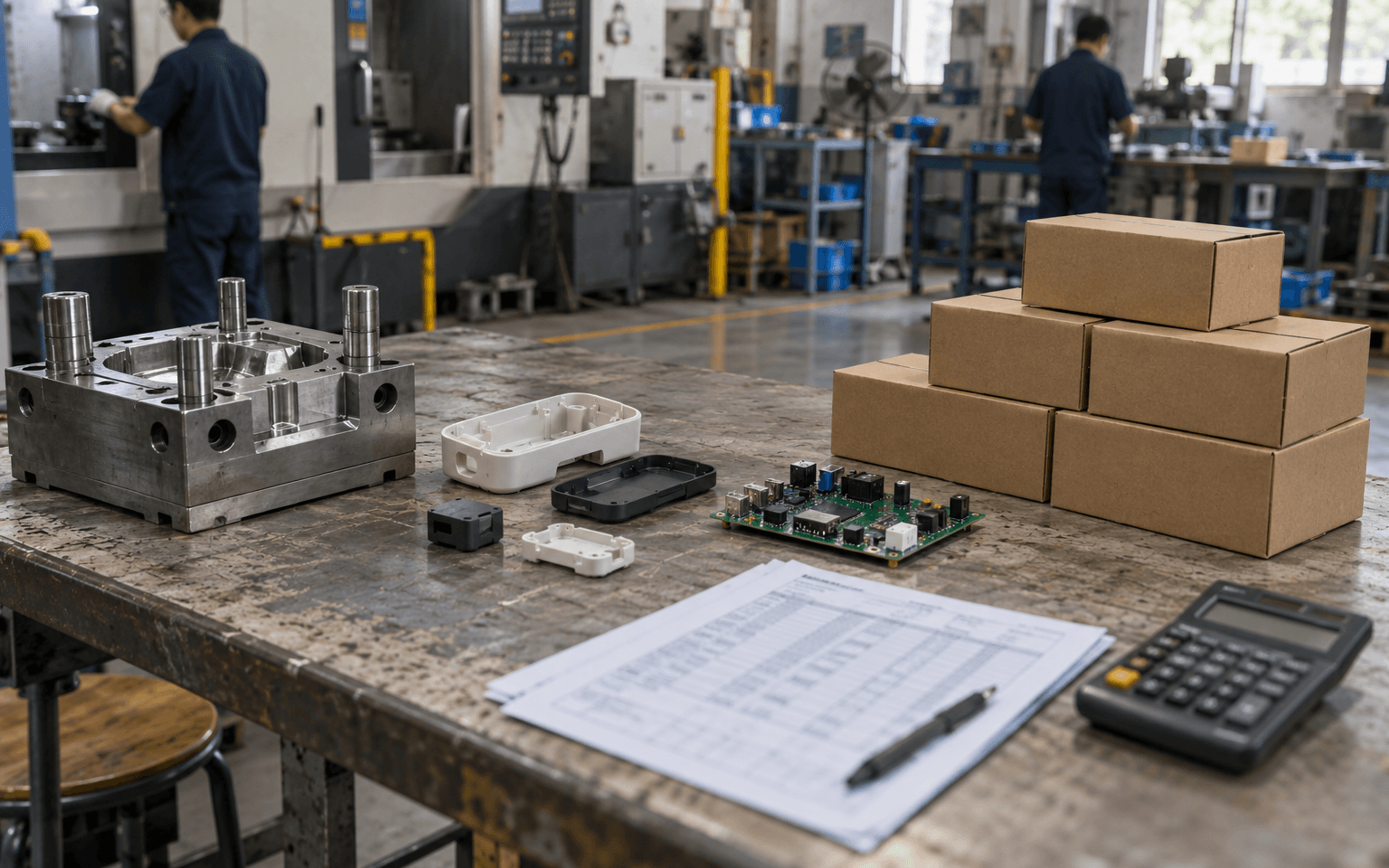 12Cost · 10 min
How much does it cost to develop a hardware product?
The cost buckets of developing and manufacturing a hardware product, explained for first-timers. Design, prototypes, tooling, certification and the first production order, with typical ranges where they're widely published, plus the costs people forget.
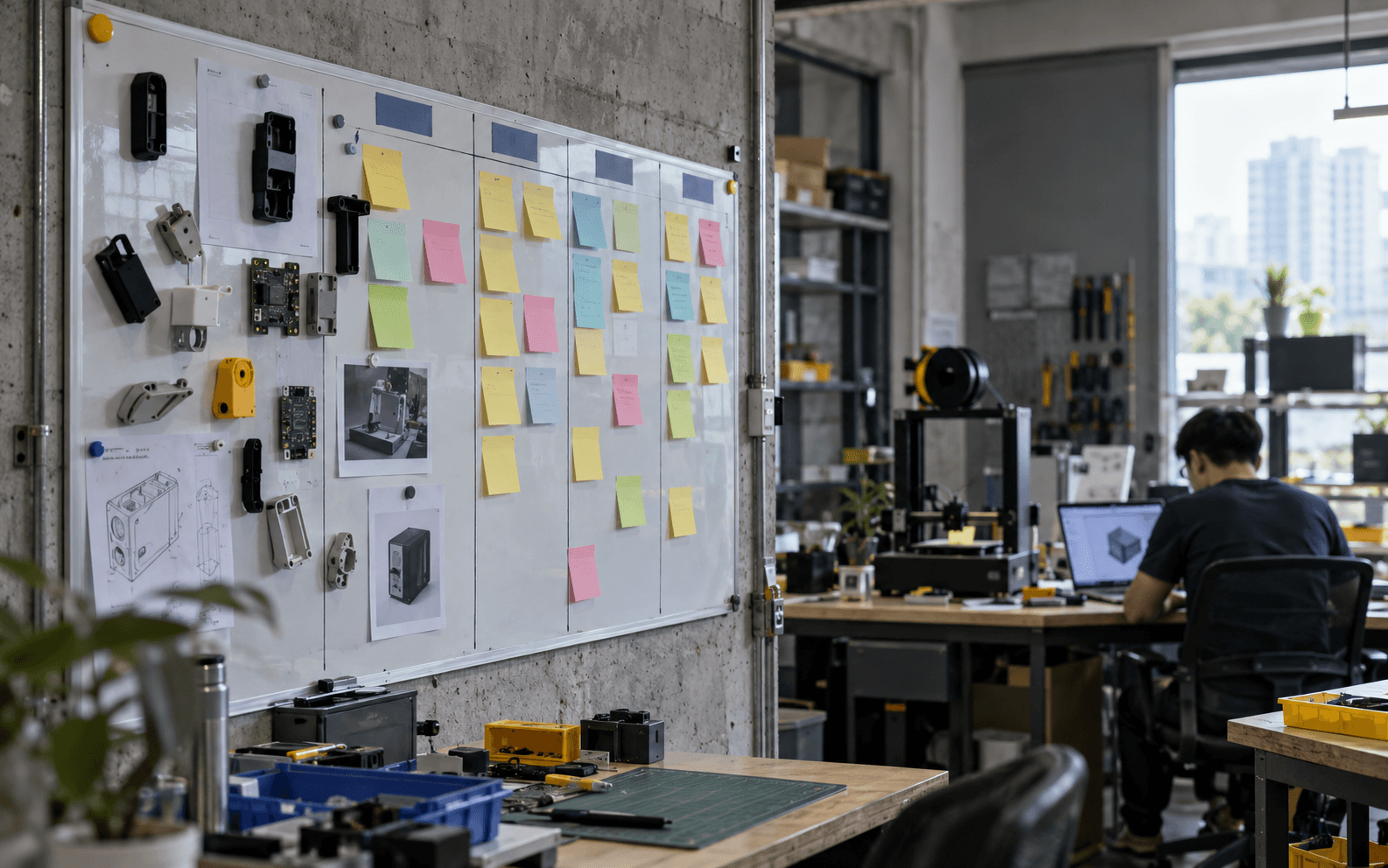 13Basics · 9 min
How long does it take to develop a hardware product?
A realistic timeline for bringing a hardware product to market, stage by stage, for first-time founders. Where the time actually goes, what slows projects down in Shenzhen, and how to save weeks.
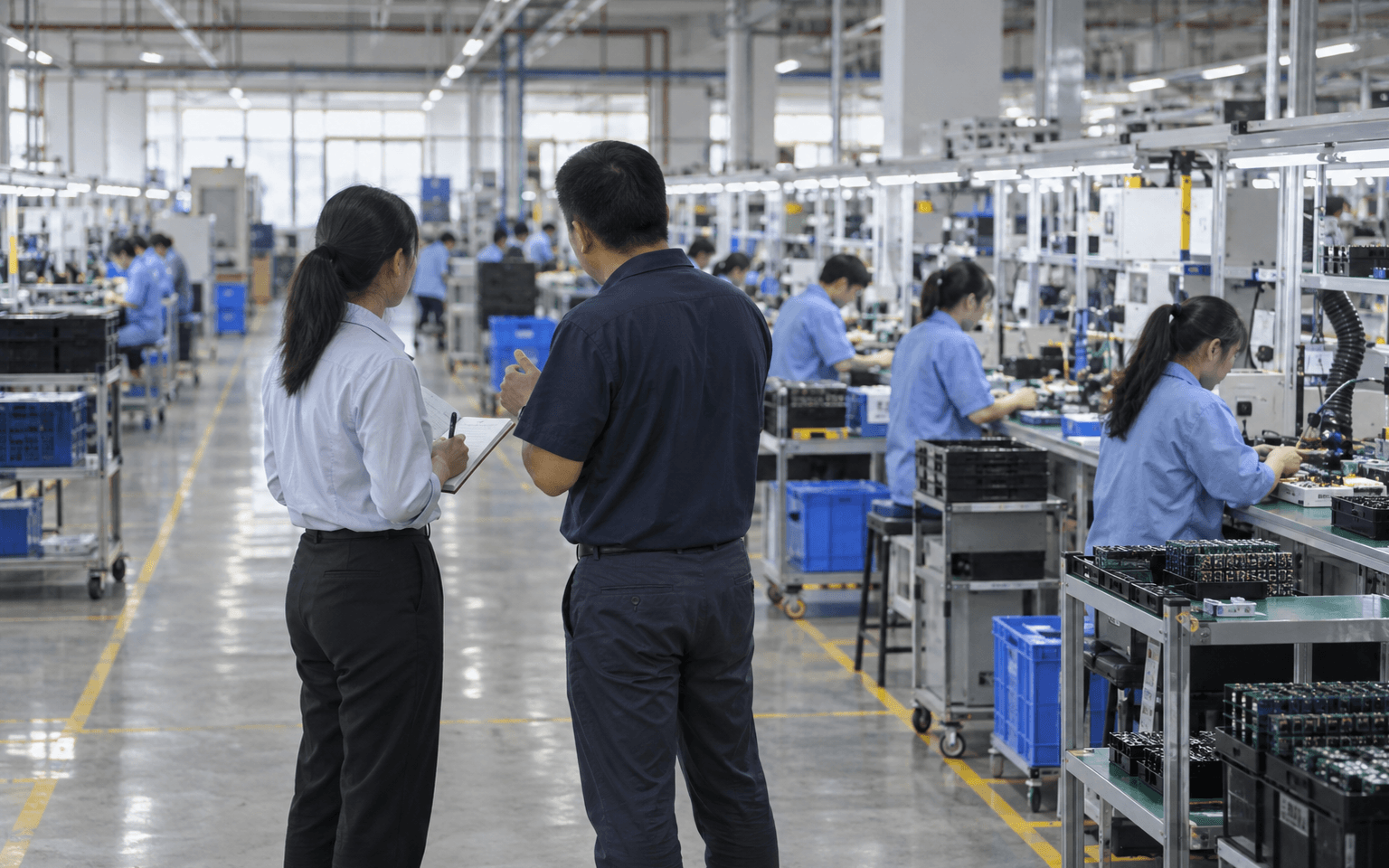 14Working in China · 10 min
How to choose a factory in China
A step-by-step, neutral guide for first-time hardware teams. How to find suppliers, tell factories from trading companies, check what you can, compare quotes, and start small.
 15Design · 8 min
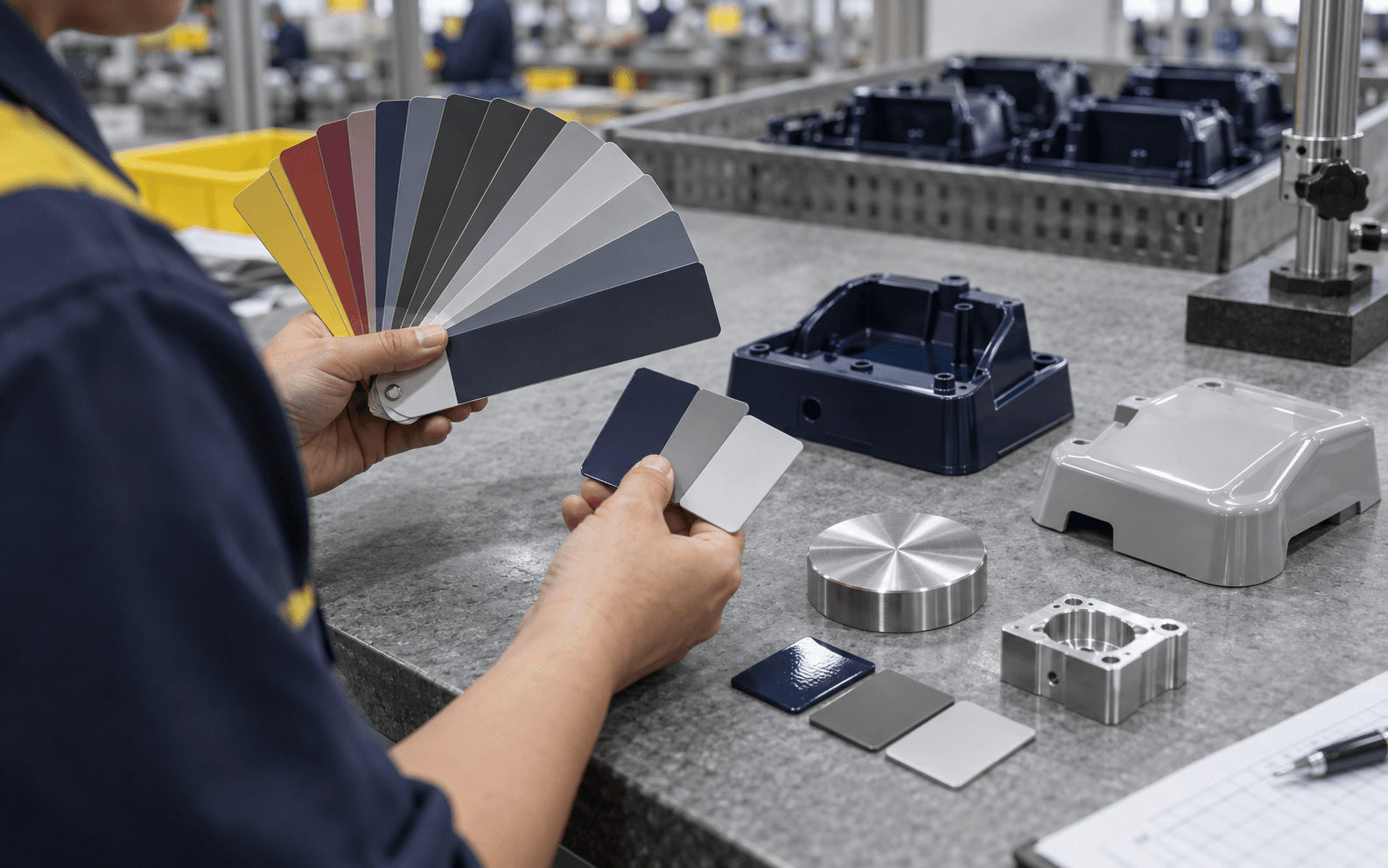
How to specify colour and finish
How to tell a factory exactly what colour, gloss and texture you want, using colour codes, physical samples, texture standards and a simple written spec. For first-time hardware teams.
 16Choosing · 8 min
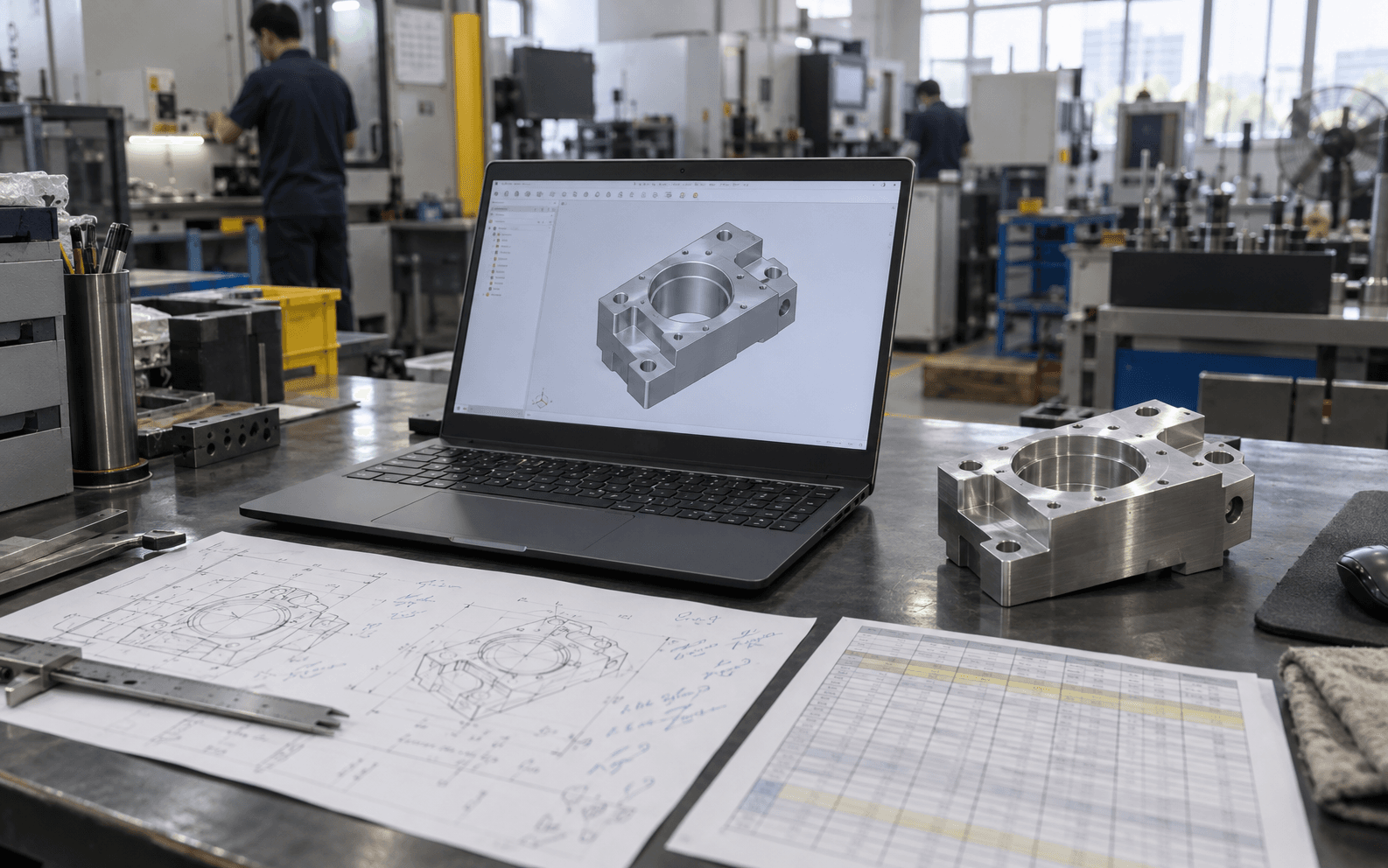
How to write an RFQ
What a request for quotation (RFQ) is, what to put in it, and how to write one that gets clear, comparable quotes from Shenzhen suppliers. With a checklist you can copy.
 17Working in China · 8 min
NNN agreements explained
What an NNN agreement is, how it differs from a standard NDA, why it's commonly recommended when working with Chinese manufacturers, and what it can and can't do. Plain-English background, not legal advice.
 18Basics · 11 min
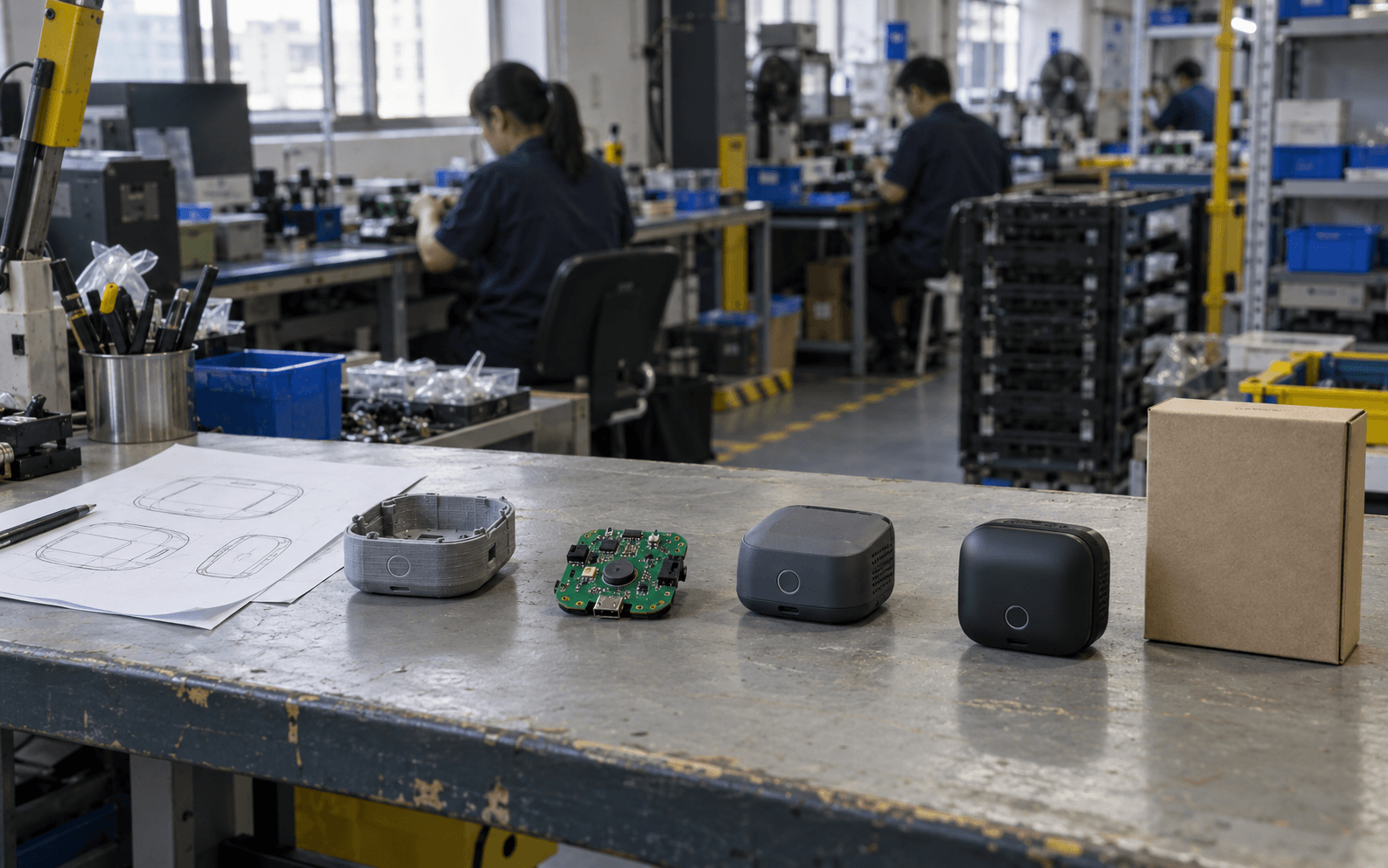
Product development stages: how to make a physical product from idea to finished product
The stages of making a physical product, from first sketch to boxes on a ship, explained for first-timers. What happens at each stage, why it matters, what you get out of it, and who in Shenzhen helps.
 19Basics · 10 min
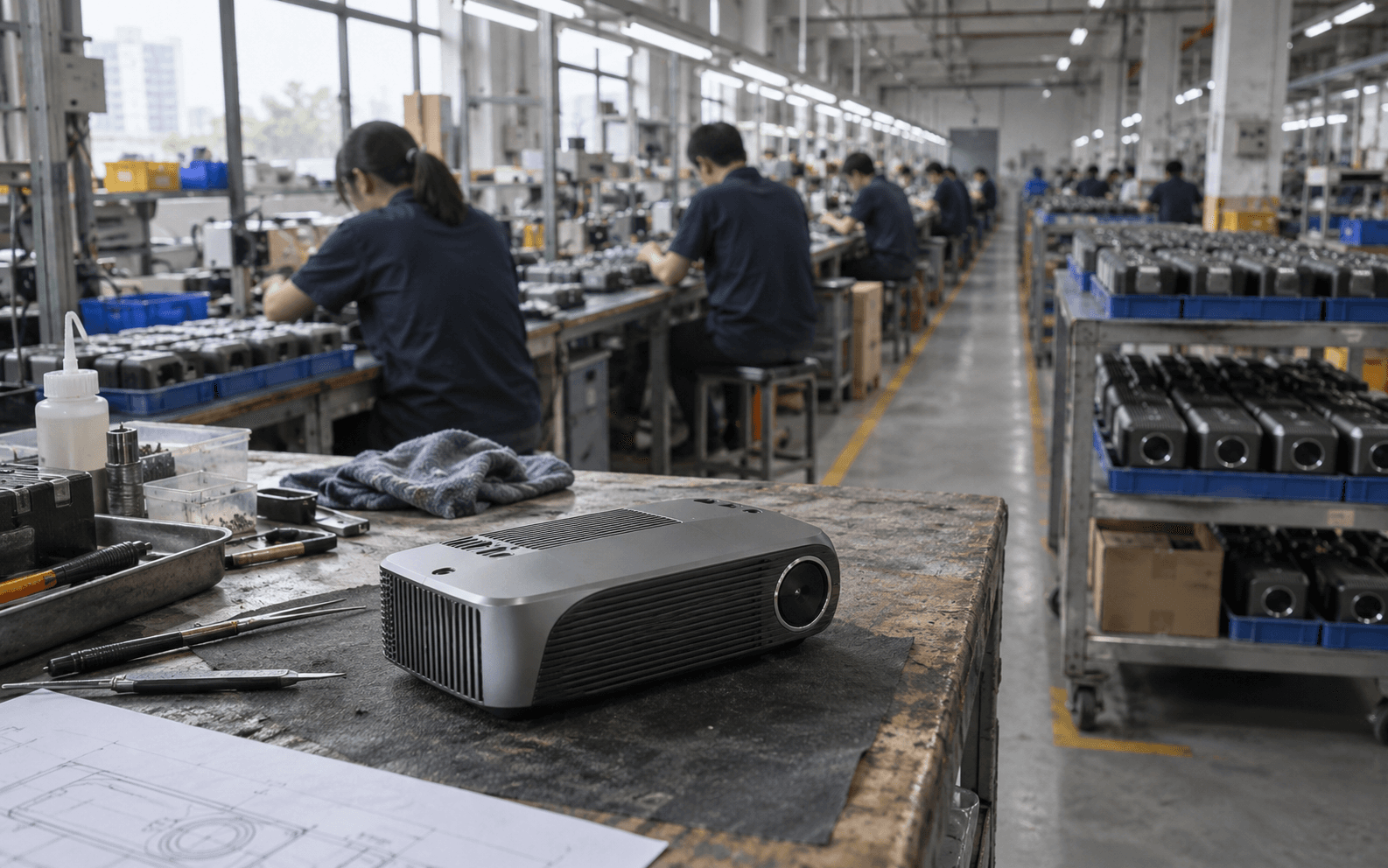
Prototype to production: what changes when you scale from 10 units to 1,000
Why a product that works as 10 prototypes can fail at 1,000 units, what changes in parts, people, testing, documents and cash as you scale, and the steps between a working prototype and your first production run in Shenzhen.
 20Working in China · 10 min
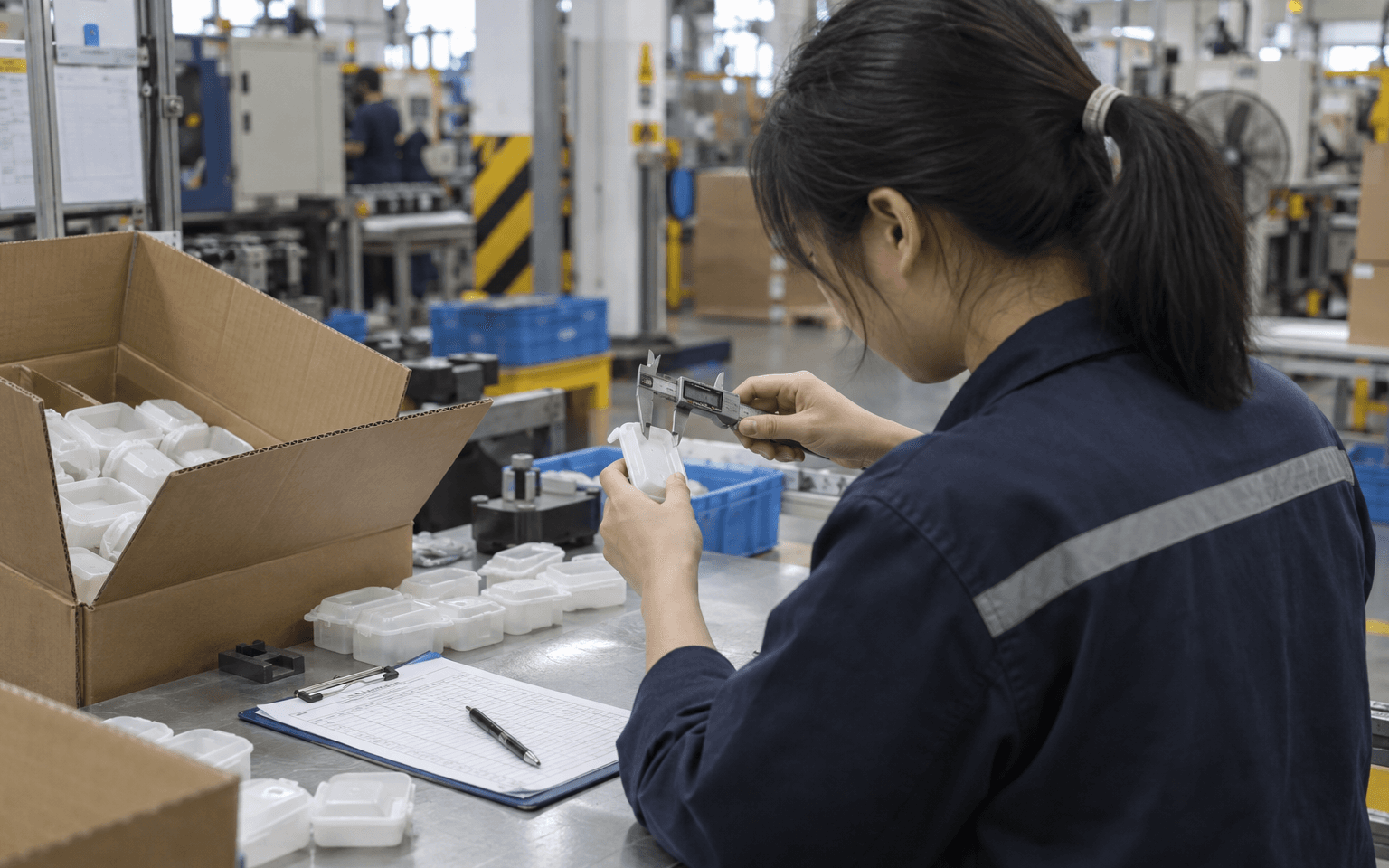
Quality inspection explained: pre-shipment checks and AQL
What pre-shipment inspection is, when to inspect, how AQL sampling works in plain words, what an inspector checks, and how to prepare so the report is actually useful. For first-time importers.