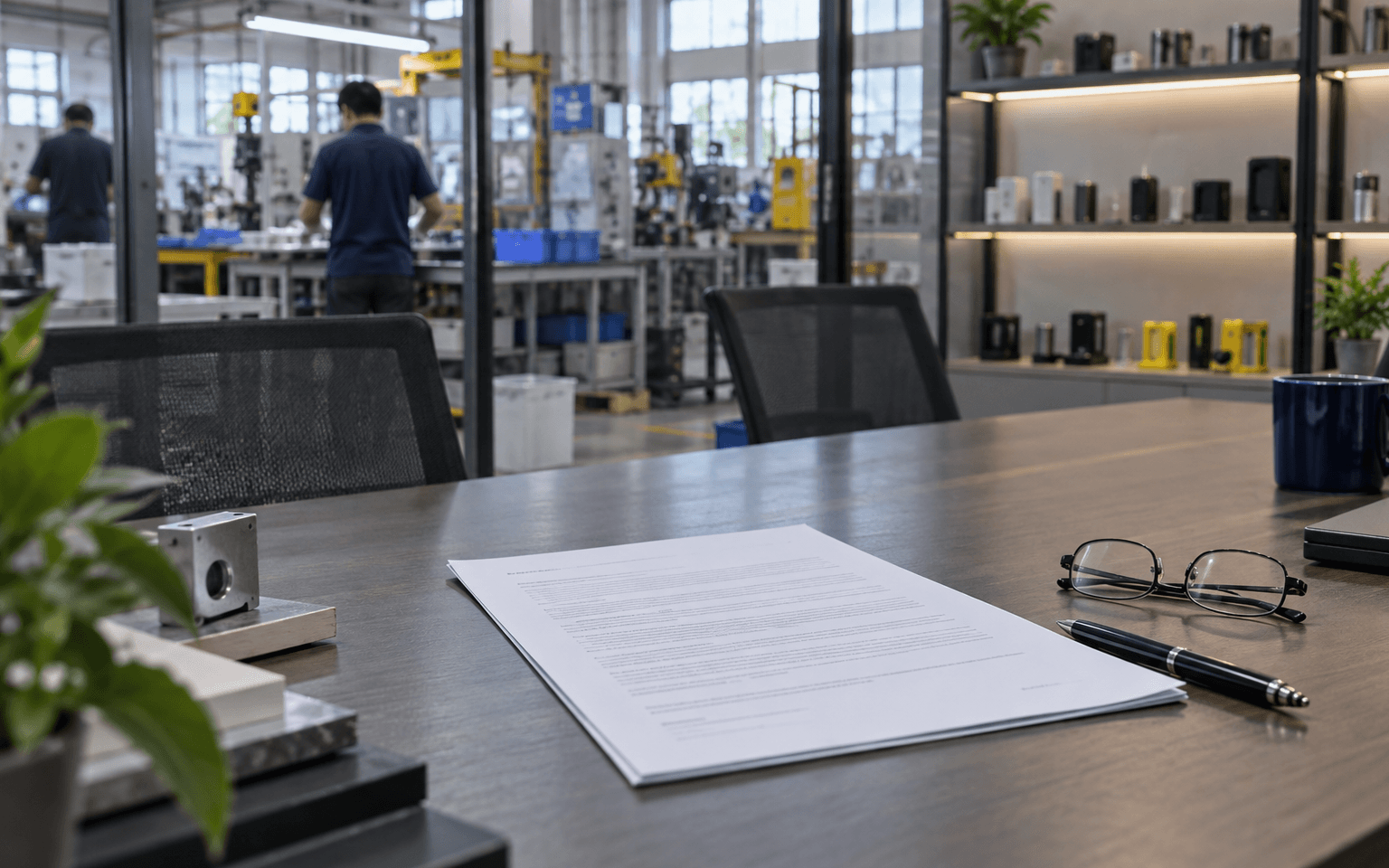
When you start sharing CAD files and product plans with factories, a common worry is: what stops them copying my product, or selling it directly to my customers? Many founders reach for a standard NDA. People with experience manufacturing in China often recommend something different: an NNN agreement.
This guide explains what NNN agreements are and why they're used, in plain words. It is general background, not legal advice. Contract law is specific to each situation. Talk to a lawyer who works with Chinese contracts before relying on any agreement.
First, what an NDA is
An NDA (non-disclosure agreement) is a contract where one side promises not to share the other side's confidential information. It's the standard document in many countries when you show a partner something secret.
A typical Western NDA has limits when you're working with a Chinese manufacturer:
- It mostly covers disclosure, meaning telling others. But the bigger risk is often that the factory uses your design itself, for example making and selling the product, without telling anyone anything.
- It's often written in English and governed by a foreign law, with disputes to be decided in a foreign court. Even if you win there, getting that decision enforced against a company in China can be difficult.
What NNN stands for
An NNN agreement bundles three promises:
- Non-disclosure: the factory won't share your confidential information with others.
- Non-use: the factory won't use your information for any purpose except making your product for you. For example, it won't make the same product for itself or another customer.
- Non-circumvention: the factory won't go around you to deal directly with your customers, or sidestep you to work with your other suppliers in ways that cut you out.
An analogy: an NDA is like asking a locksmith not to tell anyone your door code. An NNN also asks them not to use the code themselves, and not to sell copies of your key to your neighbours.
Why NNNs are usually written for China
The features commonly recommended for an NNN aimed at a Chinese manufacturer are about making it enforceable where the factory is:
- Chinese language. The contract is written in Chinese (often with an English translation), with the Chinese version stated as controlling.
- Chinese law. The contract is governed by the law of the People's Republic of China.
- A Chinese court. Disputes go to a court with jurisdiction over the factory, usually where it's located, so a judgment can be enforced against its assets there.
- Liquidated damages. A pre-agreed amount the factory must pay if it breaks the agreement. This avoids having to prove exactly how much money you lost, which can be hard.
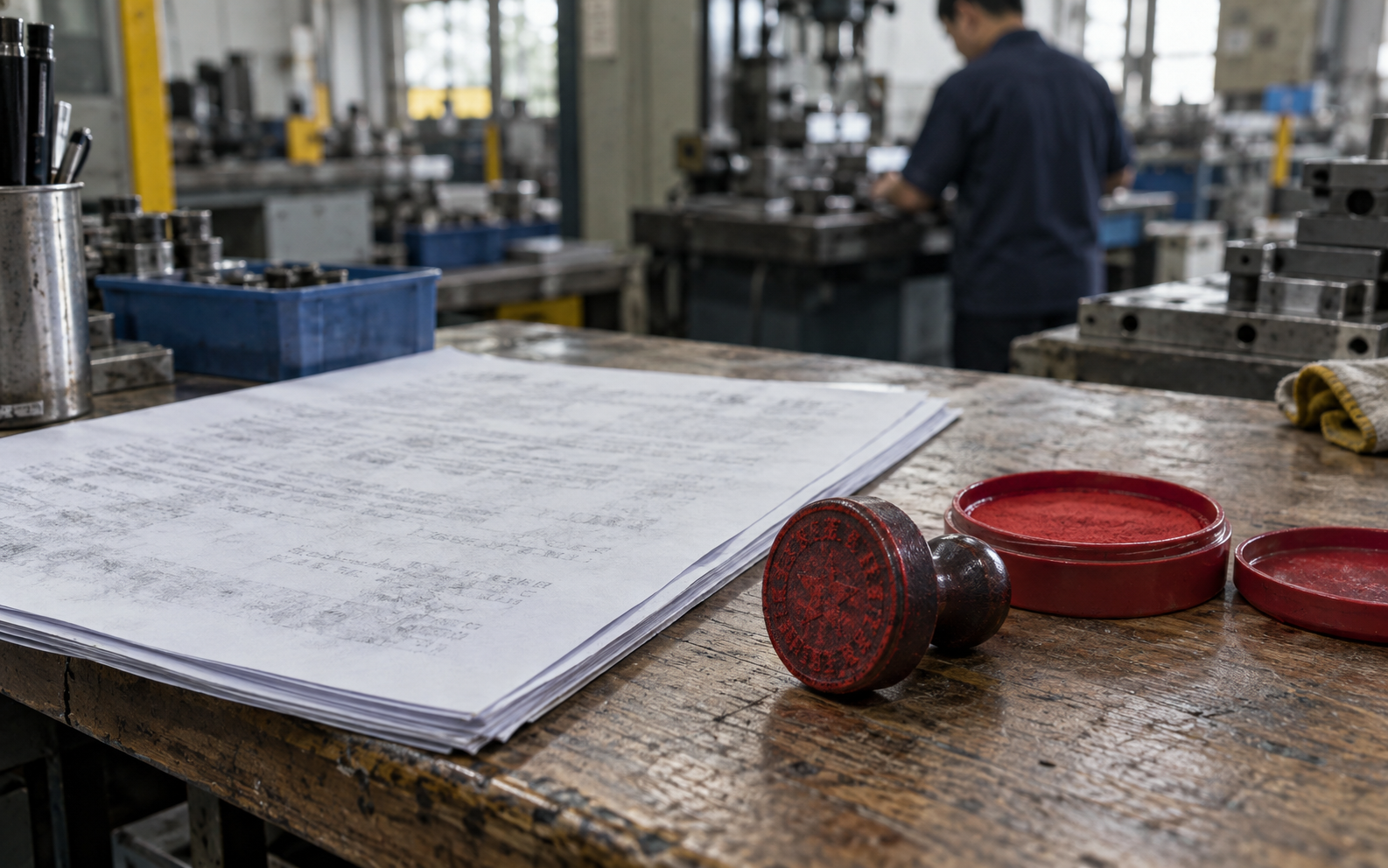
- Correct parties and signing. The exact registered Chinese company name, and the company's official seal (chop, 公章 gōng zhāng) on the document. In China, the chop is what commits a company, much like a signature does elsewhere.
These details are exactly why a lawyer familiar with Chinese contracts should draft or review it. A poorly drafted agreement may give much less protection than it appears to.
What an NNN can't do
An NNN is a useful tool, but it isn't a shield:
- It doesn't register any rights. It's a contract between you and one company. It doesn't stop a different company that never signed from copying a product it bought in a shop.
- It doesn't replace IP registration. China generally uses a first-to-file system for trademarks: whoever registers first usually gets the rights. Many advisers suggest registering your trademark in China early, often before you start manufacturing there. Patents and design registrations are separate decisions. Ask an IP lawyer.
- It won't make a bad supplier good. Choosing partners carefully still matters more. See How to choose a factory in China.
- Enforcement takes effort. Even a strong contract means little if you never act on it.
Practical habits that also help
Contracts work best alongside sensible habits:
- Share on a need-to-know basis. A plastics molder needs the housing files, not your firmware or full BOM.
- Split the work across suppliers where it makes sense, so no single one has the whole product.
- Keep records: who received which files and when, with revision numbers.
- Own your tooling, and state that in writing. (Molds you pay for are sometimes called private molds, 私模.)
- Build a real relationship. A factory that values your long-term business has less reason to cut you out.
When to sign one
A common approach is to send non-sensitive information first (a general description, rough dimensions) to get initial interest and ballpark quotes, then sign an NNN before sharing detailed CAD files, drawings and customer information with your shortlisted suppliers.
Some suppliers are used to NNNs; others may push back or ask for changes. A reasonable discussion about terms is normal.
Questions to ask a lawyer
- Should my agreement be governed by Chinese law and courts, or is arbitration better for my case?
- What liquidated damages amount is realistic and enforceable?
- How do I confirm the factory's registered Chinese name and correct chop?
- Should I register my trademark or designs in China now?
- Does my agreement cover the factory's sub-suppliers?
Keep reading
- How to choose a factory in China
- How to write an RFQ
- How to get an injection mold made in China
- Incoterms for first-timers
Next steps
- Read the contract manufacturing hub
- Find legal and IP services in the directory
- See the Funding & legal stage of the Path
- Glossary: 私模 private mold, 开模 opening a mold
- Not sure where to start? Get an intro
Updated 29 September 2026