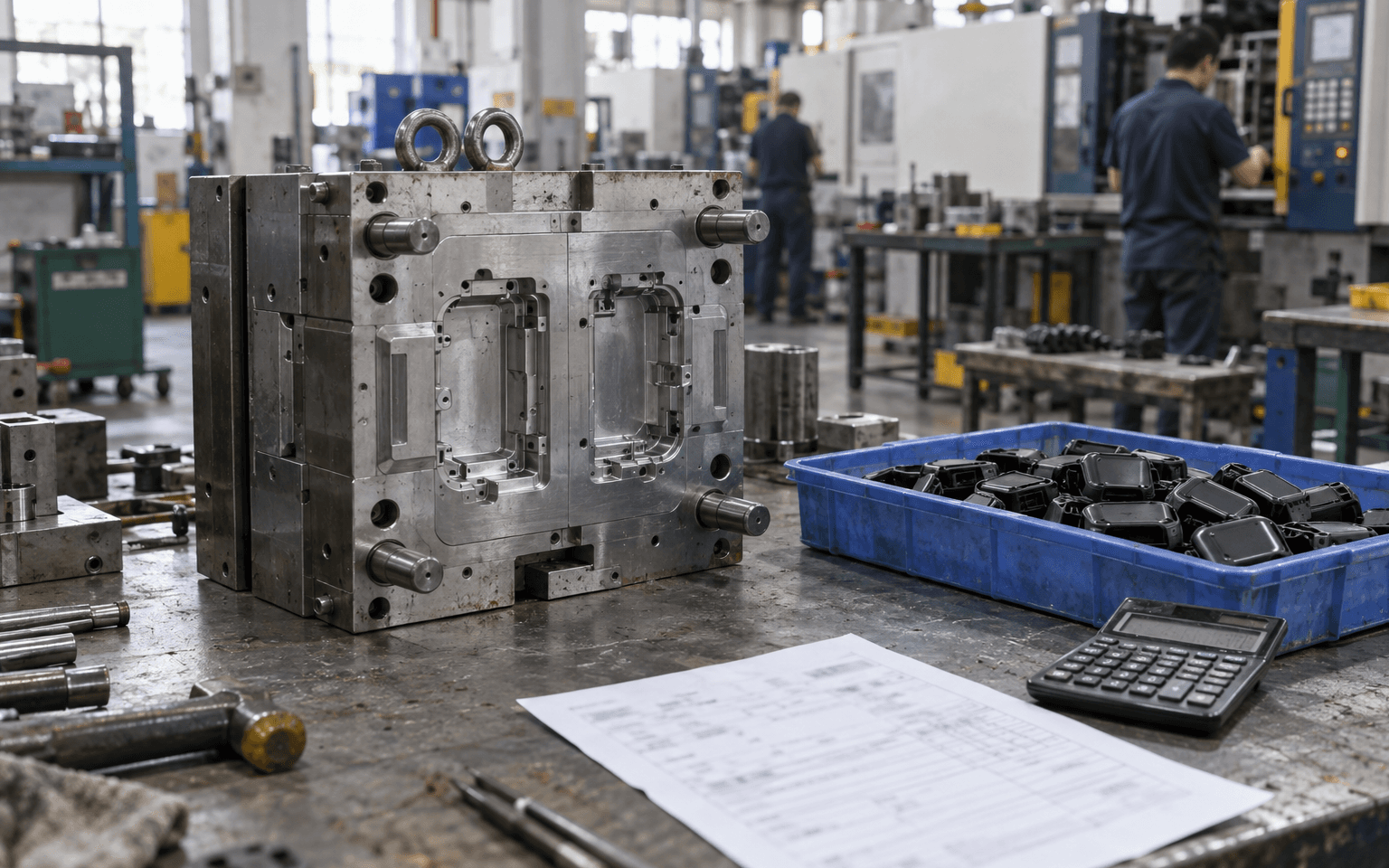
Injection molding has two separate costs, and understanding both is the key to deciding when to use it:
- The mold (tooling): a one-time, up-front cost.
- The part price: what each part costs once the mold exists.
New to molding? Start with What is injection molding?
1. The mold: what drives the price
- Part size: bigger parts need bigger, heavier molds.
- Complexity: each undercut (a feature that stops the part coming straight out) needs a moving mechanism in the mold (a slide or lifter), and each one adds cost.
- Number of cavities: a mold that makes 4 parts per shot (a "1×4") costs more than one that makes 1, but each part is cheaper.
- Steel type: harder steel lasts longer and costs more. Aluminum is cheapest. (See Aluminum vs steel molds.)
- Surface finish: high polish (for glossy or clear parts) or texture adds cost.
- Hot runner vs cold runner: a hot runner system wastes less plastic but makes the mold more expensive.
Rough feel (not a quote): a small, simple single-cavity steel mold is often a few thousand US dollars; a larger enclosure mold with several slides can be over ten thousand; multi-cavity and hot-runner molds more again. Always get several quotes.
2. The part price: what drives it
- Material: how much plastic, and what type. Engineering plastics cost more than ABS or PP.
- Cycle time: how many seconds each shot takes. Thick parts cool slowly, so they take longer and cost more.
- Machine size: big parts need big, more expensive machines.
- Labour and secondary steps: assembly, painting, printing, packing.
For small parts at volume, the part price is often cents to a few dollars.
When does molding become cheaper?
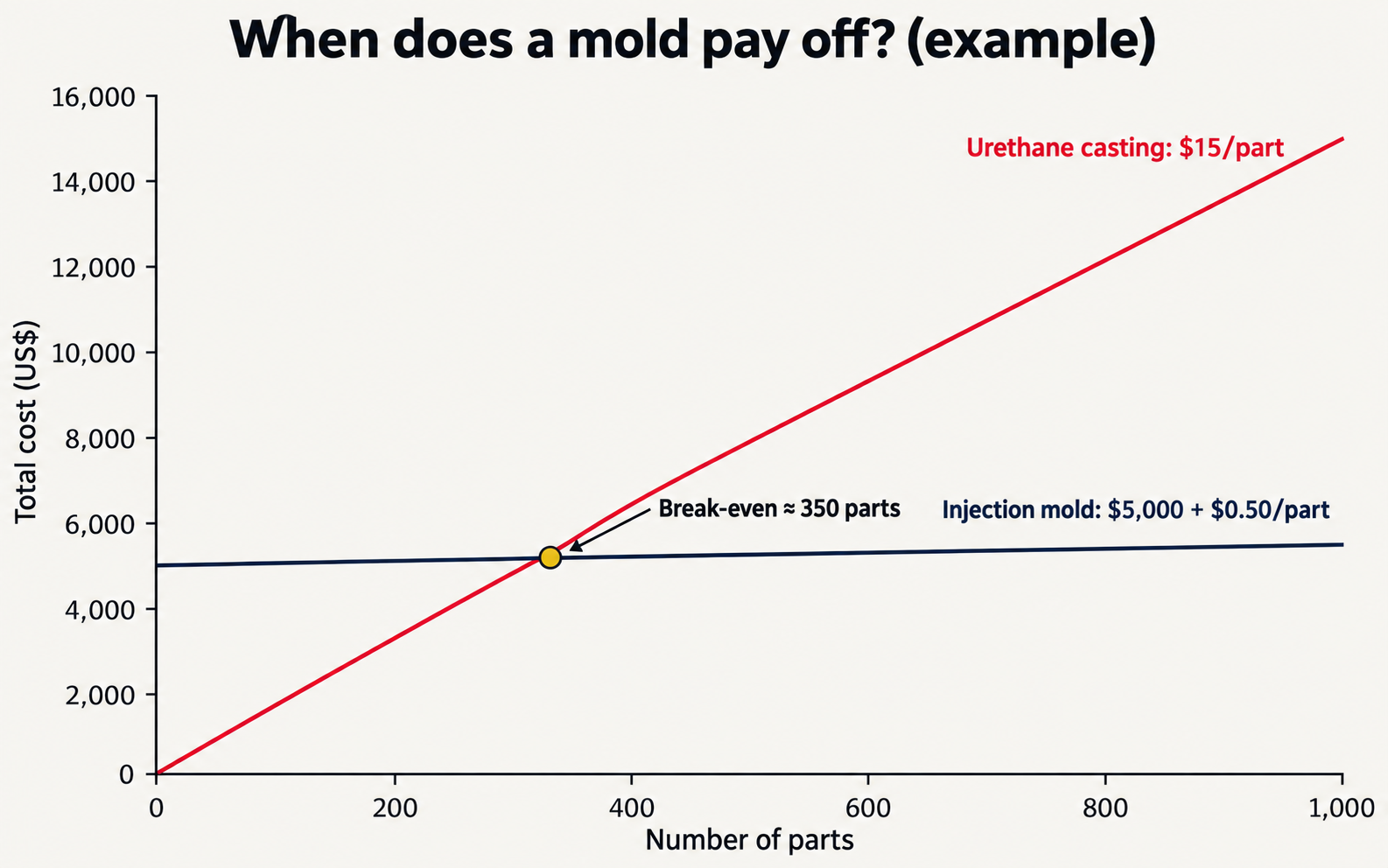
Here's a simple way to compare. Suppose (made-up numbers, just to show the method):
- Mold: $5,000, then parts at $0.50 each
- Urethane casting: no mold, but $15 per part
For 100 parts: molding = $5,000 + $50 = $5,050; casting = $1,500. Casting wins. For 1,000 parts: molding = $5,000 + $500 = $5,500; casting = $15,000. Molding wins.
The break-even point is where the lines cross; here, around 350 parts. Do this sum with your real quotes.
Hidden costs first-timers miss
- Mold modifications after the first trial (T1). Budget for at least one round.
- Samples and shipping of samples.
- Texture and colour matching.
- Second molds if you later need more capacity or a different colour setup.
- Design changes after the mold is made. These are the most expensive of all.
How to lower the cost
- Simplify the design to remove undercuts.
- Start with fewer cavities (1 or 2).
- Use aluminum or softer steel for a first run of a few thousand.
- Combine small parts into one family mold (several different parts in one tool). It's cheaper up front, though harder to perfect.
- Get a DFM review before quoting, so the design is right the first time.
Next steps
Updated 29 September 2026