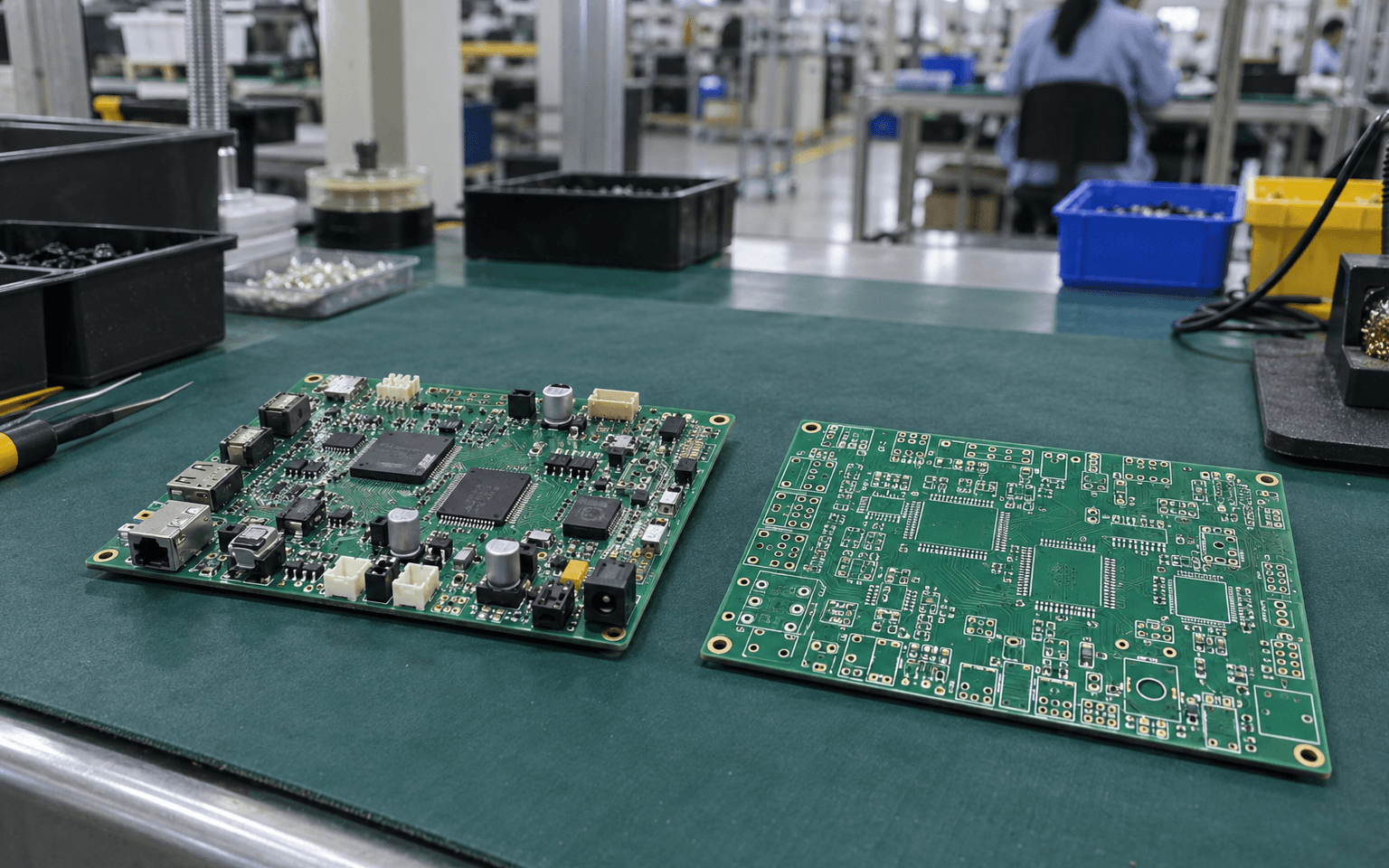
Open almost any electronic product and you'll find a flat board covered in tiny components. That's the product's "brain and nervous system". Two acronyms describe it, and people mix them up constantly:
- PCB (printed circuit board): the bare board, with no components on it yet.
- PCBA (printed circuit board assembly): the board with all the components soldered on, ready to work.
In Chinese: PCB is 电路板 or 线路板; PCBA assembly is often called 贴片 (tiē piàn, "sticking on chips").
What a bare PCB is
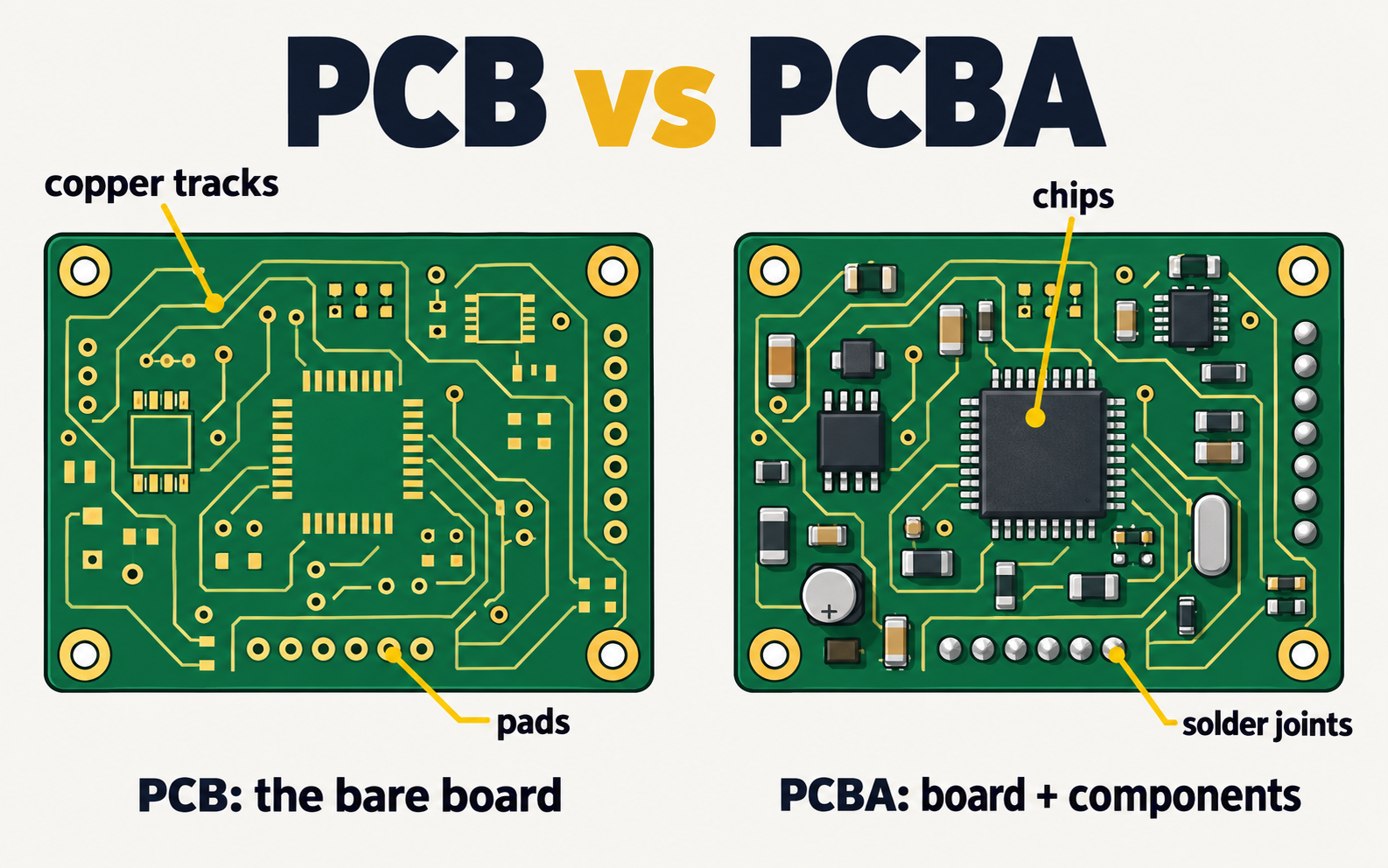
A PCB is a thin board, usually fibreglass (a material called FR-4), with copper tracks that connect components the way wires would. Simple boards have copper on 2 layers; complex ones have 4, 6 or more layers stacked inside.
It's made from your design files, called Gerber files, which describe each copper layer, the holes, and the coloured protective coating (solder mask, usually green). The white text printed on top is the silkscreen.
How a PCB becomes a PCBA
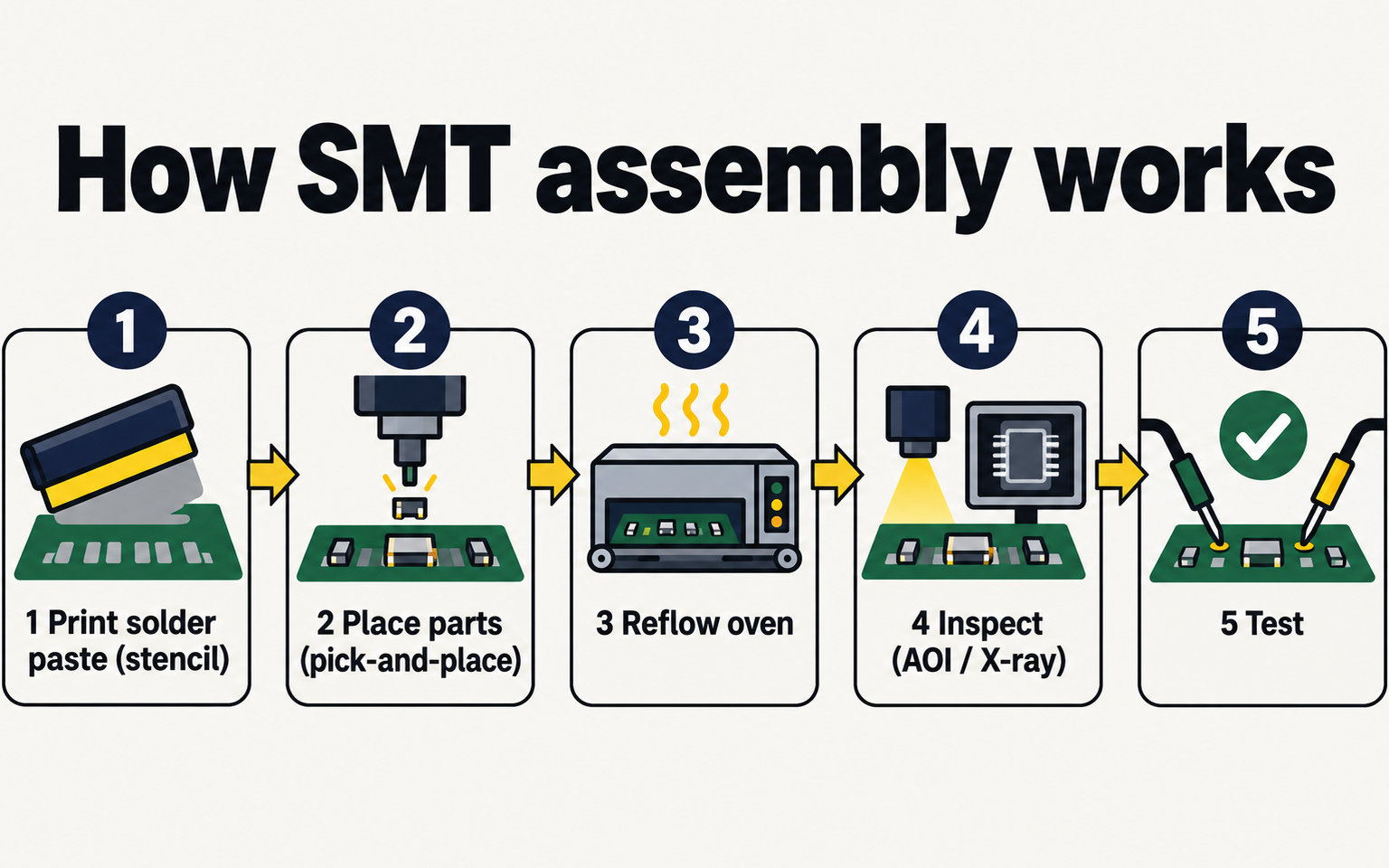
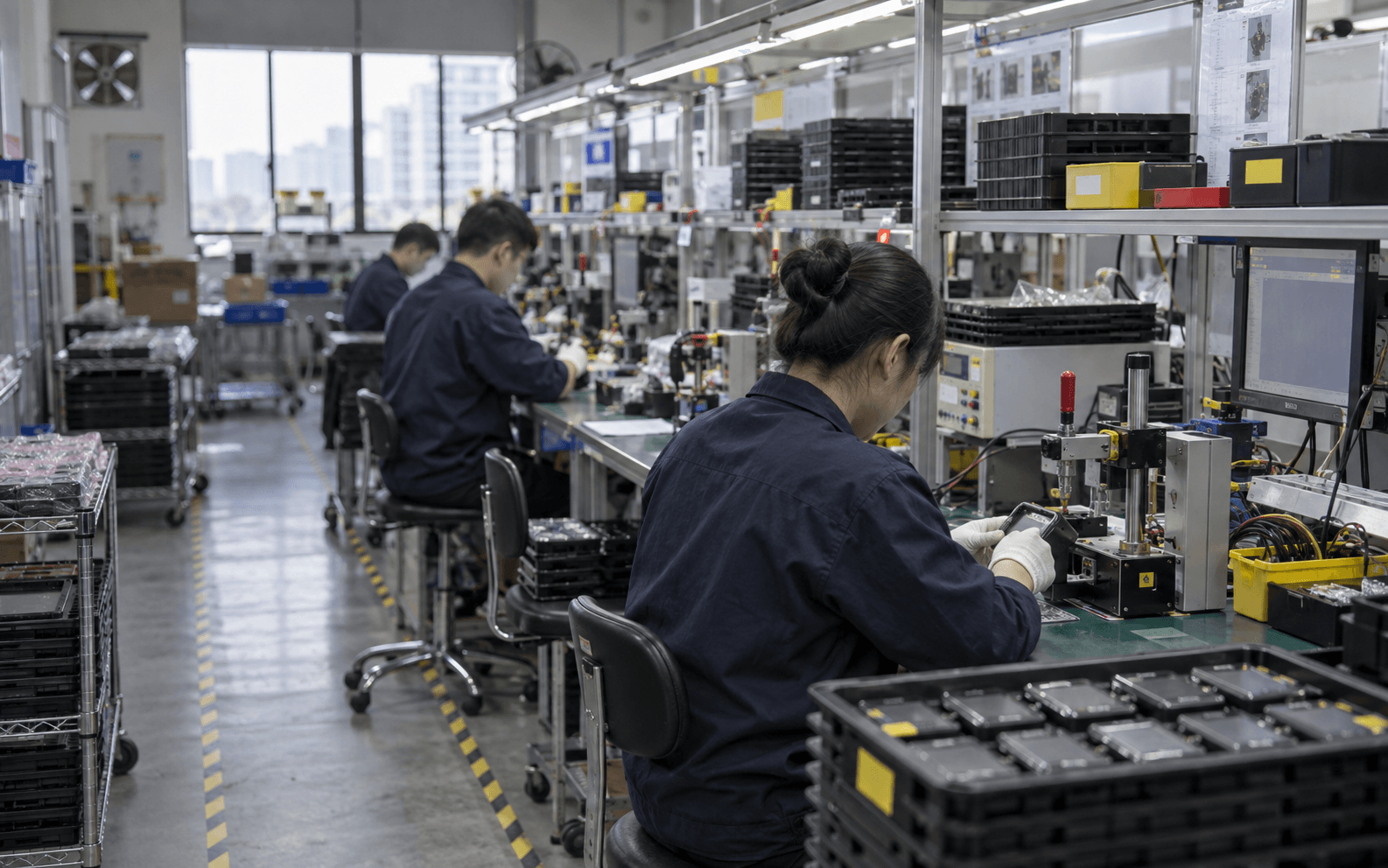
Most modern boards use SMT (surface-mount technology), where components sit on the surface rather than going through holes:
- Solder paste (a grey paste of tiny solder balls) is printed onto the pads through a laser-cut metal stencil.
- A pick-and-place machine picks components off reels and places them precisely on the paste, thousands per hour.
- The board passes through a reflow oven, which melts the paste and solders everything in place.
- Inspection: cameras check for missing or misaligned parts (AOI, automated optical inspection). Hidden joints under chips can be checked with X-ray.
- Bigger parts with legs through holes (some connectors, for example) are soldered afterwards. This is through-hole or DIP assembly.
- Testing: the board is powered on and checked. You usually need to tell the factory how.
Who buys the components?
- Turnkey (包料): the assembler buys all the components for you. It's easiest for first-timers.
- Consigned (来料加工): you supply the components yourself.
- Partial turnkey: a mix of the two.
More in Turnkey vs consigned PCBA.
What you need to order
- Gerber files (the board design)
- A BOM (bill of materials): the list of every component with its exact manufacturer part number
- A pick-and-place file (also called a centroid or CPL file): where each component goes
- Quantities, and how you want the boards tested
Full walkthrough in How to order PCB assembly.
Why Shenzhen
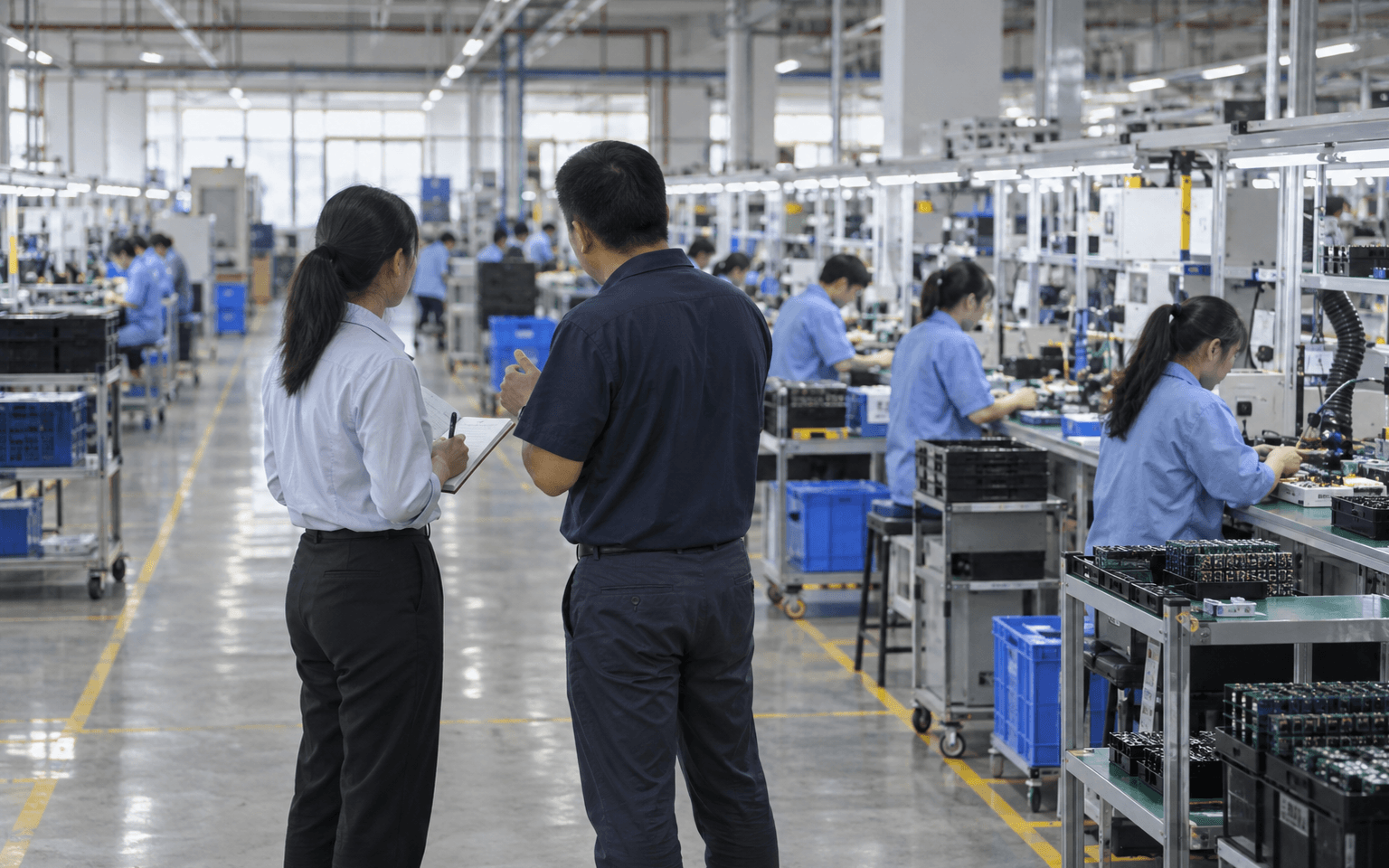
Shenzhen has one of the world's largest concentrations of PCB and assembly factories, next to Huaqiangbei, the huge electronics market where you can buy components the same day. Simple prototype boards can be made in a day or two, and assembly for small batches often takes around a week once parts are in stock.
You can order through online platforms (upload files, get an instant price) or from PCBA shops that quote by email and help with engineering questions.
Keep reading
- How to order PCB assembly
- How much does PCB assembly cost?
- Turnkey vs consigned PCBA
- Huaqiangbei for hardware makers
Next steps
- Find PCB assembly shops and online platforms
- See the PCB assembly hub
Updated 29 September 2026