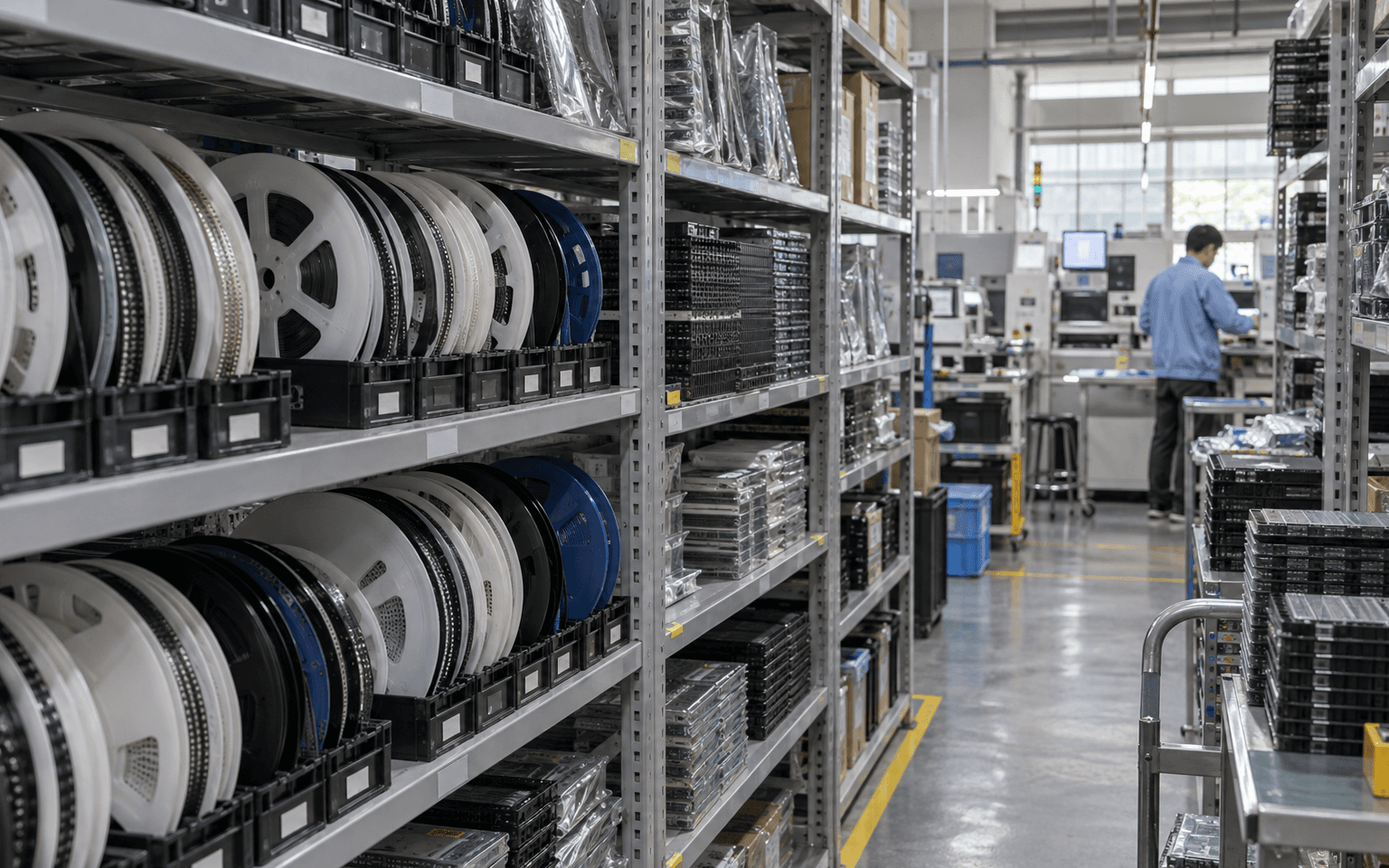
When you order assembled boards, someone has to buy all the components. There are three ways to do it.
Turnkey (包料, bāo liào)
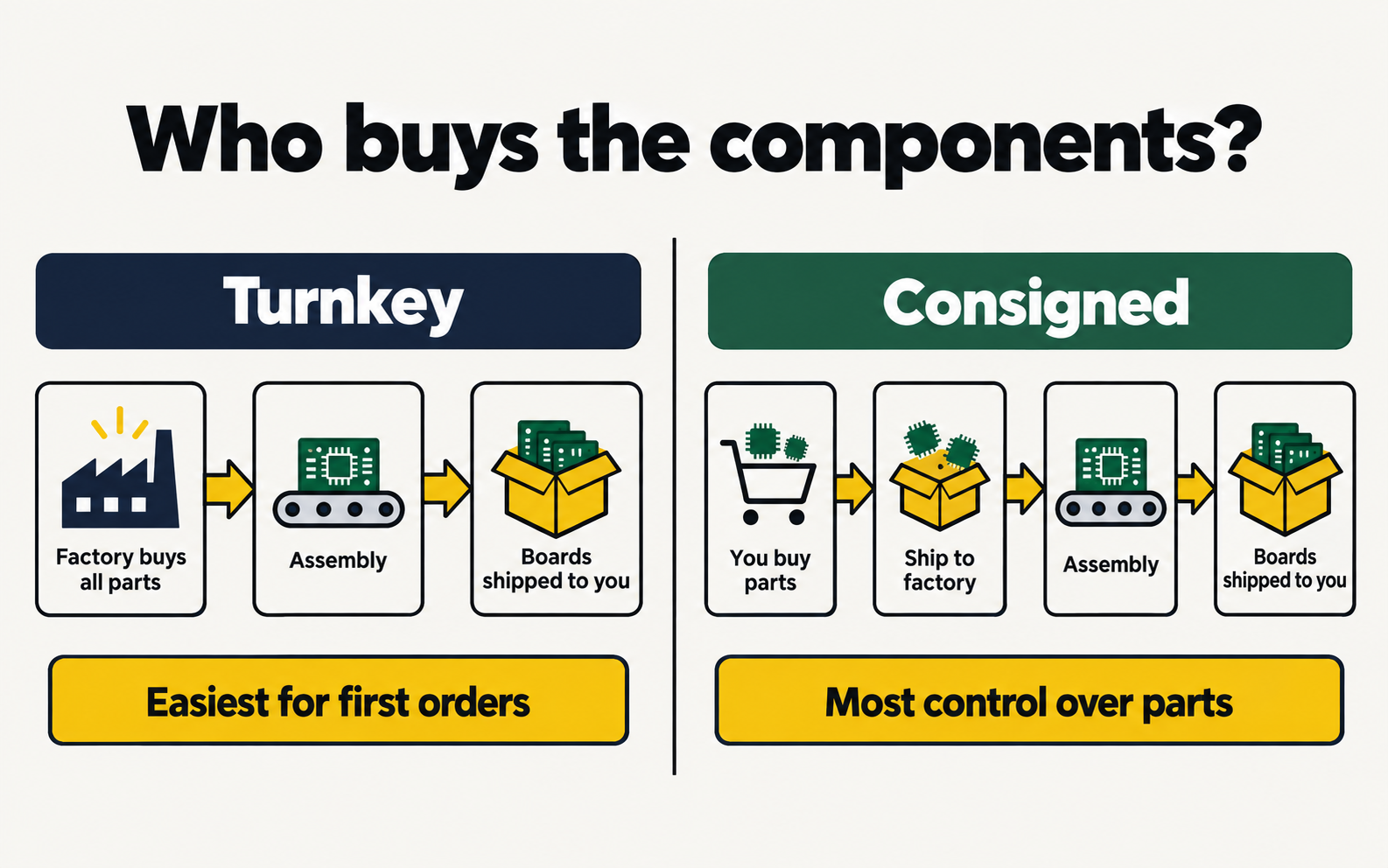
The assembler buys everything: the bare boards and all the components on your BOM.
Pros
- Easiest: one order, one supplier, one invoice.
- Assemblers buy in bulk and know reliable sources.
- They handle stock-outs and propose alternatives.
Cons
- Less control over exactly where parts come from.
- Mark-up on components (usually modest).
- You must check any substitutions they propose.
Best for: first prototypes and most small-batch orders.
Consigned (来料加工, lái liào jiā gōng)
You buy the components and ship them to the assembler, who only does the assembly.
Pros
- Full control over sourcing (important for critical or expensive chips).
- You can use parts you already own.
Cons
- More work: you manage many suppliers and deliveries.
- Parts must arrive correctly labelled and packed (reels, trays), with extra for machine losses (called attrition).
- If one part is late, the whole build waits.
Best for: teams with an established supply chain, or with critical parts bought from authorized distributors.
Partial turnkey (a mix)
You supply a few key parts (a specific chip, a custom connector), and the factory buys the rest. This is very common, and it's a good middle ground.
How to decide
- First time, small quantities? Turnkey.
- A chip that must be genuine, or is allocated or hard to find? Buy it yourself from an authorized distributor and consign it: partial turnkey.
- Scaling up with negotiated component prices? Consigned or partial.
Whatever you choose, keep a BOM with exact manufacturer part numbers. It makes every option work better.
Next steps
- How to order PCB assembly
- Huaqiangbei for hardware makers (buying parts in person)
- Glossary: 包料 turnkey, 来料加工 consigned
Updated 29 September 2026